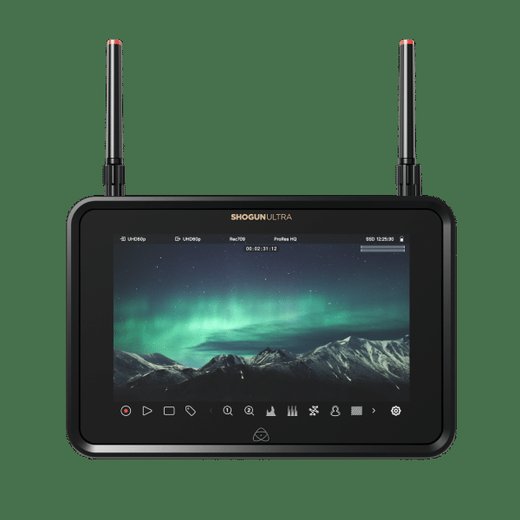
Connect atomos shogun ultra with the correct video standard, supported signal format and stable power source before changing display settings.
I used a Shogun Ultra for a multi-camera live event and the wireless monitoring feature struggled to maintain a stable connection once several other devices joined the same network. Setting up a dedicated, isolated network just for the monitoring devices restored a stable, low-latency feed for the rest of the event.
This guide covers safe setup, compatibility checks and the first troubleshooting steps for this monitor-recorder. It avoids assumptions that commonly lead to the wrong battery, firmware, controller or replacement part.
Use the label on the product as the final reference. Seller titles may shorten a model name or combine accessories that were not part of the original package.
Setup in the correct order
Identify the exact version first
Read the complete code on the product, controller, battery and package. Record suffixes, connector type, radio protocol and any hardware revision. A small extra letter can identify a different board, screen, receiver or battery.
Compare the physical product with the linked sources. Check button positions, ports, mounting holes, antenna connectors and included accessories. Similar appearance is not enough for electrical or firmware compatibility.
Photograph the original wiring and save the current settings before repair or updating. Keep these records with the source links so the device can be returned to a known working state.
Specifications and compatibility checks
| Area | What to confirm |
|---|---|
| Device class | Large monitor-recorder with HDMI and SDI workflows |
| Recording | Professional codecs and RAW support depend on camera and activation |
| Connectivity | Network and cloud functions are integrated |
| Storage | Use approved media for selected recording formats |
| Status | Official page notes that production has ended |
Published specifications describe a reference package. A retailer may combine another controller, battery, cable or accessory. Verify the complete kit rather than relying on one short product title.
Match electrical limits before physical fit. Voltage, polarity, signal type and pin order matter more than wire colour. For moving parts, also compare dimensions, screw length, shaft size and clearance.
Common problems and first checks
| Symptom | Likely area | First action |
|---|---|---|
| No picture | Wrong input, cable, camera output or unsupported signal | Use a known cable and simple camera format |
| Picture cuts out | Loose connector, weak battery or cable strain | Secure cables and measure loaded voltage |
| Wrong colour or brightness | LUT, HDR, range or display mode | Return to neutral monitoring settings |
| Recording stops | Media speed, format, heat or power | Use approved media and stable power |
| FPV signal is noisy | Antenna, band, channel or interference | Match the channel manually and inspect antennas |
Start with the symptom that can be observed directly. Firmware cannot repair a cracked arm, bent shaft, damaged cable, weak battery or wrong connector. Rule out mechanical and electrical causes before changing software.
When possible, compare with a known working part. Keep voltage and signal type within the published limits during the comparison.
Maintenance and long-term reliability
Clean dust, hair, grass and grit after use. Disconnect power before using a soft brush or cloth. Avoid liquids around motors, bearings, switches, lenses, speakers and circuit boards.
Inspect batteries before and after charging. Retire a pack that is swollen, punctured, unusually hot, badly unbalanced or damaged at the connector. Store lithium batteries at a safe storage charge in a fire-resistant location.
Check screws, cables, antennas and moving parts regularly. Use the correct screw length near motors and circuit boards. Overtightening can strip plastic, crack a shell or touch motor windings.
Keep a service record for atomos shogun ultra with the exact model, firmware, battery type, source links and any changed settings.
Final validation before normal use
Complete a full power cycle and confirm that saved settings remain. Test every switch, status light, application connection and warning message. Verify that loss of control signal produces the safe behaviour described in the manual.
For aircraft, install propellers only after control direction and motor order are correct. For cars and boats, begin at low throttle and listen for binding. For monitors and scanners, test the full workflow rather than only the power screen.
Record the test conditions and result. Notes such as “fails only at full throttle” or “works only with the short cable” are more useful than a general description of an intermittent fault.
Detailed inspection checklist
Use bright light and magnification to inspect small plugs, solder joints, gears and moving parts. Look for bent pins, cracked insulation, lifted pads, loose crimps and signs of overheating. A connection can look normal while failing when it is moved.
With power disconnected, test continuity from each connector pin to the next point in the circuit. Flex the cable gently during the test. An intermittent reading usually indicates a damaged conductor or weak crimp.
After reconnecting power, measure voltage at the device while the fault is present. An unloaded battery or regulator can show a normal value and then fall when a motor, transmitter, display or processor draws current.
Configuration and service records
Write down the firmware name, application version, battery type and every changed setting. Save screenshots or text exports before and after work. Name backups with the exact product and revision.
Keep factory files separate from experimental files. When a change performs worse, return to the known working state instead of adding another change on top of it.
Frequently Asked Questions
Where should I get information for Atomos Shogun Ultra?
Use the product, manual or support pages linked in this article and match the complete model code.
Can I use a part from a similar model?
Only after confirming voltage, connector order, dimensions and part number. Similar appearance does not guarantee compatibility.
Should I update firmware immediately?
Update only when the official file applies to the exact hardware and solves a relevant issue. Save current settings first.
Why does it work on the bench but fail during use?
Loaded voltage, vibration, heat, radio interference or mechanical stress may appear only during operation.
What is the safest first troubleshooting step?
Return to the last known working setup and test power, connection, control and mechanics one section at a time.
Sources
Ryan has operated larger monitor-recorders on multi-camera productions, learning practical networking lessons around wireless monitoring reliability. He documents these lessons at softwaredriverdownload.com.