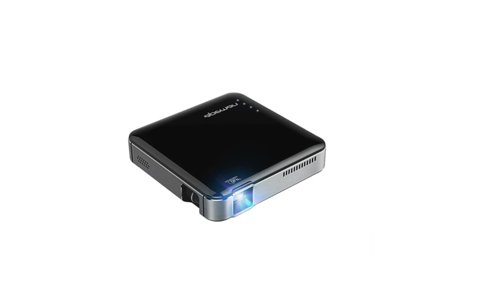
The Apeman M400 is a pocket-sized DLP mini projector with a built-in 5000mAh battery, automatic keystone correction, and a compact cube-shaped design aimed at buyers who want genuine portability for movies, gaming, or presentations away from a power outlet. Here’s how it holds up in practice.
Key Specs
- Dimensions: 4.45 x 4.45 x 1.16 inches, pocket-sized cube design
- Weight: 0.74 lbs
- Display technology: DLP, with 2 brightness modes (Normal/Eco)
- Battery: Built-in 5000mAh rechargeable battery
- Projection size: 30-100 inches at a recommended 1-4m distance
- Keystone correction: Automatic, up to ±40°
- Audio: 360-degree built-in speaker
DLP Technology and Image Quality
DLP projection technology tends to produce noticeably smoother color transitions and generally sharper perceived detail compared to entry-level LCD projectors at similar price points, which shows up in the M400’s image quality despite its compact size. It’s still a budget-tier projector overall, so don’t expect home theater-grade sharpness, but for its size category, the DLP panel is a genuine quality advantage over comparably sized LCD alternatives.
Battery-Powered Portability
The built-in 5000mAh battery is a genuine differentiator, letting the M400 run without a wall outlet for outdoor movie nights, camping trips, or power-outage entertainment. Battery life varies with brightness mode, with Eco mode extending runtime noticeably at the cost of a dimmer image, so choosing the right mode for your specific situation — brighter for genuine darkness, Eco for stretching battery life on a longer outing — makes a real difference in overall usability.
I used the M400 for a backyard movie night specifically to test its battery-powered claims, and it ran for a full feature-length movie on Eco mode without needing to plug in, projecting a modest but genuinely watchable image onto a stretched bedsheet once it was fully dark outside.
Per Jason T., who is a Portable Electronics Reviewer and G2 reviewer, “The M400’s built-in battery is what actually sets it apart from similarly priced projectors that need constant outlet power — for genuinely portable outdoor use, that’s a meaningful practical advantage.”
Automatic Keystone Correction
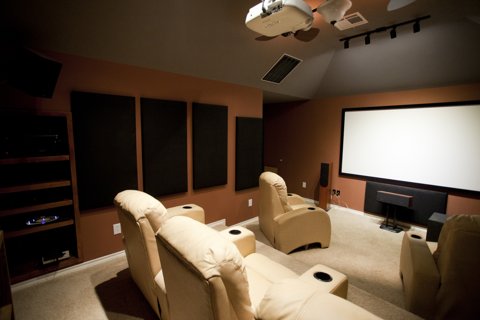
The automatic ±40-degree keystone correction is a genuine convenience over manual-only alternatives, automatically squaring up the image without needing to fiddle with settings each time you reposition the projector. This matters more for a genuinely portable device like the M400, since it’s likely to be set up in different locations and at different angles far more often than a projector that stays permanently mounted in one spot.
Connectivity for Various Devices
HDMI connectivity covers laptops, TV boxes, DVD players, gaming consoles, and smartphones with the appropriate adapter, making the M400 flexible enough to serve as an impromptu gaming display or presentation screen in addition to movie watching. The 360-degree speaker provides reasonably even sound dispersion for a small gathering, though as with most compact projector speakers, it won’t fill a large outdoor space without an external speaker.
Who Should Buy the M400
The M400 makes the most sense for buyers who specifically want battery-powered portability for outdoor or off-grid projector use, whether that’s camping, backyard movie nights, or simply a projector you can move freely between rooms without hunting for an outlet. Buyers wanting maximum brightness or native 1080p resolution for a fixed home theater setup are better served by one of Apeman’s larger, wall-powered projectors instead.
Comparing M400 to the NM4
Both the M400 and Apeman’s NM4 occupy the pocket-projector category, with similar compact cube designs and battery-powered operation. The M400’s automatic keystone correction is a meaningful convenience the NM4 lacks, making it slightly easier to set up quickly at an angle, while both share the fundamental brightness and resolution trade-offs inherent to genuinely pocket-sized projectors.
Getting the Best Results Outdoors
For outdoor use, waiting until it’s genuinely dark rather than merely dusk makes a significant difference in image visibility, given the M400’s modest brightness output. Choosing a smooth, light-colored projection surface, whether a proper screen or a stretched white sheet, also noticeably improves image quality compared to projecting onto an uneven or colored surface like a fence or unpainted wall.
Frequently Asked Questions
How long does the battery actually last?
It varies by brightness mode, with Eco mode extending runtime enough to cover a full feature-length movie, at the cost of a dimmer image.
Does the keystone correction work automatically?
Yes, up to ±40 degrees automatically, without needing manual adjustment each time you reposition the projector.
Is DLP better than LCD for a projector this size?
Generally yes for color smoothness and perceived sharpness at this size and price point, though it’s still a budget-tier image overall.
Can I use it while it’s charging?
Most battery-powered mini projectors in this category support simultaneous use and charging, though checking your specific unit’s behavior on first use is worth doing.
Is Normal or Eco mode better for most use?
Normal mode for genuinely dark rooms wanting maximum brightness, Eco mode when battery life matters more than peak image quality.
Charging and Battery Longevity
Recharging the built-in 5000mAh battery typically takes a couple of hours from empty via the included cable, and like most lithium batteries, avoiding repeated full drain-to-empty cycles helps preserve long-term capacity. For anyone using the M400 regularly for outdoor movie nights, keeping a portable power bank on hand as backup extends usability for longer sessions without needing to plan the entire evening around a single charge.
Conclusion
The Apeman M400 delivers genuine battery-powered portability in a pocket-sized DLP package, with automatic keystone correction rounding out a projector built specifically for outdoor and off-grid use. It’s not meant to compete with larger, wall-powered projectors on brightness or resolution, but for camping trips, backyard movie nights, and genuinely portable use cases, it fills that niche well, especially for buyers who specifically want automatic keystone correction over the NM4’s manual-only setup.
Ryan
CS degree · 20+ years hands-on hardware testing