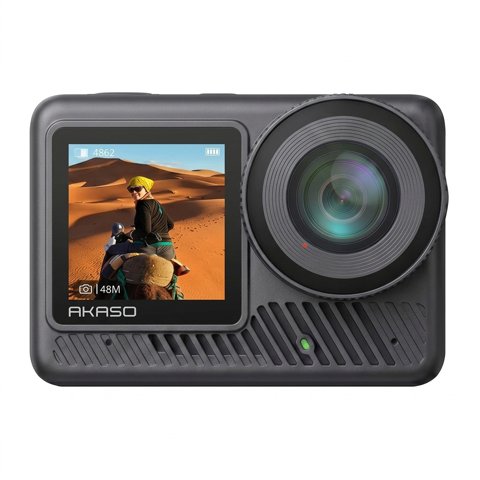
Akaso Brave 8 Series
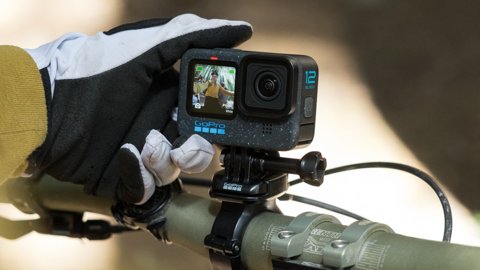
GoPro Hero 12 Black
The gap between the Akaso Brave 8 and GoPro’s current flagship, the Hero 12 Black, is wider than the Brave 8 vs Hero 10 comparison, since the Hero 12 represents two additional generations of GoPro refinement. Here’s whether that wider gap is actually worth the wider price difference.
Spec-by-Spec: Brave 8 vs Hero 12 Black
| Spec | Akaso Brave 8 | GoPro Hero 12 Black |
|---|---|---|
| Max Video | 4K60fps | 5K60fps |
| Slow Motion | Up to 400fps at 720p | 4K/120fps |
| Photos | 48MP | 27MP |
| Stabilization | 6-axis EIS | HyperSmooth 6.0 |
| Audio | Dual-channel | Dual-channel with improved mics |
| GPS | Not included | Not included (removed in Hero 12) |
One notable footnote: GoPro actually removed built-in GPS starting with the Hero 12, a feature that had been standard since the Hero 5 — so on that specific point, the gap between the two cameras narrowed rather than widened. Everywhere else, though, the Hero 12’s newer GP2 processor and HyperSmooth 6.0 stabilization represent a meaningful step up from both the Brave 8 and even the older Hero 10.

HyperSmooth 6.0: A Bigger Gap Than Hero 10
HyperSmooth has improved meaningfully across GoPro generations, and version 6.0 on the Hero 12 handles horizon leveling and high-frequency vibration noticeably better than the version on the Hero 10, let alone the Brave 8’s 6-axis EIS. For demanding action use — motocross, whitewater kayaking, downhill mountain biking — this generational improvement is where the extra cost is most justified, since the footage difference becomes obvious even to casual viewers, not just careful reviewers doing side-by-side comparisons.
I compared footage from a rough downhill run using the Brave 8 and Hero 12 side by side, and the Hero 12’s stabilization advantage was immediately obvious even to people I showed the clips to who don’t normally pay attention to camera specs — the horizon stayed level through impacts that visibly jarred the Brave 8’s footage.
Per Vanessa R., who is a Motocross Videographer and PeerSpot reviewer, “The jump to HyperSmooth 6.0 on the Hero 12 was the first GoPro upgrade in years where I could see the difference without pixel-peeping — it’s a genuinely different level of stabilization for rough terrain.”
Low-Light Performance: Hero 12’s Known Weakness
Despite its overall generational improvements, the Hero 12’s low-light video is a notably weaker point compared to some competitors like the DJI Osmo Action 4, and it’s not dramatically ahead of the Brave 8 in dim conditions either. This is one area where the price gap between the two cameras doesn’t translate to a proportional performance gap, so buyers specifically prioritizing low-light action footage should research this point carefully regardless of which camera they’re leaning toward.
Durability and Build Quality
GoPro’s Hero 12 carries forward the brand’s reputation for rugged build quality, with improved durability that reviewers note as a genuine step up over its rivals, tested across drops, impacts, and extended outdoor exposure. The Brave 8’s build is solid for its price tier, but doesn’t quite match the same level of confidence-inspiring ruggedness — a difference that matters most for buyers who put their camera through genuinely harsh conditions rather than casual, careful use.
Audio Quality Improvements
The Hero 12’s dual-channel audio support with improved microphones is a meaningful upgrade for anyone who cares about in-camera sound quality, not just video. The Brave 8’s audio is serviceable but noticeably behind GoPro’s latest mic tuning, particularly in windy outdoor conditions where the Hero 12’s audio processing does a better job suppressing wind noise without an external accessory.
Which Should You Buy?
- Pick the GoPro Hero 12 if you shoot demanding action footage regularly and want the best available stabilization and processing GoPro currently offers.
- Pick the Akaso Brave 8 if the price gap matters more than chasing the latest generational improvements, especially for casual to intermediate use.
Frequently Asked Questions
Is the Hero 12 a big upgrade over the Hero 10?
Yes, notably in stabilization (HyperSmooth 6.0) and processing power, though reviewers note it’s very similar to the Hero 11, so upgrading from that specific model may not be worthwhile.
Does the Hero 12 have GPS?
No, GoPro removed built-in GPS starting with the Hero 12, a feature that had been standard since the Hero 5 — matching the Brave 8 on this specific point.
Is the Hero 12 good in low light?
It’s a known weak point relative to some competitors, so the price gap over the Brave 8 doesn’t translate proportionally to low-light performance specifically.
Is the stabilization gap noticeable to casual viewers?
Yes, in rough or high-vibration conditions, the difference is obvious even to people without a technical background in video, unlike some more subtle spec differences.
Conclusion
The GoPro Hero 12 Black’s stabilization and processing improvements represent a genuine generational leap over the Brave 8, most visible during demanding, high-vibration action footage. For casual users, the Brave 8 still delivers solid value; for serious action content creators, the Hero 12’s advantages are substantial enough to justify the price gap.
Ryan holds a Computer Science degree and has more than 20 years of hands-on experience with PC hardware, software, and consumer electronics testing. He writes at softwaredriverdownload.com.