Gustard’s A26 and R26 sit at almost the same price point and the same tier in the company’s lineup, but they take fundamentally different approaches to digital-to-analog conversion. That makes them one of the more genuinely useful head-to-head comparisons in the current DAC market, since the choice really does come down to sound philosophy rather than one being an objectively better product.
Delta-sigma versus R2R: the core difference
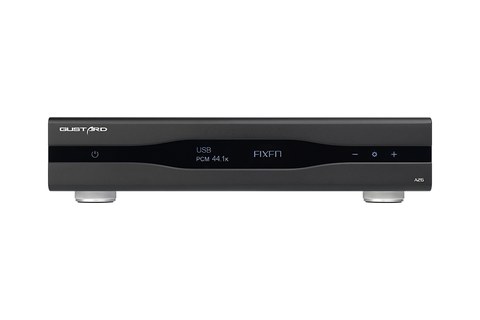
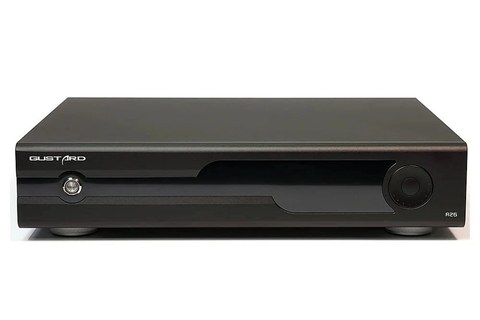
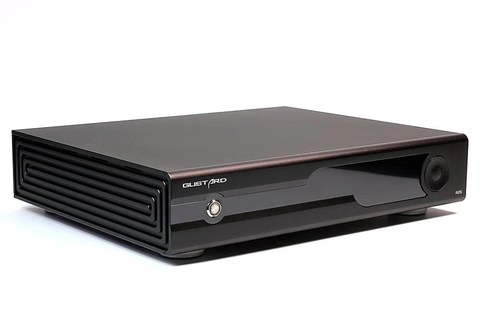
The A26 is a chip-based delta-sigma DAC, built around two Asahi Kasei AK4499EX chips, one per channel. The R26 abandons off-the-shelf DAC chips entirely in favor of a discrete resistor-ladder (R2R) network, decoding audio the same fundamental way Denafrips and other R2R specialists do. Neither approach is inherently superior on paper; they simply optimize for different things.
| Spec | Gustard A26 | Gustard R26 |
|---|---|---|
| DAC architecture | Delta-Sigma, dual AK4499EX chips | Discrete R2R resistor ladder |
| Approximate price | $1,500 | $1,650 |
| Sound signature | Sharper imaging, leaner tonal balance, reference-class resolution | Fuller, richer tone, deeper soundstage |
| Best suited for | Listeners who want maximum measured accuracy and detail | Listeners who want warmth and emotional engagement across varied recording quality |
How they actually sound different
The A26 measures close to reference-class resolution and its imaging is sharper and more precisely etched, but it leans tonally leaner — it prioritizes accuracy over richness. The R26, by contrast, gives up a bit of that outright precision in exchange for a noticeably deeper soundstage, a fuller tonal body, and a more forgiving character across recordings that weren’t mastered perfectly. Reviewers who’ve compared them directly frequently summarize it as: the A26 impresses you, the R26 makes you feel something. Neither description is exaggerated marketing — it lines up with what R2R versus delta-sigma conversion typically sounds like in practice.
Which one should you buy?
- If most of your library is well-mastered, high-resolution files and you want maximum transparency, lean toward the A26.
- If your library is mixed quality, or you listen to a lot of older or compressed recordings, the R26’s more forgiving character will likely make for more enjoyable long-term listening.
- If you already own a warm-sounding tube amplifier or headphones with a naturally rich tonal balance, the A26 can be the better complementary pairing to avoid stacking too much warmth in the chain.
- If your amp and headphones already lean bright or analytical, the R26 can balance that out nicely.
Detailed side-by-side listening notes from the community are collected in this Head-Fi comparison thread, and Headfonics published a standalone A26 review with measurements worth reading if you want the more technical side of the comparison.
A note on resale and long-term value
Both DACs currently sit close in price, but R2R DACs like the R26 have historically held resale value a bit better in the used market, partly because the category has a smaller, more dedicated following that tends to keep gear longer rather than chasing yearly chip upgrades. That’s a minor factor compared to which one you’ll actually prefer listening to daily, but worth knowing if resale value matters to your decision.
Setup and pairing considerations for each
Beyond the tonal difference, a few practical setup notes if you’re choosing between the two:
- Both DACs benefit from a clean USB source; if your computer has known USB noise issues, that will color the comparison more than the DACs’ inherent differences
- Give either unit real warm-up time (20-30 minutes minimum) before doing a serious A/B comparison, since both delta-sigma and R2R designs can sound slightly different cold versus warmed up
- If possible, audition both with your own headphones or speakers rather than relying entirely on other people’s listening impressions, since the “warmer versus leaner” distinction is genuinely subjective and system-dependent
What owners who’ve compared both actually say
Community listening comparisons, including a lengthy dedicated Head-Fi thread with contributions from owners of both units, consistently arrive at the same conclusion: neither DAC is a straightforward upgrade over the other, and the “right” choice comes down to which sonic priorities matter more to you. That kind of consensus across independent listeners, rather than a single reviewer’s opinion, is a reasonably strong signal that the difference is real and not just marketing positioning between two similarly priced products.
A note on trusting your own ears over consensus
Even with strong community agreement on the general character of each DAC, tonal preference remains genuinely personal. Someone coming from a bright, analytical system may find the R26’s warmth a revelation, while someone already running warm-sounding tube gear might reach for the A26 specifically to counterbalance that. If you have any way to demo both before buying — a local dealer, a friend’s system, or a generous return policy — take it, since this is one comparison where the “better” answer is genuinely different depending on who’s listening.
Common Setup Problems and Fixes
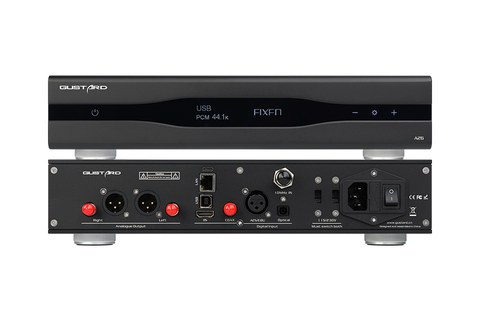
- Problem: No sound after connecting via USB. Fix: Install the manufacturer’s USB driver on Windows if required for your specific firmware revision, and confirm the DAC is selected as the default playback device in your operating system’s sound settings.
- Problem: Audio cuts out or stutters intermittently over USB. Fix: Try a different USB cable and port, ideally avoiding a USB hub; both DACs are sensitive to marginal USB signal quality, and a cheap or overly long cable is a common culprit.
- Problem: The DAC sounds different, or worse, right after unboxing. Fix: Give either unit real warm-up time, at least 20 to 30 minutes, before judging its character; both delta-sigma and R2R designs can sound noticeably different cold versus fully warmed up.
- Problem: Volume seems inconsistent between digital inputs. Fix: Check that any digital volume control or upstream software EQ isn’t applying different gain per input; both DACs output at a fixed reference level by design.
- Problem: A faint hum through connected speakers or an amp. Fix: This usually points to a ground loop between components; try a different power outlet or a ground loop isolator before assuming the DAC itself is at fault.
FAQ
Is the R26 objectively better than the A26?
No, they measure differently by design and the “better” choice depends entirely on your tonal preference and existing system.
Do both have headphone outputs?
No, both the A26 and R26 are line-level DACs without built-in headphone amplification.
Which one is easier to drive with budget amps?
Both output standard line-level signal and pair fine with most amplifiers; the choice isn’t about drivability but tonal matching.
Can I hear the difference without expensive headphones?
Yes, the tonal difference between delta-sigma and R2R conversion is usually audible even on mid-range gear, though it becomes more obvious as your system resolves more detail.
Does either support MQA?
Check current firmware specifications directly with Gustard or your retailer, as MQA support has varied across firmware revisions on Gustard’s chip-based models.
A quick buyer’s checklist
- List the five albums or genres you listen to most and think honestly about whether they’re well-recorded or more casually mastered — that alone often points toward one DAC over the other
- Consider the rest of your chain’s existing tonal balance before adding either DAC on top of it
- Factor in that both are similarly priced, so budget isn’t really the deciding variable here — sound preference is
Comparisons like this one are exactly why I keep multiple DACs in rotation instead of settling on a single “best” unit — different recordings genuinely benefit from different presentation styles.