Open clip-on headphones are a small, slightly old-fashioned category that most of the audio world moved away from once over-ear and in-ear formats took over, but Aune has kept building on it, and the AC55 is the current high point of that effort. It sits above the AC45 in Aune’s lineup, built around a reinforced version of the same driver philosophy but pushed further in nearly every measurable direction.
| Quick Facts | Aune AC55 |
|---|---|
| Type | Open clip-on, ear-hook headphone |
| Driver | 40mm open dynamic, bio-fiber composite diaphragm |
| Frequency response | 15Hz to 40,000Hz |
| Impedance / sensitivity | 32 ohms / 112dB |
| Cable | Detachable 0.78mm, swappable 3.5mm/4.4mm plugs |
| Positioned above | Aune AC45 |
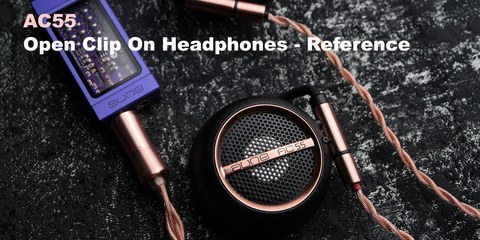
What Makes the AC55 Different
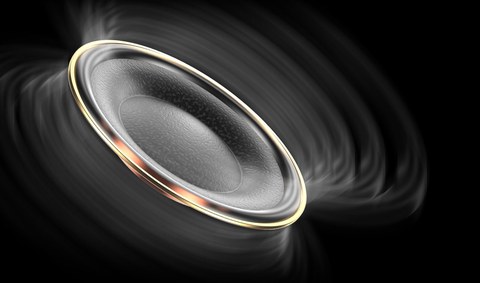
The AC55 uses a 40mm open dynamic driver built around a reinforced W-shaped bio-fiber composite diaphragm, paired with what Aune describes as a “high-dynamic symmetric driver system.” That is a meaningful upgrade in language over a simple diaphragm refresh; the surround itself is more elastic and designed for longer excursion, which in plain terms means the driver can move further and more precisely before distortion creeps in, particularly during demanding, dynamic passages.
Key specifications:
- Driver: 40mm open dynamic, reinforced W-shaped bio-fiber composite diaphragm
- Frequency response: 15Hz to 40,000Hz
- Impedance: 32 ohms
- Sensitivity: 112dB
- THD: less than 0.3%
- Cable: detachable 0.78mm CIEM-style connector with swappable 3.5mm and 4.4mm balanced terminations
Comfort and Wearability
The clip-on, ear-hook format is a genuinely different wearing experience from a standard over-ear or in-ear headphone, and it deserves an honest assessment rather than treating it as a lesser version of either. There is no headband clamping pressure and no in-canal insertion depth to fuss with; the hook rests over and around the ear, distributing the headphone’s light weight along the ear itself rather than the top of the head.
For long desk sessions, that can be genuinely more comfortable than a heavier over-ear headphone, especially for anyone who wears glasses and finds headband clamp force uncomfortable against the temples. The tradeoff is that the fit takes a short adjustment period to get the hook angle right for your particular ear shape, and it is not a format built for movement; running or high-activity use will shift the fit in ways a properly fitted IEM or over-ear headphone would not.
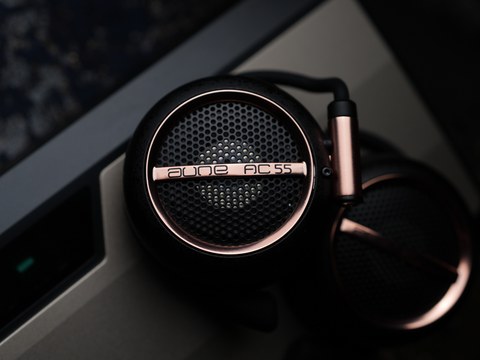
Cable and Termination Flexibility
Like its sibling, the AC55 uses a detachable 0.78mm CIEM-style cable rather than a fixed, non-removable cord, which is one of the more owner-friendly design choices at this level. Swappable 3.5mm and 4.4mm balanced termination options mean the same headphone can move between a phone, a portable dongle DAC, and a full balanced desktop amplifier without needing a bulky adapter in the chain. It also means the wider aftermarket 0.78mm cable market, built primarily for in-ear monitors, is compatible here too, opening the door to tuning and ergonomic tweaks beyond what ships in the box.
Sound Signature
The open-back design gives the AC55 a genuinely spacious, airy presentation, helped along by the extended 40,000Hz upper frequency response figure. Where the reinforced diaphragm and upgraded driver system show up most clearly is in dynamic control: fast, percussive, or densely layered passages stay composed rather than smearing together, and bass, while never the star of an open clip-on design, is tighter and better controlled than a simpler driver typically manages in this format.
Because the AC55 runs a 32-ohm impedance rather than a lower figure, it benefits noticeably from a proper source with real current on tap. Straight out of a phone, it will play at a reasonable volume, but a dedicated dongle DAC or a small desktop amp brings out a meaningfully blacker background and more assured dynamics, which is worth factoring into the total cost of getting the most from this headphone.
Value for Money
As the higher-tier model in Aune’s clip-on lineup, the AC55 is priced above the AC45, and that gap is justified by real driver hardware differences rather than a cosmetic refresh. For someone who already has a capable source and wants the most refined version of this specific open, ear-hook format Aune builds, the AC55 earns its higher price tag. For someone starting from scratch with just a phone, the lower-impedance AC45 may actually be the more sensible entry point, with the AC55 as a later upgrade once a proper source is in the picture.
Pairing Suggestions
Since the AC55’s 32-ohm driver rewards a source with real current on tap, it is worth thinking about pairing rather than just plugging it into whatever is nearby. A modest desktop DAC/amp, or one of the more capable USB-C dongle DACs on the market, will typically bring out noticeably tighter bass and a blacker background than a bare phone jack. It does not need a flagship amplifier to sound good, but it does reward stepping up from the absolute minimum, which is a fair tradeoff for the extra control and refinement the driver offers over the entry-level AC45.
Because the cable uses swappable 3.5mm and 4.4mm terminations, it is easy to move the AC55 between a single-ended phone setup for casual listening and a balanced desktop rig for more serious sessions without needing two separate headphones. That flexibility is arguably as valuable as the driver upgrade itself for anyone whose listening setup changes throughout the day.
Common Setup Problems and Fixes
- Problem: The hooks don’t sit comfortably behind the ears. Fix: Spend a few minutes adjusting the hook angle to your specific ear shape rather than expecting a perfect fit immediately; the ear-hook format needs a short adjustment period most reviews don’t mention.
- Problem: Sound is too quiet straight out of a phone. Fix: The AC55’s 32-ohm impedance benefits from more current than most phones can supply; add a dongle DAC or small desktop amp rather than assuming something is wrong with the headphone.
- Problem: One side is quieter or channel balance seems off. Fix: Reseat the detachable 0.78mm cable firmly on both sides; a loose connector pin is the most common cause of a perceived channel imbalance on cable-swappable headphones.
- Problem: The headphone shifts position during light movement at a desk. Fix: Re-check hook placement over the ear rather than resting it loosely on top; a properly seated hook should stay put through normal desk-bound movement, though it isn’t designed for exercise or running.
- Problem: Bass sounds thin compared to a sealed headphone. Fix: This is expected of any open-back design, AC55 included; the open-back tradeoff favors soundstage and airiness over bass impact, so an EQ boost in the low end can help if you want more weight without switching formats.
FAQ
Does the AC55 need a dedicated amplifier?
Not strictly, but its 32-ohm impedance benefits from more current than a typical phone output can supply, so a dongle DAC or small desktop amp is recommended to hear it at its best.
Is the AC55 comfortable for long sessions?
Yes, the light clip-on design avoids headband clamping pressure entirely, though the ear-hook fit needs a short adjustment period and is not intended for high-movement activities.
Can the cable be swapped for a different termination?
Yes, it uses a detachable 0.78mm CIEM-style connector with swappable 3.5mm and 4.4mm balanced options, and third-party 0.78mm cables are also compatible.
Does it isolate outside noise?
No, it is fully open-back by design, so it is best suited to quiet rooms rather than noisy or shared spaces.
Is the AC55 a big step up from the AC45?
The reinforced diaphragm and upgraded driver system give it tighter control and more refined dynamics, particularly when paired with a proper source, though the improvement is most audible with amplification that can actually take advantage of the higher-impedance driver.
Between years spent reviewing clip-on and open-back headphones for this site and simply wearing the AC55 through long writing sessions at my own desk, its comfort-to-sound-quality ratio stood out enough to warrant its own dedicated writeup beyond the comparison piece.