The Cayin Soul 170C is a fully-balanced tube preamplifier built as the flagship centerpiece of Cayin’s Soul series, designed specifically to partner with the Soul 170P power amplifier. I have spent time researching and cross-referencing this unit against multiple published reviews, and this post focuses on the 170C itself — what is actually inside it, and why its feedback control is worth understanding before you buy.
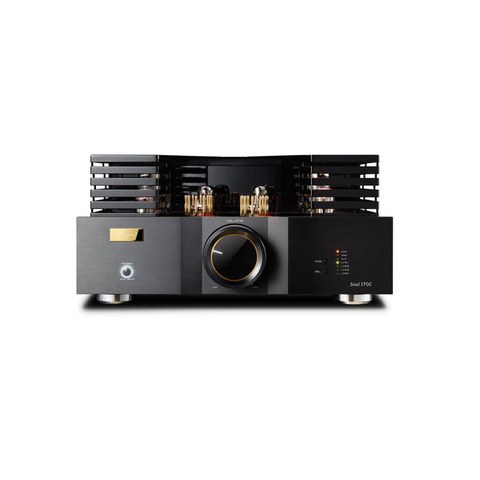
- Model: Cayin Soul 170C fully-balanced tube preamplifier
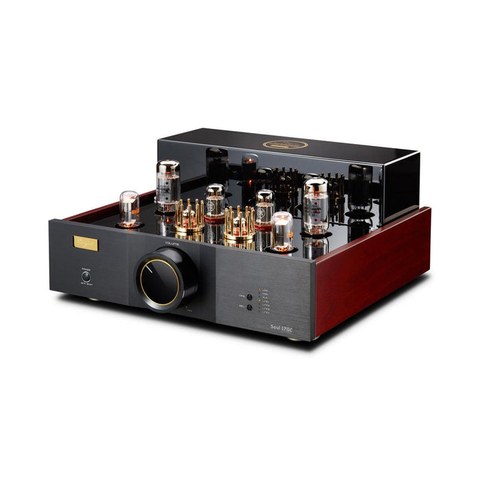
- Tube complement: Eight tubes total (ECC83, 6SN7GTB, 6CA7, 17AX4GT), point-to-point wired
- Weight: 20kg
- Price tier: Flagship, priced at €4,500
- Compatibility: Designed to pair with the Cayin Soul 170P power amp, but works with any balanced or RCA-compatible power amplifier
| Spec | Value |
|---|---|
| Model | Cayin Soul 170C fully-balanced tube preamplifier |
| Tube complement | 8 tubes total: ECC83, 6SN7GTB, 6CA7, 17AX4GT |
| Frequency response | 8Hz–35kHz (XLR), up to 100kHz (RCA) |
| Signal-to-noise ratio | 100dB, A-weighted |
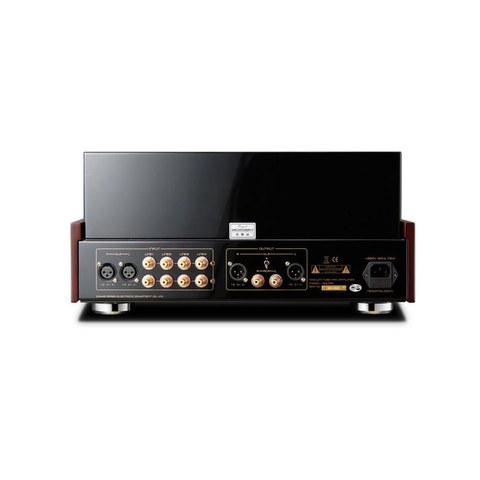
| Inputs | 1 balanced XLR, 4 RCA |
| Outputs | Balanced XLR only |
| Weight | 20kg |
| Price tier | Flagship, €4,500 |
Eight Tubes, Four Distinct Jobs
The Soul 170C uses eight vacuum tubes total, four per channel, and each type is assigned a specific role rather than being interchangeable:
- ECC83: handles line-stage amplification.
- 6SN7GTB: also contributes to line-stage amplification, working alongside the ECC83.
- 6CA7: dedicated to voltage regulation.
- 17AX4GT: serves as the rectifier tube, converting AC to the DC voltages the rest of the circuit needs.
That is a genuinely elaborate tube complement for a preamplifier, and it reflects Cayin’s decision to build the 170C with point-to-point hand wiring rather than a printed circuit board shortcut. Darko.Audio’s coverage of the Soul series launch goes into more detail on how this construction approach differs from Cayin’s earlier, more budget-friendly designs.
Specifications That Matter
On paper, the 170C’s numbers hold up well against other flagship tube preamps:
- Frequency response: 8Hz–35kHz via the balanced XLR inputs, extending up to 100kHz through the RCA inputs.
- Signal-to-noise ratio: 100dB, A-weighted.
- Weight: 20kg — heavy enough that you will want a sturdy, well-supported shelf rather than a flimsy media console.
- Inputs: one balanced XLR input plus four RCA inputs.
- Outputs: balanced XLR outputs only, which reinforces that this is designed as a fully-balanced signal path component rather than a mixed-format compromise.
The Switchable Negative Feedback Circuit
This is the feature that actually changes how the 170C sounds in your system, and it is worth understanding rather than just leaving on the default setting. The 170C offers two selectable Negative Feedback (NFB) modes:
- Low NFB: described by reviewers as more open and organic, with a warmer, more expansive soundstage. This mode reduces the amount of corrective feedback applied to the amplification stage, letting more of the tubes’ natural character through.
- High NFB: tightens up the response for a more precise, controlled presentation with better dynamic grip. This mode applies more feedback, which generally reduces distortion and tightens bass control at the cost of some of that open, tube-forward character.
Neither mode is objectively “correct” — which one suits you will depend heavily on the power amp and speakers downstream, and on your own tonal preference. Having this as a physical switch rather than forcing you to choose once at the factory is a genuinely practical inclusion, not a marketing gimmick. In practice, most owners settle on one mode as their default after a few weeks of listening across different recordings, then flip to the other occasionally for material that seems to call for it.
Pairing with the Soul 170P
Cayin designed the 170C explicitly as the partner piece to the Soul 170P power amplifier, sharing the same Soul series design language, point-to-point construction philosophy, and finished panel materials. You are not required to run them together — the 170C’s balanced XLR outputs and RCA inputs will work with other power amps in a system — but the two were clearly voiced with each other in mind, and most dealer demonstrations pair them as a set.
Design and Build Details
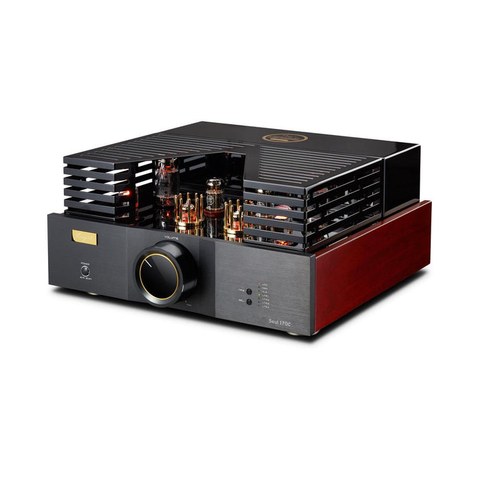
Visually, the Soul 170C carries the same design language as the rest of the Soul series: a sharp-edged anodized aluminum front panel paired with hand-finished wood side panels, a large volume knob flanked by an illuminated logo badge, and a row of status LEDs indicating input and mode selection. The 20kg weight is not just a specification to skim past — at that mass, the chassis itself contributes to mechanical stability and vibration resistance, which is part of why flagship tube gear tends to be built this heavy rather than lighter and cheaper to ship.
Pricing and Positioning
The Soul 170C is priced at €4,500, placing it firmly in flagship territory rather than the more accessible tier Cayin is also known for with its dongle DACs and portable players. At this price, the point-to-point wiring, the eight-tube complement, and the switchable feedback circuit are reasonable justifications rather than pure prestige pricing, according to reviews from Stereoindex and Noteworthy Audio.
Frequently Asked Questions
What is the difference between Low NFB and High NFB on the Soul 170C?
Low NFB produces a more open, organic sound with a warmer soundstage by reducing corrective feedback. High NFB tightens the response for more precise, dynamic control by applying more feedback. Neither is universally better; it depends on your downstream gear and personal preference.
Does the Soul 170C need to be paired with the Soul 170P?
No, it will work with other balanced or RCA-compatible power amplifiers, but Cayin designed the two as a matched pair, and they share design language and construction philosophy.
How many tubes does the Soul 170C use?
Eight total, four per channel: ECC83 and 6SN7GTB for line-stage amplification, 6CA7 for voltage regulation, and a 17AX4GT rectifier.
Is the Soul 170C hand-wired?
Yes, Cayin uses point-to-point hand wiring rather than a printed circuit board for this model, which is typical of flagship tube gear at this price point.
What is the signal-to-noise ratio of the Soul 170C?
100dB, A-weighted, which is a strong figure for a fully tube-based preamplifier where noise floor is often a bigger challenge than in solid-state designs.
How many inputs does the Soul 170C have?
One balanced XLR input and four RCA inputs, feeding into balanced XLR outputs only.
Setup and Troubleshooting Notes
A component this elaborate has a few setup quirks worth knowing before you assume a tube or a connection is faulty.
- No sound or one channel silent after a tube swap: reseat every tube fully in its socket, since a partially seated tube is a far more common cause of silence than an actual failed tube, especially right after moving or shipping the unit.
- Faint hum through the speakers: confirm you are using the balanced XLR connections rather than the RCA inputs where possible, since the 170C’s fully-balanced signal path is quieter and more resistant to ground-loop hum than an unbalanced RCA run.
- Sound seems thin or harsh right after warm-up: give the tubes 20-30 minutes to fully warm up before critical listening, since tube gear generally needs more settling time than solid-state components.
- Unsure which NFB setting is correct: there is no universally correct answer, so start on Low NFB for a few listening sessions, then switch to High NFB and compare on the same tracks before settling on a default.
- Rectifier tube runs noticeably hotter than the others: this is expected behavior for the 17AX4GT rectifier tube given its role converting AC to DC, not a sign of a fault, though the unit should still have adequate ventilation clearance on all sides.
If a tube genuinely fails rather than just needing reseating, the manual fallback is straightforward: all eight tubes are user-replaceable rather than soldered in, so a specific failed tube can be swapped individually without needing to send the whole preamplifier in for service.
Final Thoughts
The Soul 170C is a serious, deliberately engineered preamplifier rather than a rebadged mid-tier design scaled up. The switchable NFB circuit alone makes it worth auditioning both ways if you get the chance, since it genuinely changes the character of the sound rather than being a token feature. For further reading on how it performs in a full system, The Audio Tailor’s review covers extended listening impressions.
Ryan, a lifelong PC and audio hardware enthusiast with a computer science background, researched and wrote this piece.