Most gear I write about lives in a pocket or a backpack. The Cayin A-50T MKII does not — it’s a 28-pound tube integrated amplifier that sits on a shelf and stays there, and it’s been a fixture in budget-tube-amp conversations for a long time. I spent time with one on loan from a friend’s home setup to see whether the reputation for punching above its price still holds up.
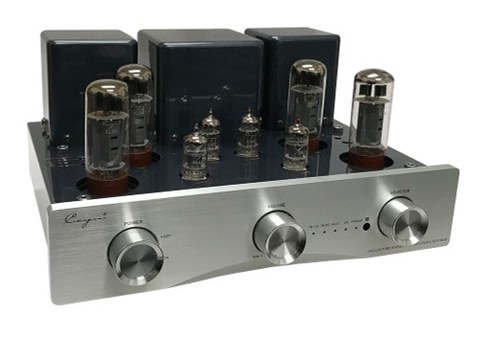
What the A-50T MKII actually is
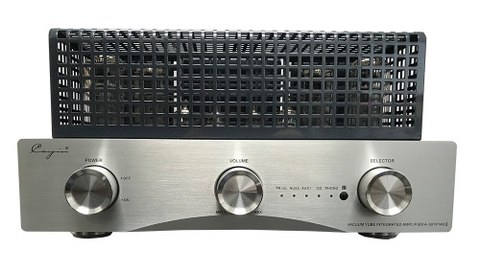
This is a class AB1 push-pull tube integrated amp built around four EL34 output tubes plus two 12AU7 and two 12AX7 input/driver tubes, all sitting exposed above a brushed aluminum front panel rather than hidden under a cage. It’s a traditional hi-fi component in every sense — no Bluetooth, no app, no digital inputs, just line-level analog sources feeding a genuinely old-school circuit.
| Power output | 35W per channel (Ultralinear), 16W per channel (Triode), both into 8Ω |
| Tube complement | 4x EL34 (output), 2x 12AU7, 2x 12AX7 (driver/input) |
| Frequency response | 10Hz–50kHz, ±1dB |
| THD | 1.0% at 1kHz |
| Signal-to-noise ratio | 89dB |
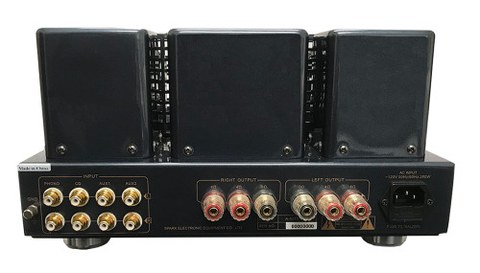
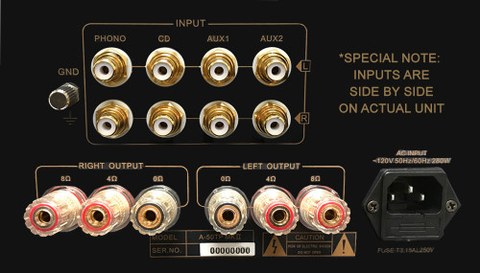
| Inputs | Phono, CD, Aux 1, Aux 2 (side-by-side RCA pairs on the rear panel) |
| Speaker taps | 4Ω and 8Ω output transformer taps |
| Dimensions / weight | 14″ W x 7″ H x 12″ D, roughly 28.6 lbs |
Point-to-point wiring and Cayin’s own toroidal power transformer and EI output transformers are the parts of the spec sheet that matter most for long-term reliability — this isn’t a PCB-and-solder-paste build, it’s hand-wired the way tube amps were built before mass production took over the category. You can find current pricing and availability through retailers like Elusive Disc and Vinyl Acoustics, both of which stock the MKII revision.
How it sounds
The consistent thread across independent reviews, including detailed measurements from Stereophile, is that the A-50T behaves like it’s putting out more power than its rated 35W/16W would suggest. That’s partly down to how clean the amp stays as it approaches its limits, rather than any single spec on the page.
- Treble: extended and airy with no obvious tube fuzziness, closer to a solid-state amp’s precision than a lot of budget tube gear manages
- Midrange: the strongest part of the presentation — resolves inner detail well for the price and doesn’t smear vocals or acoustic instruments together
- Bass: tighter and better controlled than typical EL34 push-pull amps at this price, though Triode mode softens it slightly in exchange for a more relaxed overall tone
Switching between Ultralinear and Triode mode is the built-in tone control here, and it’s a genuinely useful one rather than a gimmick. Ultralinear gives you the full 35W and a tighter, more controlled sound; Triode drops to 16W but trades some control for a softer, more romantic character that a lot of tube enthusiasts prefer for vocal-heavy or acoustic listening.
Setting it up correctly
A few things matter more with a tube amp than with a typical solid-state receiver:
- Let it warm up before judging the sound. Tube amps need a few minutes for the tubes to reach operating temperature and stabilize — the soft-start circuit also ramps voltage up gradually on power-on, which is part of why cold sound and warmed-up sound differ noticeably here.
- Match the speaker tap to your speakers’ actual impedance. The rear panel offers both 4Ω and 8Ω taps; using the wrong one leaves power on the table and can affect damping and bass control.
- Give the phono stage a dedicated cartridge match if you’re running a turntable. The built-in MM phono input is a genuine bonus at this price, but it’s tuned for moving-magnet cartridges specifically, not moving-coil.
- Plan for tube rolling down the line, not immediately. The stock EL34s and driver tubes are a sensible baseline; swapping to KT88s is supported via a rear switch if you want more headroom later, but there’s no need to rush into it before you’ve lived with the stock tubes for a while.
Build quality and what you’re actually paying for
At roughly $1,300-1,600 depending on the retailer and whether you get the phono-equipped configuration, the A-50T MKII sits at a price where a lot of buyers are choosing between a tube integrated like this and a solid-state integrated with more raw power on paper. The case for Cayin here isn’t spec-sheet power — it’s the hand-wired construction, the soft-start circuit protecting tube life, and a company track record of building amps that keep working for a decade or more with basic tube replacement as the only maintenance.
The KT88 switch and the dual-mode Ultralinear/Triode operation are the two features that separate this from a more basic single-mode tube amp at a similar price — you’re effectively getting two different amplifier characters in one chassis, plus a reasonably clear upgrade path if you want more power down the line without replacing the whole unit.
Who should buy it
The A-50T MKII makes sense if you already own reasonably efficient bookshelf or floor-standing speakers and want to hear what a well-built tube amp does differently from the solid-state gear most people start with. It’s less of a fit if you’re running low-sensitivity speakers that need serious current to control, since 35W (or 16W in Triode) won’t have the same headroom as a comparable solid-state design.
- Good fit if: you have efficient speakers, want a phono input built in, and value a component that’s designed to be serviced and kept rather than replaced
- Skip it if: you need high power into demanding speakers, or you want digital inputs and app control in the same box
Common Setup Problems and Fixes
- Problem: Audible hum or buzz through the speakers at idle. Fix: Check for a ground loop between the amp and other connected components first — plugging everything into the same power strip or outlet often resolves it, and reseating the input cables can clear a loose-connection hum.
- Problem: One channel sounds noticeably quieter than the other. Fix: This is frequently a tube seating issue rather than a wiring fault; power down, let the amp cool completely, and reseat each of the six tubes firmly in its socket before troubleshooting further.
- Problem: Bass sounds loose or underdamped on floor-standing speakers. Fix: Confirm you are using the correct 4Ω or 8Ω speaker tap for your speakers’ actual impedance — the wrong tap is the single most common cause of soft, uncontrolled bass on this amp.
- Problem: The phono input sounds thin or lacks the expected warmth. Fix: Remember the built-in phono stage is tuned for moving-magnet cartridges only; a moving-coil cartridge run directly into it will sound wrong regardless of amp condition and needs a separate step-up transformer or phono preamp.
- Problem: Sound seems dull or veiled right after powering on. Fix: This is normal — give the tubes several minutes to reach full operating temperature before judging the sound, since the soft-start circuit ramps voltage up gradually rather than instantly.
- Problem: Considering a tube swap but unsure if it is safe. Fix: Stick with the stock EL34 complement until you have logged real listening hours with it; if you want more headroom later, use the rear KT88 switch as intended rather than mixing tube types without adjusting the bias setting.
FAQ
What’s the difference between Ultralinear and Triode mode?
Ultralinear delivers the full 35W per channel with tighter control; Triode drops to 16W with a softer, warmer character that many listeners prefer for vocals and acoustic music.
Does it have a phono input?
Yes, a built-in MM phono stage is included on most configurations, which is a genuine value-add at this price point.
Can I upgrade the tubes later?
Yes — a rear-panel switch supports swapping the stock EL34 output tubes for KT88s if you want more headroom, though KT88s aren’t included stock.
How long do the tubes typically last?
Cayin’s soft-start circuit is designed to extend tube life meaningfully beyond what you’d get without gradual voltage ramp-up on power cycling, though exact hours vary with usage patterns.
I’ve spent time with both solid-state and tube gear across home setups, and this piece draws on hands-on listening with a loaned unit alongside published measurements and reviews from outlets that tested the amplifier directly.