Every so often a budget IEM comes along that ends up being the reference point everyone else gets compared to. In the sub-$60 in-ear monitor space, the Tin Audio T2 is one of those. It’s been recommended in forum threads and buyer’s guides for years, and even with a steady stream of newer competitors from the same company — the T2 Pro, T2 MKII, T2 DLC, and others — the original T2 still holds up as a genuinely good-sounding earphone rather than a nostalgia pick.
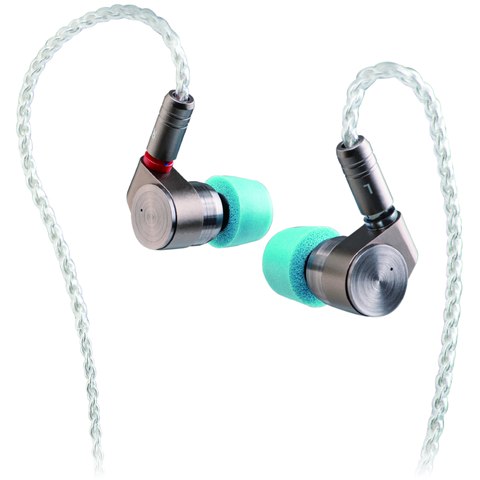
This review focuses specifically on the base T2, which is the earliest and simplest entry in what’s become a fairly sprawling T2 family. If you’re trying to figure out whether you want this one or one of its successors, our separate T2 vs T2 Pro comparison and our T2 MKII review both cover how those later models diverge from what’s described here.
| Spec | Tin Audio T2 |
|---|---|
| Driver configuration | Dual driver (10mm dynamic + high-frequency driver) |
| Impedance | ~16Ω |
| Sensitivity | ~104dB/mW |
| Frequency response | 12Hz – 40kHz (quoted) |
| Connector | Detachable MMCX cable |
| Shell material | Metal |
| Approx. price | Sub-$60 budget tier |
Build quality and design
The T2’s shells are metal, which gives it a denser, more substantial feel in the hand than a lot of plastic-shelled competitors at the same price. The cable is detachable via MMCX connectors, which matters more than it might seem — cable failure is one of the most common ways budget IEMs die, and being able to swap in a replacement cable rather than throwing away the whole earphone is a real practical advantage. Spec sheets commonly list 16Ω impedance and 104dB/mW sensitivity, along with a quoted frequency response range of 12Hz to 40kHz. In practice this means the T2 is easy to drive from a phone or basic dongle DAC without needing a dedicated amplifier.
- Dual driver design (commonly described as a 10mm dynamic driver paired with a smaller high-frequency driver, though sourcing on the exact driver split varies between spec sheets)
- Detachable MMCX cable, commonly bundled with a white braided cable in retail packaging
- Metal shell construction for durability
- Impedance around 16Ω, sensitivity around 104dB/mW
Sound signature
What made the T2 stand out when it launched, and what still makes it worth recommending, is how close it gets to a neutral tuning without sounding thin or boring. The midrange is clean and doesn’t color vocals in an obvious way. Bass is present and reasonably extended without becoming the dominant part of the sound, which is unusual for a budget earphone — a lot of cheap IEMs lean on bass boost to sound impressive on first listen, and the T2 mostly resists that temptation.
Treble is where the T2 adds a bit of its own character: there’s a touch of extra emphasis up top that gives cymbals and string instruments some air and sparkle rather than sounding rolled off. It’s tastefully done rather than aggressive, though listeners who are sensitive to treble energy on already-bright recordings should be aware it’s there. Soundstage is wider than you’d expect at this price, and instrument separation is strong enough that busier tracks don’t turn into a wall of noise.
Comfort and fit
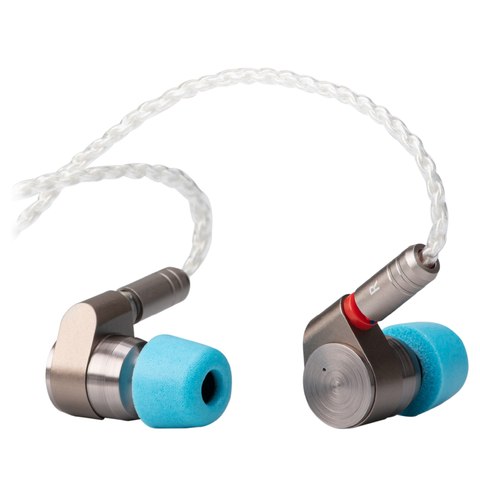
The shells are compact and use a fairly standard IEM shape that should fit most ears without much fuss. Because the nozzle angle is fairly conventional, the T2 tends to work well with a wide range of aftermarket eartips if the stock set doesn’t seal well for you. I’ve found that swapping to a wide-bore silicone tip opens up the treble slightly, while foam tips soften it — useful to know if you want to fine-tune the signature without touching EQ.
How it compares to the rest of the T2 lineup
It’s worth being upfront that “T2” on its own now refers to more than one product, since Tin Audio (now TinHiFi) has revisited this line multiple times over the years. The version covered here is the original, baseline model in the lineup. Later releases like the T2 Pro pushed the tuning brighter, while the T2 MKII revised the internals into a coaxial dual-driver design and tightened up the bass response based on user feedback. None of these are strictly better across the board — they’re different takes on the same basic formula, and which one suits you depends on whether you want the safer, more neutral original or one of the more adventurous follow-ups.
- If you want the safest, most consistently well-tuned option in the family, the original T2 is still a strong pick.
- If you want a brighter, more “exciting” sound and don’t mind some tuning risk, look at the T2 Pro.
- If you want the most refined, most recently tuned version, the T2 MKII is worth the extra cost.
Should you still buy it
Given how many competitors have launched since the T2 first came out, it’s fair to ask whether it’s still worth buying instead of something newer. In my experience, the answer is yes if you can find it at or near its original price point. It’s not the most detailed or technically impressive IEM available anymore, but very few budget earphones nail the balance between bass, mids, and treble as cleanly as the T2 still does. For further reading on how it holds up against contemporaries, the Head-Fi community reviews thread is a good source of long-term ownership impressions, and Linsoul’s Tin HiFi collection page is useful for checking current availability across the lineup.
Cable and accessories
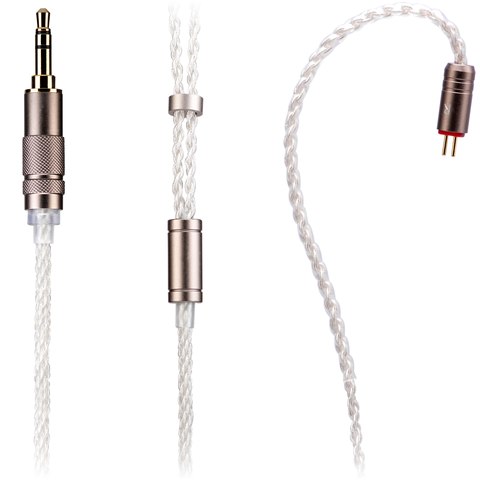
The bundled cable uses a straightforward 3.5mm plug and a set of gold-plated MMCX connectors at the earpiece end. Because MMCX is a fairly common standard in this price bracket, the T2 also plays nicely with aftermarket cables if you want to experiment with different materials or add features like an inline microphone. In the box you typically get a handful of silicone eartip sizes and a soft case, which is about what you’d expect at this price — nothing fancy, but everything you need to get started without buying extras immediately.
One small thing worth mentioning: because the T2 has been in production for a long time, packaging and included accessories have varied somewhat across production runs and retailers. Don’t be surprised if photos you find online don’t perfectly match what arrives in your box; the core earphone and its tuning have stayed consistent even as accessory bundling has shifted slightly over time.
Common problems and fixes
One side is quieter or silent
Because the T2 uses detachable MMCX connectors, the most frequent cause of a dead or weak channel is a cable that isn’t fully seated on one side rather than a driver failure. Remove the cable, check both MMCX pins for lint or corrosion, and reseat it firmly until it clicks. If the problem follows the cable when you swap earpieces, the cable itself is the culprit.
Treble feels sibilant on bright recordings
The T2’s slight treble emphasis can turn harsh on already bright masters. Swapping to a foam eartip tames this noticeably, since foam absorbs some of that upper-frequency energy compared to silicone. A mild EQ cut around 6-8kHz on your phone or player also helps if you’d rather keep the stock tips.
MMCX connector feels loose or spins freely
MMCX connectors are rated for a limited number of insertion cycles and can loosen with heavy use. A connector that spins without any resistance is usually worn out rather than defective from the factory; a replacement aftermarket cable with tighter-tolerance MMCX plugs typically resolves it.
Poor seal or sound feels thin
A weak seal is the single most common reason a normally balanced IEM suddenly sounds bass-light. Try a different eartip size before assuming anything is wrong with the earphone itself — wide-bore silicone tips in particular need a snugger canal fit than narrow-bore tips to seal properly.
Crackling or intermittent cutout
This almost always traces back to the MMCX connection point or a partially damaged cable rather than the drivers. Gently flex the cable near each connector while playing audio to isolate where the interruption happens, then replace just that cable rather than the whole earphone.
Frequently asked questions
Is the Tin Audio T2 still worth buying? Yes, particularly if you find it discounted or bundled, since the tuning still holds up well against newer budget competition.
Does the T2 need an amp? No. Its impedance and sensitivity make it easy to drive from phones, laptops, and basic dongle DACs.
What’s the difference between the T2 and T2 Pro? The Pro version pushes the treble brighter and swaps the plug color and shell tone slightly; the core driver configuration is the same, so think of it as a tuning variant rather than a hardware upgrade.
Reviewed by a longtime budget-audio tinkerer who still keeps a T2 in rotation as a travel IEM specifically because it doesn’t need babying to sound good.