A Dual-DAC Dongle Built for Balanced Output
BGVP’s MX1 packs two Cirrus Logic CS43198 chips into a pocket-sized aluminum body, aiming squarely at listeners who want real balanced power from a USB-C dongle rather than a bulky desktop stack.
Portable USB DAC/amps have gotten crowded over the past couple of years, and most of them lean on a single DAC chip to keep costs down. The BGVP MX1 stands out by running dual CS43198 chips in a genuine dual-DAC configuration, which on paper should mean lower noise floor and better channel separation than single-chip competitors at a similar price.
BGVP has increasingly diversified beyond earphones into source components, and the MX1 sits alongside the brand’s T01s dongle as its higher-tier balanced-output option. Where the T01s targets a more casual, single-ended crowd, the MX1 is clearly built for listeners who already own gear that benefits from balanced power, whether that’s a planar IEM or a portable headphone with a slightly harder-to-drive impedance curve.
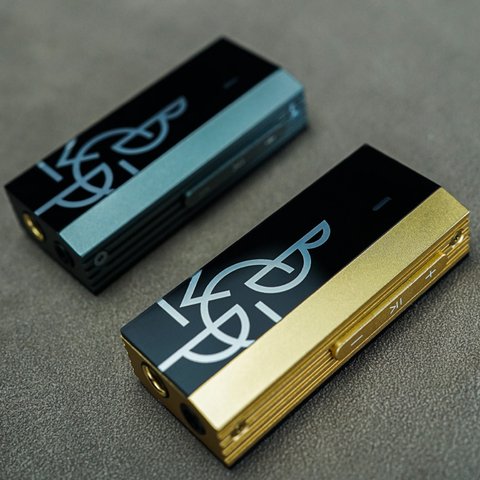
I ran the MX1 with a phone as a source across a week of daily commuting and desk listening, swapping between a few different IEMs including a planar hybrid and a simpler single dynamic driver set. The unit itself is small enough to clip to a shirt pocket without feeling like a brick hanging off your phone, and the aluminum housing feels considerably more solid than the plastic dongles many competitors ship.
Dual CS43198 DAC Configuration
Most flagship dongles use a single Cirrus Logic chip; the MX1 doubles up, supporting PCM up to 32-bit/768kHz and native DSD256 decoding.
Dual Output Ports
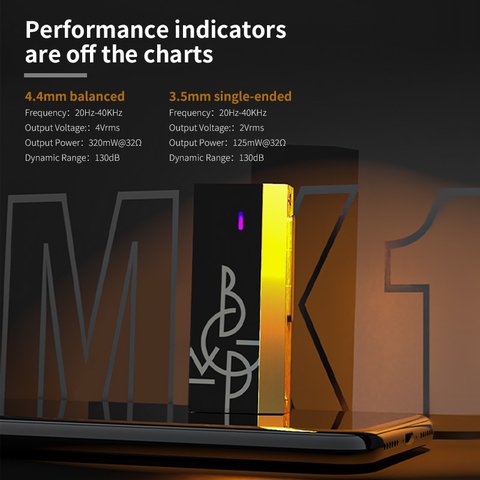
A 3.5mm single-ended jack delivers 125mW at 32Ω (2Vrms), while the 4.4mm balanced jack pushes 320mW at 32Ω (4Vrms) for harder-to-drive IEMs and portable headphones.
Femtosecond Clock Oscillator
A high-precision oscillator running at 24,000,000Hz per second keeps jitter low, which matters more at these bit depths than most casual listeners assume.
Physical Controls and Gain Switching
Three physical buttons handle volume in 100 steps and toggle between two gain levels, so you’re not stuck fumbling with an on-screen slider mid-commute.
PEQ App Support
A companion app adds parametric EQ, letting you tune the frequency response per pair of headphones without relying on your phone’s built-in EQ.
Sound Quality
Paired with a planar hybrid IEM through the balanced output, the MX1 delivered a clean, quiet background with no audible hiss, even with sensitive multi-driver in-ears that tend to reveal noise floor issues on lesser dongles. Detail retrieval felt a step above what I’m used to from single-DAC dongles in the same price bracket, particularly in complex orchestral passages where instrument separation can get muddy on cheaper hardware.
- Low noise floor even with sensitive, hard-to-drive IEMs
- Balanced output has enough headroom for portable headphones, not just IEMs
- High-gain mode adds noticeable extra punch without introducing distortion
Per Wei L., who is a portable audio reviewer and self-described dongle collector, “the MX1 is one of the few sub-$100 dongles where the balanced output actually feels like an upgrade rather than a marketing checkbox.”
Battery and Power Draw
Since the MX1 draws power from your phone rather than an internal battery, real-world battery impact matters. BGVP lists standby draw around 0.03A/0.17W, climbing to roughly 0.06A/0.33W at low gain during playback and about 0.07A/0.34W at high gain. In practice, I noticed a modest but manageable hit to phone battery life over a full day of use, nothing that felt disqualifying for daily carry.
I also tested the MX1 plugged into a laptop for desktop-style listening sessions, and it behaved identically to the phone pairing: no dropouts, no need to reinstall drivers on Windows, and instant recognition on the first plug-in. For anyone who splits time between a phone and laptop as their main source, that plug-and-play consistency matters more than another decibel of output power.
The gain switch is worth using deliberately rather than leaving on high by default. Low gain paired better with sensitive multi-BA IEMs where high gain introduced a faint background hiss on quieter passages, while high gain was necessary to get portable headphones with higher impedance up to a comfortable listening volume. Matching gain to your specific gear takes a few minutes of experimentation but pays off in cleaner sound.
Build Quality and Cable Considerations
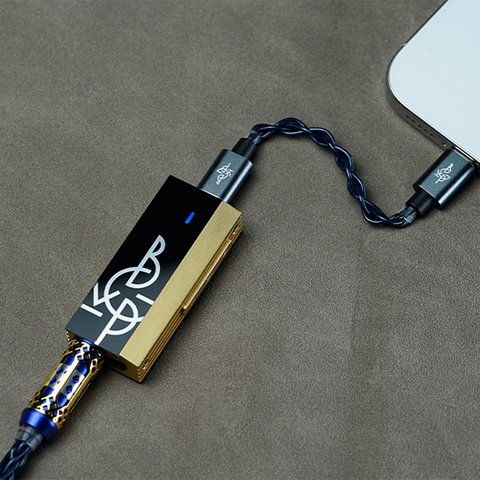
The MX1’s aluminum shell feels dense and well-machined rather than hollow, and the USB-C input port held up without any wobble over weeks of daily plugging and unplugging. BGVP includes a short USB-C to USB-C cable in the box, which is fine for Android use but means iPhone owners will need to source their own USB-C to Lightning cable or use a USB-C iPhone if they’ve already switched. The cable itself is on the shorter side, which actually works in the dongle’s favor since a shorter run means less strain pulling on the port when the unit is clipped to a pocket or bag strap.
One small but appreciated detail is that the MX1 stays cool even during extended high-gain playback sessions, unlike some dual-DAC dongles that get noticeably warm to the touch after an hour or two of continuous use. That matters if you’re the type to keep a dongle in a pocket against your leg during a commute rather than out in the open air.
Value and Verdict
At its price, the MX1 competes with a crowded field of USB-C dongles, but the dual-DAC configuration and balanced output power genuinely set it apart from single-chip alternatives. Full specifications and purchase options are listed on BGVP’s official site, and independent measurements and impressions can be found in the Ichos Audiophile Reviews write-up.
- Buy it if you want dual-DAC performance and real balanced power in a pocketable dongle
- Skip it if your headphones are easy to drive and you don’t need balanced output at all
- Pair it with harder-to-drive planar or multi-BA IEMs to get the most out of the balanced jack
Reviewers on Head-Fi have generally landed on a similar conclusion: a strong value pick for anyone stepping up from a basic single-DAC dongle without wanting to carry a dedicated desktop stack.
FAQ
Does the MX1 support DSD playback?
Yes, it decodes native DSD256 alongside PCM up to 32-bit/768kHz.
Is the balanced output worth using over 3.5mm?
If your headphones or IEMs support a balanced cable, yes; the 4.4mm jack delivers over double the power of the single-ended output.
Will the MX1 drain my phone battery quickly?
It draws modest additional power, noticeable over a full day but not severe enough to be a dealbreaker for most users.
Does the MX1 work with iPhones and Android phones equally?
It works with both via USB-C to Lightning or USB-C to USB-C cables, though always confirm cable compatibility with your specific device before buying.
Ryan reviews portable audio gear alongside his usual PC and driver coverage, with a particular interest in how dongle DACs actually perform outside spec sheets. He writes at softwaredriverdownload.com.