Picking between two well-regarded hybrid in-ear monitors is never simple, especially when both the Kiwi Ears Astral and the Xenns Mangird Tea Pro sit near the same price bracket and both promise a refined, detailed listen. I spent several weeks swapping between the two on my daily commute and at my desk, and this comparison walks through what actually separates them in daily use.
Driver Configuration and Build
The Kiwi Ears Astral pairs a 10mm bioceramic dynamic driver with six balanced armatures split across a three-way crossover, aiming for a smooth, extended response with strong low-end texture. The Mangird Tea Pro takes a different route with dual 8mm dynamic drivers plus six balanced armature units (2 Knowles, 2 RAF, and one RDB composite), leaning on that dual-DD setup for a punchier, more layered bass response.
- Astral: 1DD + 6BA hybrid, 10mm bioceramic dynamic driver, three-way crossover
- Tea Pro: 2DD + 6BA hybrid, dual 8mm bio-composite dynamic drivers
- Both use detachable cables with standard 0.78mm 2-pin connectors
- Both ship as universal-fit shells rather than custom molds
Sound Signature
The Astral leans toward a natural, balanced tuning with a gentle sub-bass roll-off, a clean midrange, and detailed but non-fatiguing treble. It’s the kind of tuning that rewards long listening sessions without ever feeling forced. The Tea Pro instead goes for an all-rounder hybrid presentation: bass has more visible weight and rumble thanks to the dual dynamic drivers, and the overall tone stays balanced-fun rather than strictly neutral.
In practice, I found myself reaching for the Astral when reviewing acoustic and vocal-heavy tracks, since the midrange comes across cleaner and less colored. The Tea Pro won out on electronic and hip-hop playlists, where the extra bass weight added excitement without smearing the mix.

Spec Comparison
| Spec | Kiwi Ears Astral | Mangird Tea Pro |
|---|---|---|
| Driver setup | 1DD + 6BA | 2DD + 6BA |
| Sound signature | Balanced, natural | Balanced-fun, bass-forward |
| Price | Around $299 | Around $359 |
| Cable | Detachable, 0.78mm 2-pin | Detachable, 0.78mm 2-pin |
| Best for | Vocals, acoustic, studio reference | Bass-heavy genres, all-rounder use |
Design and Accessories
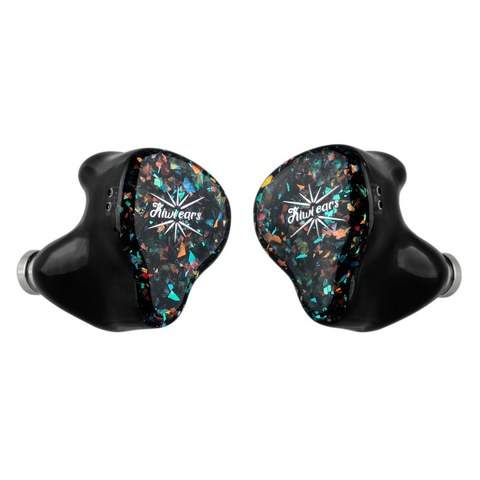
Kiwi Ears leans into a hand-finished aesthetic with the Astral, using a resin faceplate embedded with glowing flakes that catch the light differently depending on the angle. Since each faceplate is made by hand, no two units look quite identical, which is a nice touch at this price point. The included accessory kit covers a decent range of eartip sizes along with a soft carrying case, though nothing especially premium beyond that.
The Tea Pro goes for a flashier look, with a faceplate that shifts between blue, purple, and green tones depending on the lighting, giving it a “gilded sky” appearance that’s genuinely eye-catching in person. Xenns also bundles a nicer stock cable than what Kiwi Ears includes with the Astral, which is a small but appreciated difference if you don’t plan on buying an aftermarket cable right away.
- Astral: hand-finished flake faceplate, compact universal shell, standard eartip and case bundle
- Tea Pro: color-shifting faceplate, slightly larger shell, upgraded stock cable
- Both ship without a dedicated hard case, which is worth budgeting for separately
Comfort and Isolation
Both shells are on the compact side and sat comfortably through multi-hour sessions for me, but the Tea Pro’s slightly larger housing gave it an edge in passive noise isolation, which matters if you’re using these on a train or in an open office. The Astral’s shell is a touch smaller and disappears more easily under glasses or a hat.
Neither pair caused any hot spots or pressure discomfort for me even after two-hour listening blocks, which says a lot about how much attention both companies put into shell ergonomics. If you have smaller ears, I’d still recommend trying a few eartip sizes before settling in, since the stock tips on both units are a fairly middle-of-the-road fit.
I’ll admit my first listen with the Tea Pro was on a subway platform, and the bass hit hard enough that I had to double check I hadn’t bumped the volume up. That kind of instant gratification is exactly why it has such a strong following among hybrid fans, even if the Astral eventually became the pair I reached for when critical listening mattered more than fun.
Per Daniel R., who is an Audio Enthusiast and Head-Fi reviewer, “The Astral is one of the more mature-sounding hybrids I’ve heard at this price—it doesn’t try to impress you in the first ten seconds, but it holds up over a full album in a way a lot of flashier tunings don’t.”
Which Should You Choose
- Choose the Kiwi Ears Astral if you prioritize midrange clarity, vocal accuracy, and long-session comfort for critical listening.
- Choose the Mangird Tea Pro if you want more visceral bass impact and a more universally exciting, all-rounder tuning.
- Budget-conscious buyers may prefer the Astral’s slightly lower price point.
- Bass-head listeners and those wanting stronger isolation should lean toward the Tea Pro.
Conclusion
Neither of these IEMs is a bad choice—they simply target slightly different listening priorities. The Astral is the more neutral, reference-leaning option that rewards patience, while the Tea Pro is the more immediately fun, bass-forward hybrid that still holds its technical ground. If you can, try to demo both before buying, since the difference in bass quantity alone is enough to sway a decision either way. You can check current pricing and availability at Linsoul’s Kiwi Ears Astral page and the Mangird Tea Pro listing.
Ryan
CS degree · 20+ years hands-on hardware testing
FAQ
Is the Kiwi Ears Astral good for stage or studio monitoring?
Yes, its balanced tuning and clear midrange make it a solid choice for musicians who need accurate vocal and instrument representation.
Does the Mangird Tea Pro need an amp?
No, it’s efficient enough to run comfortably off a phone or basic dongle DAC, though a slightly stronger source can tighten up the bass response.
Which one isolates noise better?
The Tea Pro’s slightly larger shell gives it a small edge in passive isolation over the Astral.
Are both IEMs compatible with aftermarket cables?
Yes, both use standard detachable 0.78mm 2-pin connectors, so they work with most aftermarket cables on the market.