The RadioMaster Pocket ships in two distinct hardware variants: ELRS and CC2500, and picking the wrong one at checkout means buying an entirely new radio later, since the internal RF module is not something you can swap after the fact. I get asked about this choice constantly, usually from pilots buying their first Pocket who assume it is a simple software toggle. It isn’t, and understanding the real difference between these two protocols will save you money and frustration.
Key Specs
- Both versions share identical gimbals, case, display, and EdgeTX firmware
- ELRS version: internal ExpressLRS 2.4GHz module, modern open-source protocol
- CC2500 version: internal multi-protocol module supporting FrSky and other legacy 2.4GHz protocols
- Hardware choice is permanent — no field-swappable module between the two
- Weight 288g, X5 Hall-effect nano gimbals on both variants
- Price: CC2500 model is typically cheaper than the ELRS model
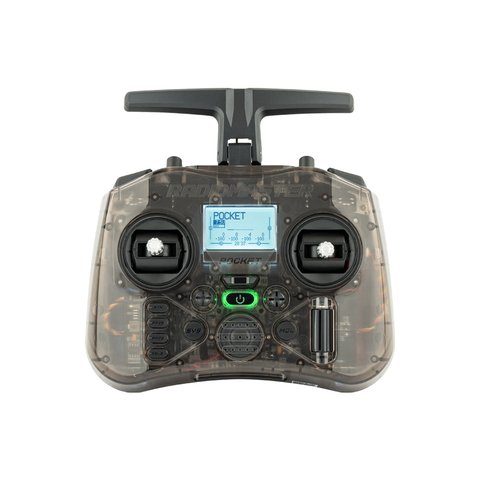
Full Comparison
| Spec | Pocket ELRS | Pocket CC2500 |
|---|---|---|
| Protocol | ExpressLRS 2.4GHz open-source | CC2500 multi-protocol (FrSky-compatible and others) |
| Range and latency | Longer range, lower latency, actively developed | Shorter typical range, higher latency, legacy support only |
| Receiver compatibility | Requires ELRS-compatible receivers | Works with existing FrSky-protocol receiver fleets |
| Firmware updates | Frequent ELRS releases with new features | Rare updates, mostly stable/legacy maintenance |
| Best for | New builds, ELRS-only pilots, best performance | Pilots with existing legacy receivers to reuse |
| Hardware upgradeable | No, fixed internal module | No, fixed internal module |
| Typical price | Slightly higher | Slightly lower |
Why This Is a Hardware Decision, Not a Setting
Both versions of the Pocket share the same gimbals, case, and EdgeTX firmware on the outside, but the internal RF module is soldered to the mainboard rather than sitting in a swappable bay. That means the ELRS and CC2500 versions are genuinely separate SKUs, and RadioMaster sells them as such. If you buy the CC2500 version hoping to flash it into an ELRS radio later, you will hit a wall, because ExpressLRS needs specific radio hardware (an SX1280-class chip) that the CC2500 module simply does not have.
When ELRS Is the Right Call
- You are starting a fresh FPV setup with no existing receiver fleet to worry about.
- You want the longest possible range and lowest latency for freestyle or racing.
- You want to benefit from ongoing ExpressLRS development, which adds new features and refinements on a frequent cadence.
- You plan to fly a mix of quads, planes, and simulators where ELRS’s flexibility across vehicle types is valuable.
When CC2500 Still Makes Sense
- You already own several FrSky or compatible receivers and don’t want to replace them.
- You are flying mostly indoors at short range where ELRS’s long-range advantage matters less.
- You want the lower price point and don’t need bleeding-edge protocol features.
- You are maintaining an older fleet of models built around legacy multi-protocol receivers.
My Own Decision Between the Two
When I bought my first Pocket, I almost went with CC2500 purely because it was a few dollars cheaper, before I actually checked what receivers I owned. I had exactly zero CC2500-compatible receivers on hand, having built my whole quad fleet around ELRS already, so the “savings” would have meant buying new receivers anyway to make the radio useful. Once I did that math, ELRS was the obvious choice, and it has been the one I recommend to almost everyone starting fresh unless they specifically mention owning legacy gear.
Checking Compatibility Before You Buy
- Look at the receivers already installed in your models, if any, and note their protocol.
- If they are FrSky-branded or explicitly listed as CC2500-compatible, the CC2500 Pocket lets you reuse them immediately.
- If you have ELRS receivers, or no receivers at all yet, buy the ELRS version for better long-term performance and support.
- When in doubt, ELRS is the safer default given how actively the protocol continues to be developed and documented.
Resale Value and Long-Term Support
One thing that doesn’t come up enough in these comparisons is resale value and long-term community support. ExpressLRS has become the de facto standard for new FPV builds over the past few years, which means an ELRS Pocket is generally easier to sell later and has a larger pool of tutorials, firmware releases, and troubleshooting threads to draw on. The CC2500 multi-protocol ecosystem is still maintained, but the pace of new development has slowed compared to ELRS, since most of the hobby’s attention has shifted toward the newer protocol.
- ELRS has a larger and more active support community, which matters when troubleshooting an odd binding issue at 9pm before a race day.
- CC2500 firmware updates are less frequent, but the protocol remains stable and well documented for existing users.
- If you plan to eventually sell or trade the radio, ELRS variants tend to hold value better given current demand.
Frequently Asked Questions
Can I convert a CC2500 Pocket to ELRS with a firmware flash?
No. ExpressLRS requires specific RF hardware that the CC2500 module does not include, so this is a hardware limitation, not something firmware can work around.
Is CC2500 range really worse than ELRS?
In most real-world comparisons yes, ELRS typically delivers longer usable range and lower latency, since it was designed from the ground up for FPV rather than adapted from older multi-protocol standards.
Do both versions run the same EdgeTX menus and features?
Yes, the EdgeTX experience is nearly identical on both, since the difference lives entirely in the internal RF module rather than the main firmware or menu system.
Which version should a total beginner buy?
Unless you already own CC2500-compatible receivers, the ELRS version is the better starting point given its performance and the momentum behind ongoing ExpressLRS development.
Conclusion
The RadioMaster Pocket ELRS and CC2500 variants look identical from the outside but represent a real hardware fork, not a configurable setting. If you already have a shelf of legacy FrSky-compatible receivers, the CC2500 version lets you reuse them without buying anything new. Everyone else, especially anyone starting fresh, is better served by the ELRS version’s superior range, latency, and ongoing development. Check current pricing and variant availability on the official RadioMaster Pocket product page before ordering.
Ryan has bought, flown, and compared multiple RadioMaster radio variants firsthand over the years. He writes at softwaredriverdownload.com.