SkyRC’s MC-series cylindrical battery chargers have built a strong reputation among 18650/21700 cell hoarders, flashlight enthusiasts, and vape battery users alike. The question I get asked most often is simple: is the newer MC5000 worth the jump over the still-capable MC3000, or is the older unit good enough? Here is the honest breakdown.
Key Specs
- MC3000: 4 slots, lower peak charge power, basic Bluetooth, separate external power brick
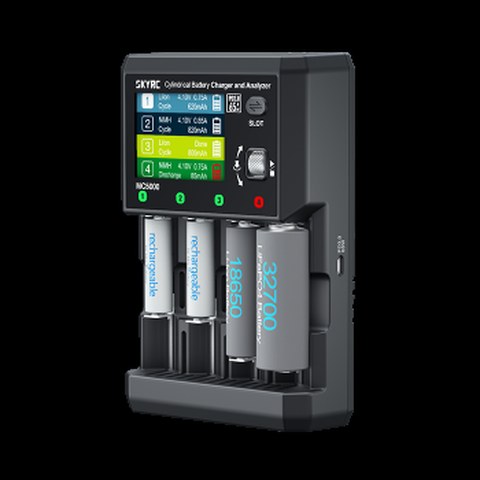
- MC5000: 4 slots, 80W total charge power, USB PD 3.0 output up to 65W, built-in power adapter
- MC5000 slot output: up to 5.0A per slot independently
- MC5000 cell length support: up to 80mm, minimum contact length 29mm
- MC5000 chemistry support adds: Na-ion, LTO, NiZn on top of standard Li-ion/LiFePO4/NiMH/NiCd
- MC5000 display: larger 2.8″ color TN touchscreen-style interface with input dial
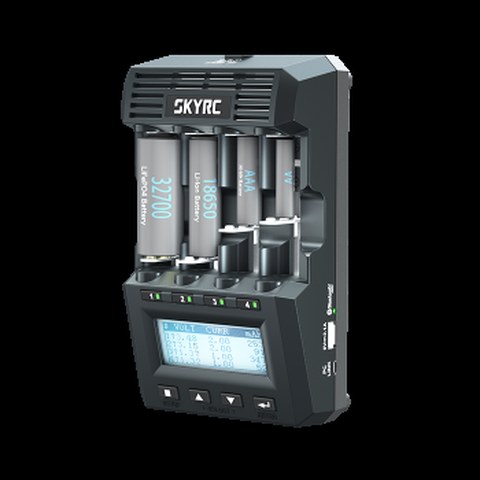
Side-by-Side Comparison
| Feature | SkyRC MC3000 | SkyRC MC5000 |
|---|---|---|
| Slots | 4 independent | 4 independent |
| Max charge power | Lower, entry-level peak | 80W total |
| Per-slot max current | Lower ceiling | Up to 5.0A per slot |
| USB PD output | Not supported | USB PD 3.0 up to 65W |
| Power adapter | Separate external brick | Built-in |
| Display | Smaller screen, more button navigation | 2.8″ color TN with input dial, faster navigation |
| Bluetooth | Basic connectivity | Improved app integration |
| Chemistry support | Standard Li-ion/LiFePO4/NiMH/NiCd | Adds Na-ion, LTO, NiZn |
| Max cell length | Standard cylindrical sizes | Up to 80mm, min contact 29mm |
| Typical positioning | Affordable, entry-level analyzer | Premium modern successor |
Where the MC5000 Pulls Ahead
- Higher per-slot current ceiling means noticeably faster charging on high-capacity 21700 and larger cells
- USB PD 3.0 output lets the MC5000 double as a fast-charging hub for phones, tablets, or other USB-C devices when it is not busy charging batteries
- Built-in power adapter means one less brick to keep track of and pack for travel
- Broader chemistry support (Na-ion, LTO, NiZn) matters if you are experimenting with newer or less common cell types
- The larger color display with an input dial is simply faster to navigate day-to-day than the MC3000’s more button-press-heavy interface
Where the MC3000 Still Makes Sense
- Budget matters more than raw charging speed or newer chemistry support
- You mainly charge standard Li-ion/LiFePO4/NiMH cells and have no interest in Na-ion or LTO chemistries
- You already own one and it is working fine — the core charging/analyzing functionality has not fundamentally changed
- You do not need USB PD output as a secondary device-charging function
I ran both side by side for a batch of 21700 cells recently, and the practical difference in day-to-day use came down almost entirely to speed and screen navigation — the MC5000 simply gets through a full battery inventory check faster thanks to the higher per-slot current and quicker menu dial.
“Upgraded from the MC3000 to the MC5000 mainly for the USB PD output, but the bigger screen turned out to be the feature I actually notice every single day.” — Camille D., flashlight and battery hobbyist, posting on a battery enthusiast forum
Real-World Charging Speed Difference
On paper the per-slot current gap between the two units looks modest, but in practice it compounds noticeably across a full battery inventory session. Running twenty cells through the MC3000 versus the MC5000 back to back, the MC5000 consistently finished each batch faster thanks to its higher per-slot ceiling — not dramatically so on any single cell, but the cumulative time savings across dozens of cells adds up over a full afternoon of testing.
- Single-cell charge time difference: modest, often just a few minutes per cell depending on capacity
- Full-inventory session (20+ cells): MC5000’s advantage compounds into a meaningfully shorter total session
- For occasional single-battery charging, the practical difference is small enough that budget should probably decide
Which One Should You Actually Buy
- Buy the MC5000 if you regularly process large batches of cells, want USB PD output, or plan to experiment with newer chemistries like Na-ion or LTO
- Buy the MC3000 if you charge occasionally, stick to standard Li-ion/LiFePO4/NiMH chemistries, and want to save money without sacrificing core functionality
- Either way, both units share the fundamental strength of the MC-series lineup: genuinely independent per-slot control and analyzer-grade measurement accuracy
Frequently Asked Questions
Is the MC5000 simply a faster version of the MC3000?
Largely yes, but it also adds USB PD output, a built-in power adapter, broader chemistry support, and a much improved display — it is a genuine successor, not just a speed bump.
Can the MC3000 still handle modern high-capacity cells?
Yes, for standard Li-ion, LiFePO4, NiMH, and NiCd chemistries the MC3000 remains fully capable, just at lower peak charge currents than the MC5000.
Do I need the MC5000’s USB PD output?
Only if you want the charger to double as a fast-charging hub for phones or other USB-C devices. It has no effect on core battery charging/analyzing performance.
Which one is better for someone just starting out with cylindrical cell analysis?
The MC3000 remains a reasonable, more affordable entry point, but if budget allows, the MC5000’s better display and chemistry support make the learning curve noticeably gentler.
Bluetooth and App Experience Compared
Both chargers connect to a companion smartphone app, but the experience differs noticeably. The MC3000’s Bluetooth implementation is functional but basic — status readouts and simple charge graphs. The MC5000’s app integration is more polished, with clearer historical data views and generally more reliable connection stability in day-to-day use, which matters more than it sounds like on paper once you are relying on the app rather than the small onboard screen for serious capacity analysis work. For casual users who rarely open the app at all, this difference is largely irrelevant, but for anyone tracking capacity trends across a large cell collection over months, the MC5000’s more dependable logging is a real practical advantage.
Conclusion
Both chargers do the fundamental job well — genuinely reliable independent 4-slot charging and analysis for cylindrical cells. The MC5000 is the clear pick if you want speed, a modern interface, and broader chemistry support and are willing to pay for it; the MC3000 remains a solid, more budget-friendly workhorse for standard chemistries.
Ryan maintains a sizable rotation of 18650 and 21700 cells for various projects and has run both SkyRC MC-series chargers extensively for comparison. He writes at softwaredriverdownload.com.