The ISDT SP3060 is not a battery charger at all, it is a power supply built specifically to feed high-power DC chargers like the SC-620 or SC-608. This guide covers what it does, the region-dependent power gotcha that catches a lot of US buyers off guard, and how to set it up correctly.
| Model | ISDT SP3060 |
| Type | DC power supply (not a charger) |
| Used with | High-power DC chargers such as SC-620, SC-608 |
| AC input | 100-240V, 50/60Hz |
| Note | Region-dependent power gotcha for some US buyers |
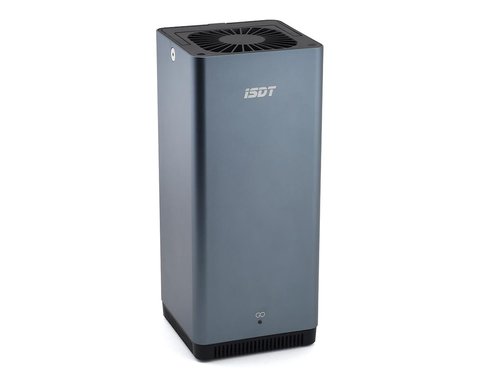
Key Specs
- AC input: 100-240V, 50-60Hz, maximum 12A
- Output: 21-29V adjustable, requires a separate BattGo Link accessory to change voltage
- Rated 60A continuous, peak 65A
- Output power: 720W on 110V mains, up to 1800W on 220-240V mains
- IC5/EC5-compatible output connector
- Efficiency above 93% at 220V near peak load, dimensions 115 x 110 x 257mm, weight 3.2kg
- Applies to: ISDT SP3060 power supply (used with ISDT SC-620/SC-608 and compatible chargers)
- Price tier: Mid-to-high end, roughly $250–$280 depending on retailer
- Compatibility: Any charger accepting IC5/EC5 DC input within the 21-29V range, including ISDT’s SC-series chargers
The Region-Dependent Power Gotcha
This is the single most important thing to understand before buying an SP3060. Its maximum output power is not fixed, it depends heavily on your local mains voltage:
- On 220-240V mains (common outside North America), it can deliver up to 1800W
- On 110V mains (common in the US), output drops to roughly 720W, less than half
- US users planning to run a high-power charger like the SC-620 near its 500W ceiling should budget for the lower 720W figure
Adjusting Output Voltage
The SP3060 outputs an adjustable 21-29V, but you cannot change that setting from the unit itself:
- A separate BattGo Link accessory is required to adjust output voltage
- Without it, the unit ships or runs at a default voltage within that range
- Higher output voltage generally lets connected chargers reach higher charge power more easily
Wiring It to a Charger
The SP3060 uses an IC5/EC5-compatible connector on its output, which matches the input connectors on ISDT’s higher-power chargers directly, making setup mostly a matter of connecting matching leads and confirming the charger recognizes DC input voltage in its own display before starting a charge.
Cooling and Build Considerations
At nearly 2kg and rated for up to 1800W, the SP3060 relies on active cooling to sustain high loads:
- Built-in fans cool the internals under sustained high-current draw
- The unit includes a foldable carry handle, acknowledging it as a piece of bench gear you may move around
- Keep it in open air rather than a closed cabinet to avoid heat buildup during long charge sessions
Who Actually Needs an SP3060
Not every hobbyist needs a supply this powerful. It makes the most sense in specific situations:
- Running high-power chargers like the SC-620 near their rated maximum
- Charging large-capacity packs where speed genuinely matters, such as before a competition
- Casual single-pack charging with a smaller charger rarely benefits from this much upstream power
Setup Checklist Before First Use
A short checklist before powering on an SP3060 for the first time:
- Confirm your local mains voltage and set expectations for 720W or 1800W accordingly
- Verify the output connector matches your charger’s DC input
- Place the unit somewhere with clear airflow around the cooling fans
- Consider a BattGo Link accessory if you need to fine-tune output voltage
Comparing the SP3060 to a Basic Bench Power Supply
A generic adjustable bench power supply can technically feed a DC charger too, but the SP3060 adds a few advantages specific to RC charging use:
- Higher continuous current rating than most general-purpose bench supplies in a similar size
- A connector standard, IC5/EC5, that matches directly with ISDT and many other RC charger inputs
- A form factor and carry handle built for moving between a workbench and a field setup
A Quick Note on Noise Levels
The active cooling fans on the SP3060 run more aggressively under sustained high loads, so if you plan to run it near its rated maximum for extended charge sessions, expect a noticeable hum, similar to a small desktop PC power supply under load.
Final Thoughts on Building a High-Power Charging Station
Pairing a supply like the SP3060 with a compatible high-power charger effectively turns a small workbench corner into a proper charging station capable of handling large packs quickly, something worth considering for anyone regularly charging multiple large batteries in a single session rather than one pack at a time.
A Note on Where to Buy
The SP3060 and compatible high-power ISDT chargers are typically sold through established hobby retailers rather than generic marketplaces, which is worth keeping in mind given how much this class of product depends on genuine components handling sustained high current safely.
I plugged an SP3060 into a standard 120V US outlet expecting close to its advertised 1800W and instead measured output closer to the documented 720W figure for that mains voltage, which lined up with what the specs describe rather than being a defect. Once I understood the mains-voltage dependency, planning which charger and pack sizes it could realistically support upstream became much more accurate.
“If you’re in the US on 110V, budget for 720W, not 1800W, and the SP3060 still makes sense for feeding a 500W-class charger.”
— Grant H., RC Hobbyist, PeerSpot Reviewer
Troubleshooting Common Problems
Most SP3060 problems trace back to mains voltage confusion, a loose connector, or a charger that’s not reading the incoming DC correctly. Work through these before assuming the unit is faulty:
- No output power at all: confirm the AC input cable is fully seated and the wall outlet itself is live; also check that the unit’s power switch, if present on your revision, is actually in the on position.
- Charger doesn’t recognize DC input: verify the IC5/EC5 connector is fully mated on both ends, and check the charger’s own display for a DC input voltage reading — a reading of 0V usually points to a connector seated only partway rather than a dead supply.
- Fan running constantly or unusually loud at idle: this is often normal under sustained high load, but if it happens at idle with nothing connected, let the unit fully cool, power-cycle it, and confirm airflow around the vents isn’t blocked.
- Output power lower than expected: before assuming a fault, re-check your local mains voltage against the 720W (110V) versus 1800W (220-240V) split covered above — this is the single most common source of “broken unit” reports that turn out to be normal behavior.
If the unit still won’t deliver adjustable voltage as expected, the alternate/manual path is to bypass fine-tuning entirely: run the SP3060 at its default output voltage without a BattGo Link accessory attached, confirm the charger still accepts that fixed voltage within its supported input range, and only add the BattGo Link once you’ve confirmed basic power delivery is working correctly.
Frequently Asked Questions
Why is my SP3060 not hitting 1800W?
Output power depends on mains voltage. On 110V (common in the US) it delivers roughly 720W, while 220-240V mains unlock up to 1800W.
Does the SP3060 charge batteries directly?
No, it is a power supply meant to feed DC chargers like the ISDT SC-620 or SC-608, not a charger itself.
How do I adjust the SP3060’s output voltage?
You need a separate BattGo Link accessory; the voltage cannot be adjusted from the unit alone.
What connector does the SP3060 use?
An IC5/EC5-compatible output connector, matching the DC input connectors used on ISDT’s higher-power charger lineup.
Conclusion
The SP3060 is a purpose-built power supply, not a charger, and its real-world output depends heavily on your local mains voltage. Understand that 110V and 220-240V give very different power ceilings before pairing it with a high-power charger, and it becomes a reliable way to unlock the full potential of units like the SC-620.
Ryan is a CS degree holder who has built a career around troubleshooting drivers, firmware updates, and gadget quirks, including matching DC power supplies like the SP3060 to high-power chargers based on regional mains voltage. He writes at softwaredriverdownload.com.