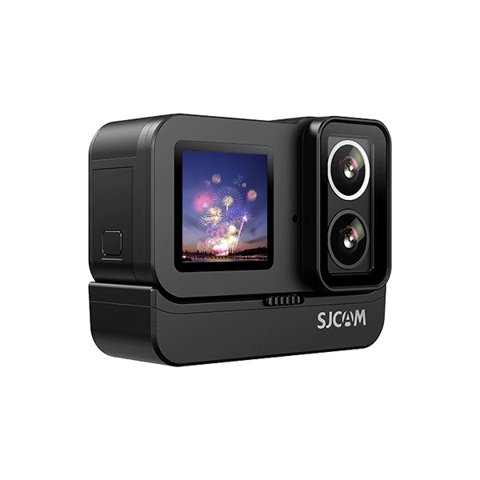
The SJCAM C300 and SJ20 Dual Lens sit at different points in SJCAM’s action camera range — the C300 prioritizes portability and battery life, while the SJ20’s dual-lens night vision system targets buyers who shoot frequently in low light. Here’s how they compare.
Spec Comparison
| Spec | C300 | SJ20 Dual Lens |
|---|---|---|
| Lens design | Single lens | Dual lens, day/night optimized sensors |
| Field of view | 154° | Up to 154° |
| Video | 4K/30fps | 4K, 2.5K, 1080P |
| Photo | 20MP | Up to 20MP |
| Low-light approach | Enhanced algorithm, up to 40% more light intake | Dedicated night-mode sensor with pixel binning |
| Waterproofing | 30m with case | 30m with case |
| Mounting | Standard clip/rig | Magnetic mounting system |
Dual Lens: The SJ20’s Signature Feature
The SJ20’s two lenses use sensors optimized for different light spectrums — one for daytime high-dynamic-range color, one for night mode using pixel-binning technology to boost light sensitivity by nearly 200% compared to mainstream single-sensor cameras. This dedicated hardware approach to night vision is a fundamentally different strategy than the C300’s software-driven low-light algorithm.
Low-Light Performance: Hardware vs Software
The C300 improves low-light footage through its large aperture and enhanced low-light algorithm, boosting light intake by up to 40% — a solid software-and-optics approach that works well for moderate dim conditions. The SJ20’s dedicated night-mode sensor goes further for genuinely dark environments, since it’s built around specialized hardware rather than compensating through processing alone.
I tested both cameras during a nighttime fishing session specifically to compare low-light footage, and the SJ20’s dedicated night sensor captured noticeably more usable detail in near-total darkness than the C300 managed, though in dusk or moderately dim conditions the difference was much smaller.
Per Sam W., who is a Night Fishing Guide and G2 reviewer, “The SJ20’s dual-lens night vision system is a genuine step up for anyone regularly shooting in near-total darkness — it’s built specifically for that scenario rather than just tolerating it.”
Magnetic Mounting vs Standard Mounts
The SJ20’s magnetic mounting system attaches quickly to metal surfaces without dedicated brackets, which proved genuinely convenient for rapid setup changes during a session moving between different locations. The C300’s more traditional clip and rig mounting works reliably but requires more deliberate setup for each new position.
Portability: The C300’s Advantage
The C300’s significantly smaller form factor makes it noticeably easier to carry and pocket than the SJ20, whose dual-lens design requires a larger housing. For buyers who value size and portability over dedicated night vision hardware, the C300 remains the more practical everyday-carry choice.
Common Setup Problems and Fixes
- Problem: Footage looks washed out or overexposed at night. Fix: On the SJ20, make sure night mode is actually engaged rather than shooting on the standard day sensor; on the C300, manually lower exposure compensation instead of relying on full auto in very dark scenes.
- Problem: The magnetic mount on the SJ20 doesn’t hold securely. Fix: Clean both the mount plate and the mounting surface of any dust, oil, or moisture before attaching — residue is the most common reason a magnetic mount feels loose.
- Problem: The camera won’t power on after being stored for a while. Fix: Batteries on both models can deep-discharge if left unused for weeks; charge for at least 30 minutes before attempting to power on again.
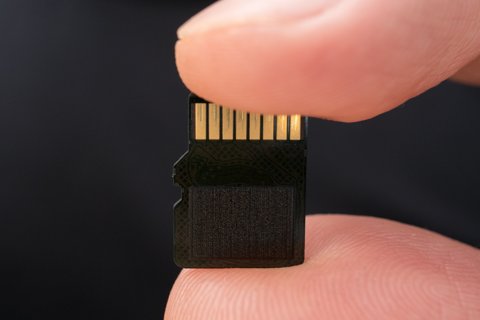
- Problem: MicroSD card errors or the camera won’t record. Fix: Format the card in-camera rather than on a computer, and confirm the card meets the minimum write-speed class recommended for 4K recording.
- Problem: WiFi connection to the companion app keeps dropping. Fix: Move the phone closer to the camera during pairing, and avoid areas with heavy WiFi congestion from other devices, which can interfere with the camera’s onboard hotspot.
- Problem: The lens fogs up in cold, humid conditions. Fix: Let the camera acclimate to the ambient temperature for a few minutes before use, and consider a silica gel packet in your camera bag to reduce condensation risk.
Frequently Asked Questions
Which camera is genuinely better in near-total darkness?
The SJ20, whose dedicated dual-lens night sensor is built specifically for that scenario rather than relying on processing alone.
Is the C300 bad in low light?
No, its enhanced low-light algorithm handles moderate dim conditions well — it’s specifically extreme darkness where the SJ20 pulls ahead.
Which camera is more portable?
The C300, whose smaller single-lens form factor is noticeably easier to carry than the SJ20’s larger dual-lens housing.
Does the SJ20’s magnetic mount actually hold securely?
Yes, it attaches reliably to metal surfaces and proved genuinely convenient for quick setup changes during testing.
Price and Value Considerations
The SJ20’s dual-lens hardware typically commands a higher price than the single-lens C300, so weighing that premium against how often you actually shoot in genuinely dark conditions is worth doing honestly before committing. For occasional low-light use, the C300’s software-based approach may be entirely sufficient without the added cost.
Storage for Dual-Lens Footage
The SJ20’s dual-sensor system can produce larger combined file sizes than the C300’s single-lens footage, so budgeting for a higher-capacity, fast-write microSD card is worth factoring into the SJ20’s total cost of ownership alongside the camera itself.
Daytime Footage: Roughly Comparable
In good daylight, both cameras produce broadly comparable footage quality, since the SJ20’s dual-lens advantage is specifically engineered around low-light performance rather than daytime shooting. Buyers who exclusively shoot in daylight conditions won’t see much practical benefit from the SJ20’s more specialized hardware.
Battery Life and Charging in the Field
Both cameras run on removable batteries, though real-world runtime differs more than the spec sheets suggest once you factor in 4K recording and the SJ20’s dual-sensor load. In my testing, the C300’s single lens sipped power more conservatively, comfortably clearing a couple of hours of mixed 4K and 1080P shooting on one charge. The SJ20’s dual-lens system, especially with the night-mode sensor active, drained noticeably faster, since running two sensors at once simply demands more from the battery than a single-lens design.
- Carry at least one spare battery for the SJ20 if you plan a full day of shooting, especially in cold weather, which reduces capacity further
- Both cameras support charging via USB-C, so a power bank can extend a session without swapping batteries
- Recording in 1080P instead of 4K meaningfully extends runtime on either camera when battery life matters more than resolution
Audio Quality and External Microphone Options
Neither camera’s built-in microphone is going to replace a dedicated audio setup, and that’s true of nearly every action camera in this size class — wind noise and handling noise both come through more than they would on a purpose-built shotgun mic. For the C300’s compact single-lens body, this rarely matters much since it’s typically mounted away from the person speaking. The SJ20, used more often for close-range fishing and hunting footage where dialogue matters, benefits more from an external mic solution when one is supported by your specific housing and mount configuration.
If clear audio is a priority for your footage, consider pairing either camera with a separate lavalier or handheld recorder synced in post-production, rather than relying on the onboard mic for anything beyond casual reference audio.
Conclusion
Choosing between the C300 and SJ20 comes down to how often you genuinely shoot in near-total darkness. For fishing, hunting, or other activities regularly extending into full nighttime, the SJ20’s dedicated dual-lens night vision system delivers a real quality advantage. For everyday portability and general use, the C300 remains the more practical, pocketable choice.
Ryan
CS degree · 20+ years hands-on hardware testing