The Hidizs MP145 Pro landed on my desk as the refined follow-up to a driver family I already knew reasonably well, and refined is the right word for it. Rather than chasing a bigger diaphragm or a flashier shell, Hidizs spent the upgrade budget on the magnetic circuit and the diaphragm trace itself, and the result is a planar IEM that sounds noticeably more composed than the standard MP145 without changing the fundamental shape of the sound.
Here is what actually changed under the hood, how it sounds in practice, and whether the “Pro” premium is worth paying.

| Spec | Hidizs MP145 Pro |
|---|---|
| Driver | 14.5mm planar, 1 Tesla Fully Symmetrical Magnetic Circuit |
| Impedance | 30 ohms |
| Sensitivity | 104 dB/mW |
| Cable | 6N silver-plated single-crystal copper, swappable 3.5mm/4.4mm |
| Tuning filters | Three included |
What changed from the standard MP145
The MP145 Pro keeps the same 14.5mm planar driver size as the base model but redesigns the internals around a new “1 Tesla Fully Symmetrical Magnetic Circuit” with a denser 7+7 N54H magnet array. Hidizs claims roughly 40 percent more magnetic flux and about 30 percent more copper trace in the diaphragm compared with the standard MP145. In plain terms: a stronger magnetic field pushing a diaphragm with more conductive material generally means faster, more controlled driver movement, which is what separates a “good” planar IEM from a genuinely precise one.
Key specifications
- Driver: 14.5mm single planar driver, 1 Tesla Fully Symmetrical Magnetic Circuit
- Impedance: 30 ohms
- Sensitivity: 104 dB/mW
- Magnet array: 7+7 N54H, roughly 40% more flux than the base MP145
- Cable: 6N high-purity silver-plated single-crystal copper, 4-core braid, swappable 3.5mm/4.4mm plugs
- Eartips: Sea Anemone liquid silicone tips included
- Tuning filters: three included
Sound impressions
What stands out first is control. Bass on the MP145 Pro hits with real authority but pulls back cleanly rather than lingering, which is the kind of behavior you expect from a well-damped planar driver but do not always get at this price point. Mids are clear and slightly forward without sounding thin, and the added copper trace seems to translate into better resolution of small details — breath sounds, fret noise, room reverb tails — that get smeared together on lesser planar IEMs.
The included cable deserves a mention on its own. A 6N silver-plated single-crystal copper cable with swappable termination plugs is a genuinely premium accessory to bundle at this price, and it noticeably reduces microphonics (the thumping noise you get when a cable brushes against clothing) compared with the more basic cables that ship with cheaper IEMs.
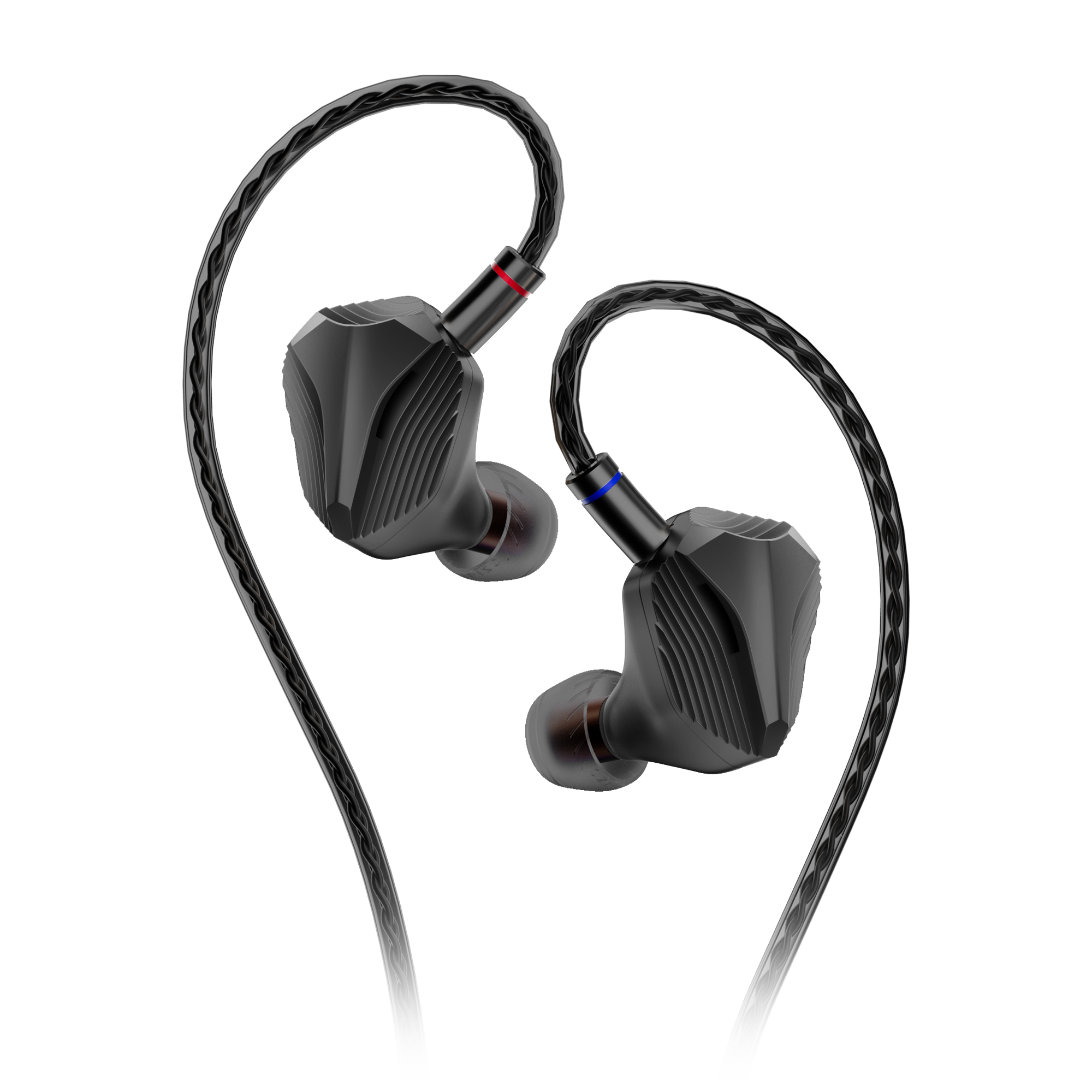
Comfort and daily use
The shell shape carries over from the standard MP145, so if you have tried that model before, the fit here will feel identical. It is on the larger side compared with the MP143 Salt, so ears that struggle with bigger shells should try before committing if possible. Isolation is solid for a vented planar design, and I had no discomfort during two-plus-hour sessions.
- Start with the balanced tuning filter to get an accurate baseline before switching to the bass or treble options.
- Give the driver a few hours of playback before making final judgments on the tuning, as is standard practice with new planar and dynamic driver IEMs.
- Use the swappable 4.4mm plug if your source supports balanced output, since it noticeably tightens up bass control on a driver this sensitive to power delivery.

Power needs
At 30 ohms and 104 dB/mW, the MP145 Pro is easy enough to drive from a phone or basic dongle DAC to get to listening volume, but it does scale with better amplification more than the lower-impedance MP143 Salt does. A mid-range dongle DAC or small desktop amp will tighten the bass response and open up dynamics noticeably compared with a bare phone jack.
Full specifications, current pricing, and bundle options are available on the official Hidizs MP145 Pro product page.
Living with the MP145 Pro
What surprised me most after a couple of weeks was how little fatigue I felt during long sessions, which is not always a given with planar IEMs that push a lot of detail at you. The tuning stays composed rather than fatiguing, and I found myself reaching for it during actual work sessions rather than just casual listening, which says something about how easy it is to listen to for extended periods without needing a break.
The Sea Anemone eartips also deserve a specific callout beyond the spec sheet mention — they hold a seal noticeably better than the generic silicone tips bundled with most IEMs in this range, and they stayed comfortable well past the two-hour mark where cheaper tips usually start causing irritation for me. If you already own a favorite set of aftermarket tips, they are still worth trying here, but the stock tips are good enough that I did not feel a strong need to swap them out immediately, which is unusual.
One small gripe: the swappable-plug cable system, while genuinely useful, takes a bit of getting used to physically — the connector has a firm click that feels slightly stiff on first use. It loosens up with repeated swaps and never felt unreliable, just worth knowing it is not a completely effortless first impression.
Common issues and fixes
- One side sounds quieter than the other out of the box: this is usually a burn-in effect on planar drivers rather than a defect; give it 20-30 hours of playback before judging channel balance, and swap ear tips left to right to rule out a seal issue first.
- Cable connector feels stiff when swapping the 3.5mm/4.4mm plug: this is normal on a fresh unit; the connector loosens up after a handful of swaps and does not indicate a faulty part.
- Bass sounds thin or loose on a phone or basic dongle: the MP145 Pro scales with better amplification, so pairing it with a mid-range dongle DAC or desktop amp tightens up bass noticeably compared with a bare phone jack.
- Losing the seal during longer listening sessions: the stock Sea Anemone tips fit most ears well, but if you have smaller or larger canals, trying a different tip size or an aftermarket silicone tip usually resolves persistent seal loss.
- Not sure which tuning filter to leave installed: start with the balanced filter as a baseline for at least a few listening sessions before switching to the bass or treble options, since judging a filter change against a moving baseline makes it harder to tell what actually changed.
Frequently asked questions
Is the MP145 Pro a completely different driver from the MP145?
No, it is the same 14.5mm planar diaphragm size, but with an upgraded magnetic circuit and more copper trace in the diaphragm for better control and resolution.
Does the MP145 Pro need a dedicated amplifier?
Not strictly, but it benefits more from extra power than lower-impedance IEMs do, so pairing it with a mid-range dongle DAC or amp is worthwhile if you have one.
Is the included cable actually better than a typical bundled cable?
Yes, the 6N silver-plated single-crystal copper cable with swappable plugs is a genuine step up from the basic cables most budget and mid-range IEMs ship with.
Does it fit smaller ears comfortably?
The shell is on the larger side. Most listeners adjust fine, but anyone who struggles with bigger IEM shells should try it in person if possible.
Conclusion
The MP145 Pro is a legitimate refinement rather than a marketing relabel — the magnetic circuit and diaphragm changes translate into real, audible gains in control and detail retrieval over the standard MP145. If you already liked the MP145’s soundstage and want a version with tighter, more resolving bass and a genuinely upgraded cable, the Pro is worth the extra cost.
Reviewed by Ryan, who has been building out a personal collection of portable DACs and planar IEMs over the past several years and tests new releases against that existing lineup.