The Hidizs AP80 Pro-X sits in an unusual sweet spot: small enough to disappear in a coat pocket, priced well below true flagship territory, yet built around a genuinely capable dual-DAC design with balanced output and MQA decoding. I spent a stretch of daily commutes and desk sessions with it to see whether the compact form factor comes at the cost of anything that actually matters in daily use.
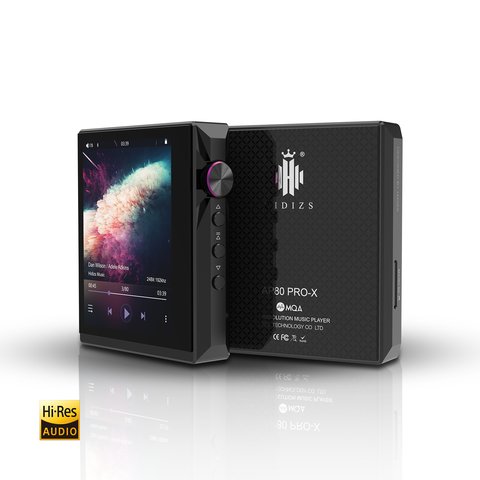
Quick Facts
| Dimensions | 61.2 x 54.5 x 13.8mm |
| DAC chips | Dual ESS ES9219C with HBC3000 FPGA clock |
| Decoding | Native DSD64/128/256, full MQA unfolding |
| Output power | 70mW+70mW SE, 190mW+190mW balanced (32ohm) |
| Battery life | 8-11hrs SE, 6-8hrs balanced |
| Storage | microSD expansion, no meaningful internal storage |
| Colors | Black, gray, blue |
Design and Build
At roughly 61.2 x 54.5 x 13.8mm, the AP80 Pro-X is genuinely pocketable, smaller than most smartphones and easy to overlook when it is clipped or bagged alongside other gear. The aluminium chassis feels dense for its size rather than hollow, and the 2.45-inch touchscreen, while not huge, is bright enough for outdoor use and responsive enough that navigating the file browser does not feel like a chore. The physical volume wheel on the side is a small but appreciated touch, giving tactile control without needing to unlock the screen first.
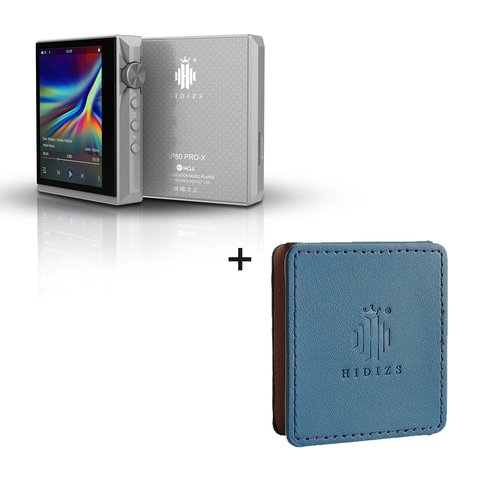
It comes in black, gray, and blue finishes, and a microSD slot on the side handles storage expansion since there is no meaningful internal memory to speak of on its own.
Under the Hood
- Dual ESS ES9219C DAC chips, one per channel, paired with an HBC3000 FPGA master clock
- Native DSD64/128/256 decoding plus full MQA unfolding support
- Single-ended output: roughly 70mW+70mW at 32 ohms
- Balanced output: roughly 190mW+190mW at 32 ohms via the 4.4mm jack
- Battery life: around 8 to 11 hours single-ended, 6 to 8 hours balanced, with up to 40 days of deep standby
- Bi-directional Bluetooth for both wireless playback and use as a Bluetooth DAC/receiver
Sound Signature
The tonal character leans neutral with a slightly analytical edge rather than anything warm or bass-boosted. Detail retrieval is genuinely strong for the price bracket, and the balanced output in particular opens up the soundstage noticeably compared to the single-ended 3.5mm jack, giving instruments more separation and a touch more air between layers on busier tracks.
Where I noticed the limits were with harder-to-drive headphones above the 200 ohm range Hidizs recommends as a practical ceiling. Within that range, the AP80 Pro-X has enough headroom to sound composed rather than strained, but pushing it past its comfort zone starts to reveal thinner dynamics than a full-size desktop amp would provide.
Battery and Daily Use
I used mine mostly on the single-ended output during a two-week test period, mixing FLAC playback with occasional Bluetooth streaming to a wireless headset while working at a desk. Battery estimates held up reasonably close to the advertised range in practice, though switching frequently between balanced and single-ended output, or leaving Bluetooth active in the background, noticeably shortens real-world runtime compared to the single-ended numbers on the spec sheet.
File Handling and Software
The onboard file browser handles folder-based navigation and metadata-based library browsing, and switching between the two took me a session or two to get comfortable with, mostly because the touchscreen response, while decent, is not quite as snappy as a modern phone. Once you settle into a workflow, though, sorting a few thousand FLAC files by album or artist is not a chore. Gapless playback worked correctly across every live album and concept record I tested, which is a detail some budget players still get wrong.
Firmware updates are distributed through the same Hidizs download center used for the rest of the lineup, and the company has kept the AP80 Pro-X reasonably well supported since launch, with periodic fixes targeting Bluetooth stability and playback bugs rather than leaving the software to stagnate after release.
How It Compares to Stepping Up From a Phone
For anyone on the fence about whether a dedicated player is worth it over a phone plus a cheap dongle, the honest answer is that the gap is real but not dramatic for casual listening. Where the AP80 Pro-X earns its keep is in sustained listening sessions on demanding headphones, where the extra output power and cleaner analog stage translate into a more relaxed, less strained sound than most phones can manage even with a decent dongle attached. If your listening is mostly casual, background music through easy-to-drive earbuds, the upgrade will be noticeable but modest.
Who This Player Is For
- Anyone stepping up from a phone or basic dongle DAC who wants meaningfully better output power and detail without carrying a brick-sized player
- Listeners who specifically want MQA decoding on a budget rather than paying flagship prices for it
- Commuters who value pocketability, since the small footprint is genuinely one of its strongest selling points
- Anyone with headphones in the sub-200 ohm range, where the balanced output has enough power to actually matter
You can check current pricing and color availability on the official Hidizs product page or through established retailers like Head-Fi’s community reviews for additional owner impressions before buying.
Accessories Worth Considering
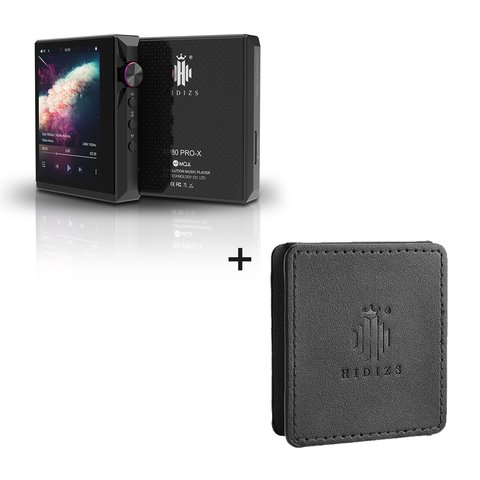
The optional leather case bundle is a sensible add-on rather than a pure cosmetic upgrade, since the AP80 Pro-X’s aluminium corners are exposed enough that daily pocket carry will eventually show light wear. A quality microSD card matters more than most buyers assume too; pairing a budget player with a slow, low-endurance card can introduce stutters on high-bitrate DSD files that have nothing to do with the DAC itself. Spending a little extra on a reputable card brand pays off in fewer playback headaches down the line.
Troubleshooting Common Issues
A few problems come up often enough with the AP80 Pro-X, and most owners of similar Hidizs players, that they are worth addressing directly:
- Bluetooth keeps disconnecting from headphones: Check for a pending firmware update on Hidizs’ download center first, since Bluetooth stability fixes are one of the more common items in their update changelogs. If the problem persists, forget the pairing on both devices and re-pair from scratch rather than just reconnecting.
- Player does not recognize the microSD card, or shows files as corrupted: Reformat the card through the AP80 Pro-X’s own settings menu rather than on a computer, since the player expects a specific file system format. Also confirm the card is a genuine, name-brand card — counterfeit high-capacity cards are common and often fail exactly this way.
- Playback stutters on high-bitrate DSD files: This is almost always a slow microSD card rather than a DAC limitation. Switching to a card rated for continuous high-speed reads resolves the vast majority of reported stutter issues.
- Touchscreen feels unresponsive or laggy: A pending firmware update often addresses this, since touchscreen responsiveness has been a target of past updates. If it persists after updating, a factory reset from the settings menu clears out any accumulated software slowdown from a large, deeply nested music library.
- Balanced output sounds quieter than expected compared to single-ended: This usually means the gain setting was not switched when changing outputs. Balanced output on the AP80 Pro-X is meant to be louder and more powerful than single-ended, so if it sounds quieter, double check the output routing and gain setting rather than assuming a hardware fault.
Frequently Asked Questions
Does the AP80 Pro-X support MQA fully?
Yes, it includes full MQA decoding and unfolding, not just partial rendering.
Can it drive high-impedance headphones well?
It performs comfortably up to around 200 ohms, which is the range Hidizs recommends. Beyond that, a dedicated desktop amp will still outperform it.
Is there internal storage, or is a microSD card required?
A microSD card is effectively required for any meaningful music library, since built-in storage is minimal.
Does it work as a Bluetooth receiver, not just a transmitter?
Yes, the Bluetooth implementation is bi-directional, so it can receive audio from a phone as well as send it to wireless headphones.
Conclusion
The AP80 Pro-X earns its reputation as one of the more sensible entry points into dedicated portable audio. It is not trying to compete with four-figure flagship players, and it does not need to; within its price bracket, the combination of balanced output, MQA support, and genuine pocketability is a hard package to beat.
A lifelong PC enthusiast who moved from soldering headphone cables to writing about them, contributing hands-on portable audio coverage to softwaredriverdownload.com.