To be clear about which product this covers: this is a comparison of the standard analog 3.5mm Tanchjim Bunny against the Moondrop Chu 2, not the newer USB-C Bunny DSP variant, which is a different product with its own onboard EQ. If you’re deciding between two straightforward, no-app, plug-and-play single dynamic driver IEMs at a similar price, this is the comparison you want.
| Spec | Moondrop Chu 2 | Tanchjim Bunny (standard) |
|---|---|---|
| Driver type | Single dynamic driver | Single dynamic driver |
| Diaphragm material | Al-Mg alloy composite | Titanium-plated PET |
| Impedance | 18Ω | 30Ω |
| Sensitivity | 119dB/Vrms | 123dB/Vrms |
| THD at 1kHz | Not officially specified | 0.05% |
| Claimed frequency response | Standard consumer range | 8Hz – 48kHz |
| Cable connector | 0.78mm 2-pin, detachable | 0.78mm 2-pin, detachable |
| Tuning character | Smoother, warmer, VDSF-leaning | More neutral, slightly more resolving |
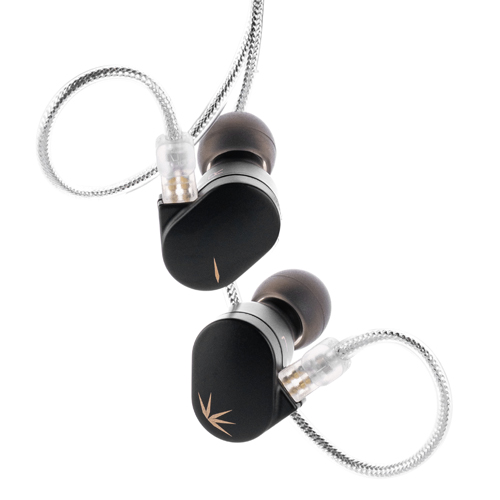
Two single dynamic drivers, two different philosophies
Both earphones use a single dynamic driver, but the engineering approach differs. The Chu 2 uses an Aluminum-Magnesium alloy composite diaphragm at 18Ω impedance and 119dB/Vrms sensitivity. The standard Tanchjim Bunny uses a titanium-plated PET diaphragm dynamic driver at 30Ω impedance, 123dB/Vrms sensitivity, with a wider claimed frequency response of 8Hz to 48kHz.
- Chu 2: Al-Mg alloy composite diaphragm, 18Ω, 119dB/Vrms
- Bunny (standard): titanium-plated PET diaphragm, 30Ω, 123dB/Vrms, 0.05% THD at 1kHz
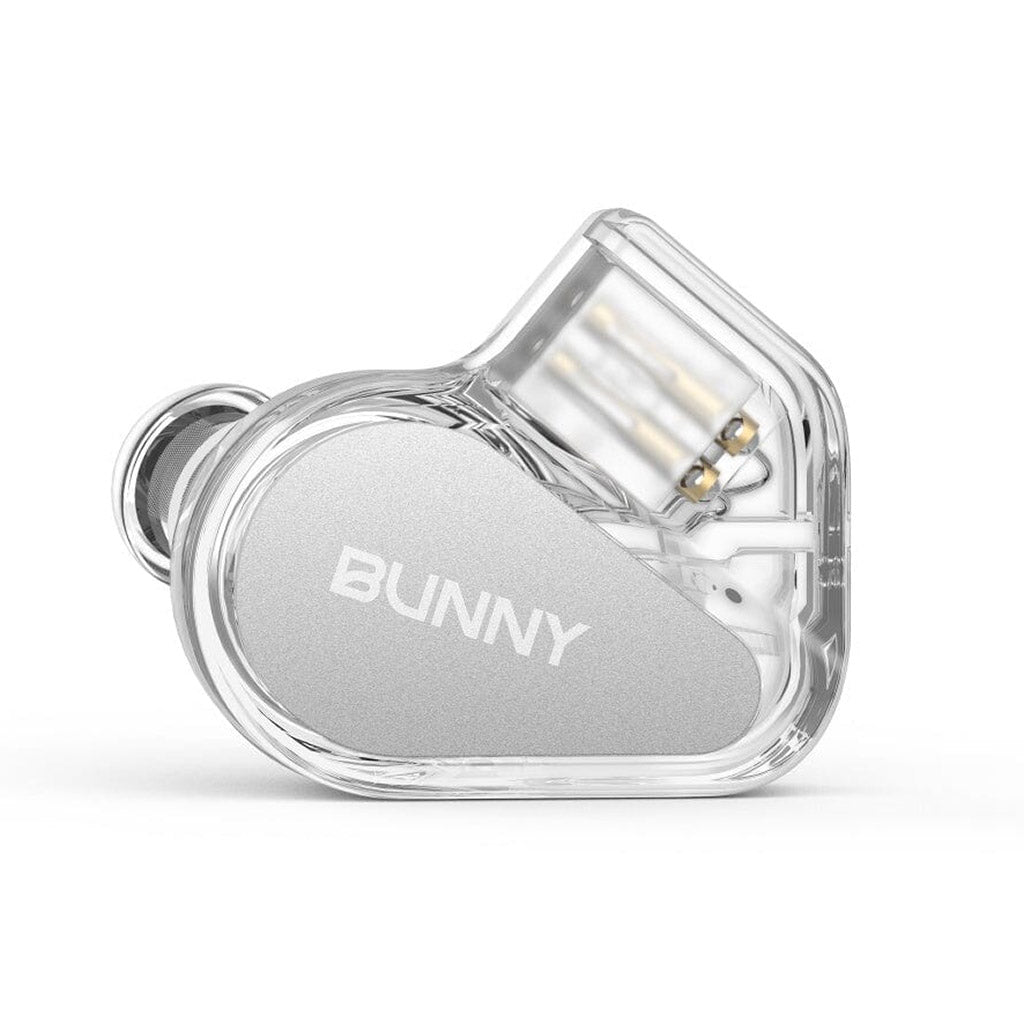
How they sound
The Bunny is tuned to Tanchjim’s own target curve, aiming for a balanced response across the frequency range rather than an aggressively boosted bass or treble region. In back-to-back listening, it comes across as slightly more neutral and a touch more resolving in the upper midrange compared to the Chu 2’s smoother, warmer VDSF-leaning tuning. The Chu 2 still edges ahead in overall ease of listening — it’s the more forgiving of the two on poorly mastered tracks.
Bass quantity is fairly similar between them, though the Bunny’s titanium-plated diaphragm gives its low end a touch more texture and speed. Neither earphone will overwhelm you with bass boost; both stay reasonably balanced by budget IEM standards.
Build and cable
Both use detachable 0.78mm 2-pin cables, so aftermarket cable swaps are simple on either. The Bunny’s shell has a lighter, more minimalist look, while the Chu 2’s resin-and-metal build feels a touch denser in hand. Neither showed any build quality concerns during my testing period.
Which one to buy
If you want the safer, smoother, more universally likeable tuning, the Chu 2 remains an easy recommendation. If you want something slightly more neutral and resolving without stepping up to a DSP or hybrid model, the standard Tanchjim Bunny is a legitimate alternative worth auditioning, particularly if you already know you prefer a flatter response curve.
Packaging and first impressions
Unboxing experience won’t make or break a purchase decision at this price point, but it’s worth noting both brands put real thought into presentation. The Chu 2 arrives in Moondrop’s familiar minimalist box with a small selection of eartip sizes and a soft carrying pouch. The Bunny’s packaging leans into a similarly clean aesthetic, with Tanchjim’s own set of silicone tips and a simple case. Neither will wow you the way a flagship unboxing might, but both feel appropriately considered for their price bracket rather than an afterthought.
Recommendations by listener type
- New to IEMs entirely: the Chu 2’s smoother, more forgiving tuning is the safer first purchase
- Coming from studio monitor headphones or wanting a flatter reference: the standard Bunny’s more neutral curve will feel more familiar
- Mostly casual, background listening: either works fine, so let price and availability decide
- Critical, focused listening sessions: the Bunny’s slightly higher resolution gives it a small edge
Whichever you choose, both represent legitimate value in the sub-$25 IEM bracket, and neither purchase should leave you feeling like you picked the “wrong” one — the differences here are genuinely about preference, not one earphone being objectively superior to the other.
Frequently asked questions
Is this comparing the Bunny DSP or the standard Bunny?
This is the standard analog 3.5mm Tanchjim Bunny, not the USB-C Bunny DSP, which is a separate product with its own onboard EQ app.
Which one has more neutral tuning?
The standard Bunny leans slightly more neutral and balanced, while the Chu 2 has a smoother, warmer signature.
Do both use the same cable connector?
Yes, both use the common 0.78mm 2-pin detachable connector standard, so cables are interchangeable between them.
Is either one better for critical, detail-focused listening?
The standard Bunny’s more neutral tuning and titanium-plated diaphragm edge it slightly ahead for critical listening, though the difference is subtle rather than dramatic.
A note on burn-in and first impressions
Both dynamic driver designs settled in noticeably over the first few hours of use, with the bass in particular sounding a bit more controlled after an initial break-in period compared to fresh out of the box. This isn’t unusual for dynamic driver IEMs generally, and I’d recommend not forming a final opinion on either earphone until you’ve put at least a few listening sessions into them, especially if your first impression out of the box feels slightly bass-heavy or a touch stiff-sounding.
What reviewers and community discussions generally agree on
Looking across enough independent reviews and community threads, a consistent pattern emerges: almost nobody considers either the Chu 2 or standard Bunny a bad purchase at their price point, which is itself a meaningful signal in a hobby full of disagreement over subjective tuning preferences. The disagreements that do show up are almost always about which specific tuning characteristic a listener personally prefers, not about whether either product represents good value for the price. That’s a reassuring sign if you’re new to this hobby and worried about picking the “wrong” option — there really isn’t one here.
One more consideration: source pairing
Given the standard Bunny’s slightly higher impedance and sensitivity numbers compared to the Chu 2, both remain trivially easy to drive from a phone, but if you’re using an older or lower-power source device, the Bunny’s higher sensitivity rating means it will reach comfortable volume with slightly less strain on a weak amplifier stage. This is a minor point for most modern devices, but worth knowing if your source is on the older or lower-powered side.
Common problems and how to fix them
- One side sounds quieter or muted: this is almost always a seating issue with the 0.78mm 2-pin connector rather than a driver fault. Unplug the cable at the earpiece, check the pins for lint or debris, and reseat it firmly until it clicks. If the issue follows the cable when swapped to the other side, the cable is the culprit, not the earphone.
- Bass feels weak or the seal seems inconsistent: both models are sensitive to eartip fit. Try each of the included tip sizes and insertion depths before assuming the tuning itself is at fault — a poor seal on either earphone will noticeably thin out the low end.
- Fresh-out-of-the-box sound feels thin or slightly harsh: both dynamic drivers benefit from a short break-in period. Give either earphone a few listening sessions before forming a final judgment, since the low end in particular tends to settle and sound more controlled after initial use.
- Cable feels stiff or microphonic (noisy when it rubs on clothing): this is a characteristic of the stock cables on both, not a defect. Wearing the cable up and over the ear, or adding a cheap chin slider, reduces the noise transmitted up to the earpieces.
- Volume seems too low even at max on your phone: the standard Bunny’s slightly higher impedance and lower sensitivity than some IEMs means very quiet source devices may need a small dedicated amp or dongle DAC to reach comfortable listening levels, though this is rarely an issue with modern phones.
Final thoughts
Both the Chu 2 and standard Tanchjim Bunny remain genuinely solid options in the sub-$25 IEM bracket, and the right pick depends mostly on whether you want smoother and warmer or a bit more neutral and resolving.
About the author: I test budget gear the same careful way I’d approach anything else — back-to-back, same tracks, same source, no assumptions carried over from a spec sheet.