Worth clearing up right away: the Hidizs MK10, sold under the ArcSonics name, is an in-ear monitor, not a digital audio player. If you came looking for another Hidizs DAP, this is the wrong page, but if you are shopping for a budget IEM from a brand better known for its music players, the MK10 turns out to be one of the more interesting releases in that price bracket, built around a single dynamic driver rather than the multi-driver hybrid designs that dominate this segment.
| Driver Type | Single 10mm dual-magnetic circuit, dual-cavity dynamic driver |
| Diaphragm | Silicon Carbide Crystal composite |
| Voice Coil | Aluminum with copper cladding |
| Shell Material | ZA12 zinc alloy, mirror finish |
| Tuning Options | Triple tuning via swappable nozzle filters |
| Certification | Hi-Res Audio certified |
| Cable | Detachable, standard connector |
| In the Box | IEM shells, cable, 3 eartip sizes, 3 nozzle filters |
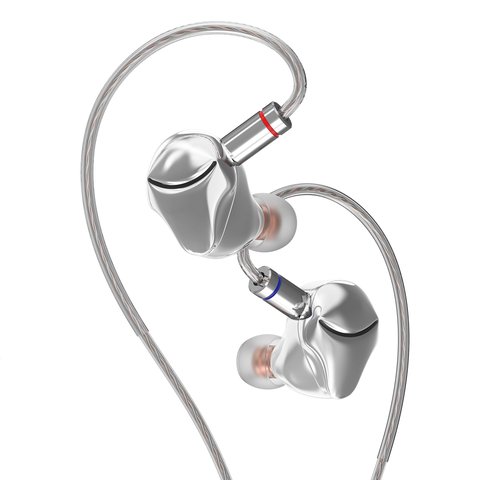
Key Specs
- Driver type: single 10mm dual-magnetic circuit, dual-cavity dynamic driver
- Diaphragm: Silicon Carbide Crystal composite, chosen for a rigid yet lightweight construction
- Voice coil: aluminum with copper cladding
- Shell material: ZA12 zinc alloy with a mirror finish
- Tuning: 6 sound styles across triple tuning options via included nozzles or software, depending on the bundle
- Certification: Hi-Res Audio certified
- Cable: detachable, included in the box alongside multiple eartip sizes and nozzle filters
Build Quality
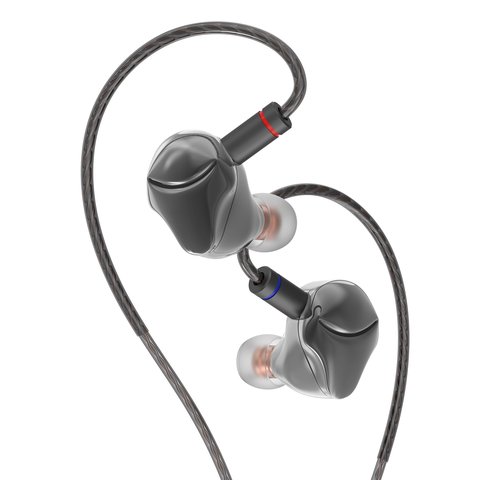
The zinc alloy shells feel dense and well-finished for the price, with a mirror polish that photographs better than most budget IEMs manage. The detachable cable uses a standard connector setup, so replacing it later with an aftermarket upgrade cable is straightforward if you eventually want to experiment with a different cable material.
Sound Signature
The MK10 leans toward a neutral-to-mild U-shaped tuning, meaning a modest lift in bass and treble without going overboard in either direction. I ran it for a couple of weeks paired with a phone dongle during commutes, mostly on rock and electronic playlists, and came away impressed by how composed the bass stayed even on busier tracks; it extends with decent authority but does not bloom into the midrange the way some single-dynamic-driver budget IEMs tend to. Vocals sit forward enough to stay clear without sounding thin, and the overall presentation avoids the fatiguing treble spike that occasionally shows up in this price range.
It is not going to out-resolve a proper multi-driver hybrid at three or four times the price, but for a single dynamic driver design, the technical performance punches noticeably above its actual cost.
What’s in the Box
- The MK10 ArcSonics IEM shells themselves
- A detachable cable
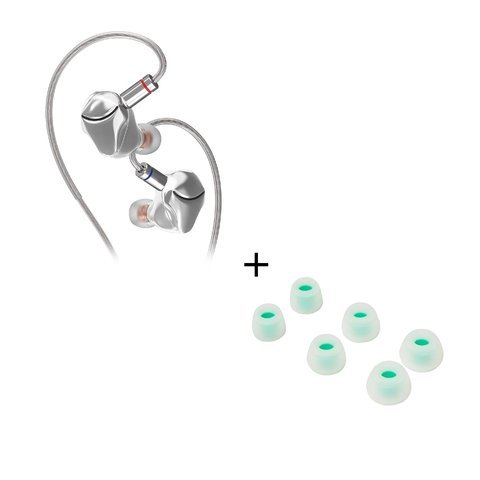
- Two sets of eartips across three sizes (small, medium, large)
- Three nozzles with different acoustic filters, letting you tune the sound signature slightly without needing an EQ
Who Should Buy the MK10
This is a strong pick for anyone shopping in the budget IEM category who wants a genuinely well-built metal shell rather than plastic, and who prefers a natural, fatigue-free tuning over an aggressively bass-boosted or treble-forward signature. It is also a sensible choice if you want the flexibility of swappable nozzle filters without diving into a more expensive, more complex multi-driver hybrid design. You can check current pricing and bundle options on the official Hidizs MK10 ArcSonics page.
Fit and Comfort Over Longer Sessions
The zinc alloy shells carry a bit more weight than the resin shells common on many competing budget IEMs, and that was noticeable the first day I wore them for a full commute plus a work session, well past the two-hour mark. It never became uncomfortable, but ear fatigue from the added weight showed up slightly sooner than it does with my usual lighter resin-shelled pairs. Swapping to the largest included eartip size improved seal and effectively reduced how much the shells shifted during movement, which indirectly helped comfort as well. If you have smaller ears or plan to wear IEMs for extended stretches, it is worth testing fit carefully rather than assuming a metal shell automatically means a worse fit; in this case it was a minor adjustment rather than a dealbreaker.
Nozzle Filters and Tuning Flexibility
The three included nozzle filters are a genuinely useful inclusion at this price, letting you nudge the tonal balance without needing external EQ software. Swapping to the filter that reduces upper-treble energy tamed the occasional sharp edge on poorly mastered tracks, while the more open filter pulled out slightly more detail and air on well-recorded material. It is a small feature, but it adds real flexibility that some far pricier IEMs skip entirely in favor of a single fixed tuning.
Pairing Recommendations
Because the MK10 is easy to drive off a modest source, it works well straight out of a phone’s headphone jack for anyone who still has one, and it scales up gracefully with a basic dongle DAC without demanding a powerful amp to sound its best. Pairing it with a warmer-sounding source can push the low end slightly further forward than some listeners prefer, so if bass is already a strong point of your chain, a more neutral source tends to keep the overall balance in check.
Troubleshooting Common MK10 Issues
A few issues come up often enough with the MK10 that it is worth knowing the fix before assuming a defective unit.
- Sound feels thin or bass-light: Check which nozzle filter is currently installed. The three included filters shift the tonal balance noticeably, and the brighter filter can read as bass-light compared to the more neutral or warmer option.
- Poor seal or shells slipping out during movement: Try the largest included eartip size first. Because the zinc alloy shells carry more weight than typical resin shells, a slightly firmer seal helps keep them anchored during activity.
- One channel sounds quieter than the other: Detach and reseat the cable connector at the earpiece; a partially seated detachable connector is the most common cause of channel imbalance on IEMs with swappable cables.
- Treble sounds harsh on certain tracks: Swap to the nozzle filter designed to tame upper-treble energy, which smooths out sharp edges on poorly mastered recordings without needing external EQ.
- Muffled sound after extended use: Earwax buildup in the nozzle mesh is the usual culprit on single dynamic driver IEMs. Clean the mesh periodically with a dry, soft brush rather than liquid or a sharp tool.
Frequently Asked Questions
Is the Hidizs MK10 a music player or an earphone?
It is an in-ear monitor, sold under the ArcSonics name. Hidizs is better known for its digital audio players, but the MK10 is strictly an earphone.
How many drivers does the MK10 use?
A single 10mm dynamic driver with a dual-cavity design and a Silicon Carbide Crystal diaphragm, rather than a multi-driver hybrid configuration.
Can I swap the cable?
Yes, it ships with a detachable cable using a standard connector, making aftermarket cable upgrades straightforward.
Does it pair well with a Hidizs DAP like the AP80 Pro-X?
Yes, the MK10’s easy-to-drive single dynamic driver design makes it a sensible pairing with compact DAPs or basic dongle DACs without needing significant amplification.
Care and Longevity
Zinc alloy shells hold up well against everyday wear, but the mirror finish does show fingerprints and minor scratches more readily than a matte resin shell would, so a soft pouch during transport is worth using rather than tossing them loose into a bag. Cleaning the nozzle mesh periodically with a dry brush prevents earwax buildup from gradually dulling the treble response, a maintenance step that matters more on single dynamic driver designs like this one than it might on sealed balanced armature setups.
Conclusion
The MK10 ArcSonics is a reminder that a well-executed single dynamic driver can still compete in a market crowded with multi-driver hybrids. Between the metal shell, the swappable nozzle filters, and a genuinely composed tuning, it earns its spot as a serious budget contender rather than a side project from a DAP-focused brand.
Long-time PC hardware writer and audio hobbyist, the author brings a CS degree and a decade of gear-testing habit to every review published on softwaredriverdownload.com.