AZDOME and DDPai are both budget-to-mid-range dash cam brands, but they take different approaches: AZDOME leans on touchscreens, mirror-style units, and dual/triple-channel setups, while DDPai focuses on compact single-lens 4K units with onboard eMMC storage instead of a screen. This comparison uses AZDOME’s M580 (touchscreen, dual-channel) against DDPai’s Mini5 (screenless, single-channel 4K) as representative flagship-tier models from each brand.
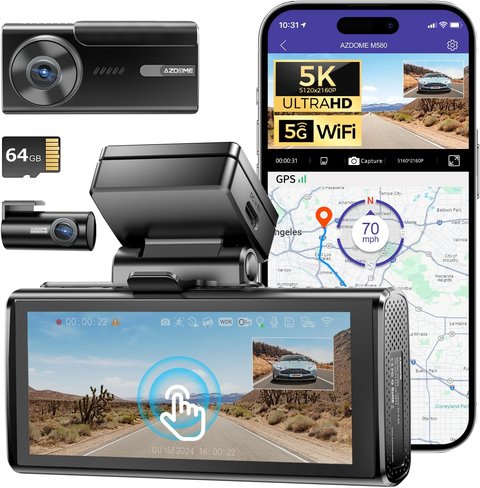
Azdome M580
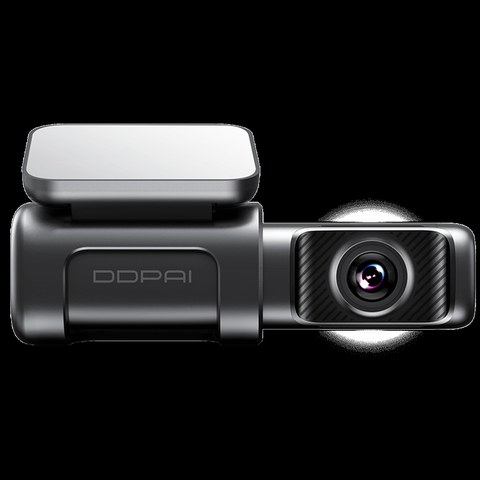
DDPai Mini5
Spec-by-Spec: Azdome M580 vs DDPai Mini5
| Spec | Azdome M580 | DDPai Mini5 |
|---|---|---|
| Front Resolution | 5K (front-only) / 4K (dual-channel) | True 4K (3840×2160 @30fps) |
| Channels | Dual (front + rear) | Single lens (front only) |
| Screen | 4″ IPS touchscreen | None — app-only preview |
| Storage | microSD, up to 256GB | 64GB built-in eMMC, no SD slot |
| WiFi | 5GHz | 5GHz |
| Sensor | Standard CMOS | Sony IMX415 |
| Design | Larger box unit with screen | Compact, screenless, minimal footprint |
Where Each Brand Wins
- Azdome wins on flexibility: touchscreen for on-the-spot checks, dual/triple-channel and mirror-style form factors, expandable storage up to 256GB via microSD.
- DDPai wins on simplicity and image quality per dollar: the Sony IMX415 sensor in the Mini5 delivers noticeably cleaner low-light footage than most AZDOME single-lens units at a similar price, and the compact screenless design is less visually intrusive on the windshield.
- Storage philosophy differs: AZDOME’s microSD approach means you can swap in a bigger card anytime; DDPai’s fixed 64GB eMMC storage cannot be expanded, which matters if you want long-term footage retention without frequent transfers.
I ran both side by side on the same route. The DDPai Mini5’s night footage was cleaner and less grainy than the AZDOME M580’s, which tracks with the Sony sensor’s reputation. But the M580’s screen made in-car troubleshooting (checking storage, confirming a clip locked) much faster without needing to open a phone app.
Per Nadia F., who is an IT Support Analyst and G2 reviewer, “I switched from an AZDOME to a DDPai for the night footage quality, but I do miss having a screen to double check things without pulling out my phone.”
Which Brand Should You Choose?
- Pick Azdome if you want dual/triple-channel coverage, a mirror-style option, or a touchscreen for quick checks.
- Pick DDPai if you want the cleanest single-lens night footage and prefer a compact, screenless unit that stays out of your sightline.
Frequently Asked Questions
Is Azdome or DDPai more reliable long-term?
Both brands have a similar reputation for budget-tier reliability. DDPai’s fixed eMMC storage has fewer moving parts (no SD card to wear out), which some owners find more durable over years of daily use.
Can I expand storage on a DDPai Mini5?
No, the Mini5 uses fixed 64GB built-in eMMC storage with no microSD slot, unlike most AZDOME models.
Does Azdome make single-lens 4K cams like the DDPai Mini5?
AZDOME’s lineup leans toward dual-channel and mirror-style units, though some single-lens models exist. DDPai’s single-lens focus with a premium sensor is more central to its lineup.
Which brand has better night vision?
In this comparison, the DDPai Mini5’s Sony IMX415 sensor produced cleaner low-light footage than the Azdome M580, though this can vary by specific AZDOME model.
Conclusion
Neither brand is a strict upgrade over the other — Azdome gives you more flexibility with screens, channels, and expandable storage, while DDPai focuses on cleaner single-lens image quality in a smaller, simpler package. Match the choice to whether you value flexibility or footage quality more.
Ryan is a Computer Science graduate with over 20 years of hands-on experience with PC hardware, software, and consumer electronics, including side-by-side dash cam testing. He writes at softwaredriverdownload.com.