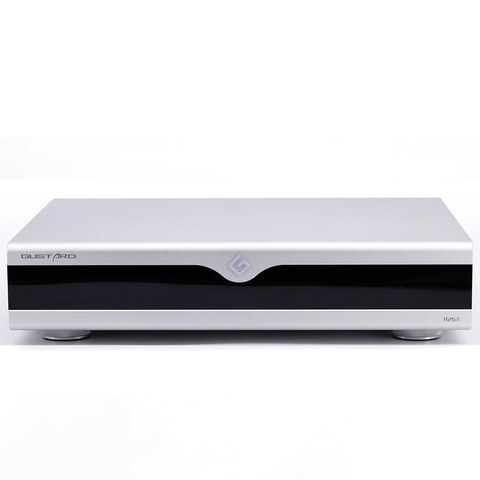
The R26 built a genuinely loyal following as one of Gustard’s most talked-about R2R DACs, so when the R26 II arrived, the expectation wasn’t a reinvention — it was a refinement of something that already worked. After digging through the changes and listening notes, that’s more or less exactly what Gustard delivered.
Quick Specs
- Model / Applies To: Gustard R26 II network streaming R2R DAC
- DAC design: 26-bit R2R ladder network, >130dB dynamic range
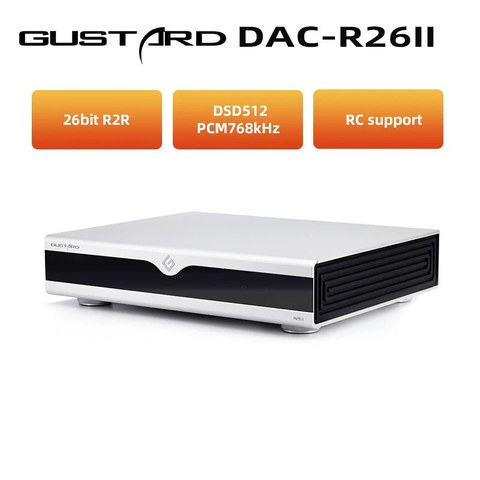
- Decoding: Native up to DSD512 and PCM 768kHz
- Connectivity: Gustard Saier network streaming bridge, Bluetooth 5.1
- Price Tier: Upper-mid, flagship-adjacent R2R DAC segment
- Compatibility: Roon, AirPlay, and UPnP network streaming; standard RCA/XLR analog outputs
| Spec | Value |
|---|---|
| Model | Gustard R26 II network streaming R2R DAC |
| DAC design | 26-bit R2R ladder network, >130dB dynamic range |
| Decoding | Native up to DSD512 and PCM 768kHz |
| Networking | Gustard Saier streaming bridge (Roon, AirPlay, UPnP) |
| Bluetooth | Bluetooth 5.1 |
| Outputs | Standard RCA/XLR analog outputs |
| Price tier | Upper-mid, flagship-adjacent R2R DAC segment |
What the R26 II actually is
The R26 II is Gustard’s updated 26-bit R2R network streaming DAC, borrowing technology from the company’s flagship R30 rather than being a simple firmware update to the original R26. Key specifications:
- 26-bit R2R ladder network processing, delivering more than 130dB of dynamic range
- Upgraded network bridge running Gustard’s newer Saier streaming system
- Bluetooth 5.1 connectivity, an upgrade from Bluetooth 5.0 on the original R26
- Native support up to DSD512 and PCM 768kHz
- Refined tuning and premium power supply capacitors carried over from R30 development
Why Gustard called it an evolution, not a revolution
The R26 II keeps the same fundamental sound character that made the original R26 popular — a warm, musically engaging presentation with a genuinely deep soundstage. What changes is execution: tighter, better-controlled bass, a more structured overall stage, and greater coherence between frequency ranges. None of that amounts to a different-sounding DAC; it’s the same design philosophy pushed further with better parts and more mature engineering, including borrowed elements from the pricier R30.
Networking and streaming upgrades
The switch to Gustard’s Saier streaming system is arguably the more practically significant change for day-to-day use, even more than the audio processing bump to 26-bit. A more modern, better-supported network bridge means more reliable Roon, AirPlay, and UPnP streaming, along with generally smoother firmware update handling than the original R26’s networking stack.
Is it worth upgrading from a standard R26?
If your current R26 is working well and you’re not having networking issues, the improvements here are real but incremental rather than dramatic — this isn’t a case where the older unit suddenly feels obsolete. Where the upgrade makes clearer sense:
- You’ve had connectivity or firmware reliability issues with the original R26’s network bridge
- You want Bluetooth 5.1’s improved range and stability over 5.0
- You’re buying new rather than upgrading from an existing unit, in which case there’s little reason to seek out the older model instead
The official product listing at The HiFi Cat has the full current spec sheet, and Audiophile Shop AU’s review includes a direct listening comparison against both the original R26 and a competing R2R DAC.
Setup considerations
- Register the unit with the Saier app early to make sure firmware updates install cleanly before you rely on network streaming day-to-day
- Use a wired Ethernet connection rather than Wi-Fi where practical for the most stable streaming performance
- If pairing with a headphone amp or preamp, XLR output is preferred whenever your downstream gear supports balanced input
Comparing the R26 II to competing network DACs
The network-streaming R2R DAC category has become more crowded recently, with several brands adding built-in streamers to what were previously standalone DACs. What sets the R26 II apart is that Gustard designed the streaming bridge and the R2R conversion stage together as one integrated product, rather than bolting a third-party streaming module onto an existing DAC design after the fact. That integration tends to show up as fewer firmware quirks and more consistent performance across both the audio and networking sides of the unit.
- Check whether a competing product’s streaming module is proprietary or a licensed third-party board, since integrated designs tend to age better with firmware support
- Confirm Roon Ready certification status directly if that’s a requirement for your setup, as certification status can change with firmware updates
- Ask about typical firmware update frequency from current owners, since a more actively maintained network stack tends to stay compatible with evolving streaming services longer
A note on buying at launch versus waiting
Newly released network-connected audio gear sometimes ships with a few firmware rough edges that get ironed out over the following months. If you’re not in a rush, it can be worth waiting a firmware cycle or two after a product like the R26 II launches before buying, particularly if the networking stack is new. That said, Gustard’s decision to build on the already-shipping R30’s proven networking foundation, rather than launching an entirely new streaming implementation from scratch, reduces that risk somewhat compared to a completely from-scratch network DAC launch.
Troubleshooting Network and Streaming Issues
- Roon or UPnP not detecting the R26 II: confirm the DAC and your streaming source are on the same subnet, and reboot the network bridge from the Saier app if it still does not appear.
- Bluetooth keeps disconnecting: forget the pairing on your source device and re-pair from scratch, and keep obstructions between the phone and DAC to a minimum.
- Firmware update fails or stalls: retry over a wired Ethernet connection rather than WiFi, since a dropped connection mid-update is the most common cause of a failed flash.
- Alternate path if networking misbehaves: fall back to a wired USB or coaxial digital input from a computer or transport, which sidesteps the network stack entirely while you troubleshoot.
FAQ
Is the R26 II a completely new DAC or an update to the R26?
It’s built on the same R2R philosophy as the original R26 but with a real hardware and networking refresh incorporating elements from the flagship R30.
Does it sound different from the original R26?
The tonal character is similar, but bass control, staging structure, and overall coherence are noticeably tighter.
What streaming services does it support?
Standard network streaming protocols including Roon, AirPlay, and UPnP through its updated Saier network bridge.
Is Bluetooth audio quality good on this DAC?
Bluetooth 5.1 is primarily a convenience feature; for critical listening, a wired digital connection will outperform Bluetooth on any DAC in this category.
Should I buy the R26 II or save up for the R30?
The R30 is a genuine flagship step up in price and performance; the R26 II is the better value pick unless your budget specifically supports the R30 tier.
A note on power supply and cabling
Since the R26 II’s power supply capacitors are part of what carried over from R30 development, giving the unit a clean, dedicated power outlet rather than sharing a heavily loaded power strip with other high-draw devices is a small but sensible precaution. It’s not a strict requirement, but it removes one more variable when you’re trying to evaluate the DAC’s actual performance rather than noise picked up from a shared circuit.
Final verdict
The R26 II is a good example of a manufacturer resisting the temptation to reinvent a product just to justify a version number bump. The changes here are real, the networking upgrade in particular is genuinely useful day to day, and the core sound that made the original R26 popular remains intact rather than being altered for its own sake.
Incremental updates like this rarely get the coverage they deserve because “same DAC, but better” doesn’t make for an exciting headline, even though it’s often exactly the upgrade path that makes the most practical sense for existing owners.