Lotoo built its reputation on professional broadcast recorders before it ever made a consumer digital audio player, and that engineering pedigree still shows in the PAW Gold Touch. This is not a new release chasing trend specs; it has been on the market long enough to earn a settled reputation among portable-audio enthusiasts as one of the more distinctive-sounding flagship DAPs available, thanks in large part to a design philosophy that prizes a fast, dynamic, “recording studio” character over the smoother, more processed house sound some rival flagships lean toward.
Quick Specs
- Model: Lotoo PAW Gold Touch (LPGT)
- DAC Chipset: AKM AK4497EQ
- Display: 3.77-inch IPS touchscreen, 800×480, Lotoo OS
- Battery: 5500mAh, rated up to 10 hours of playback
- Storage: microSD only, up to 2TB, no fixed internal memory
- Price Tier: Flagship, around $3,199 at full retail
- Compatibility: Bluetooth with LDAC, USB-C DAC mode for a computer, single-ended and 4.4mm balanced outputs
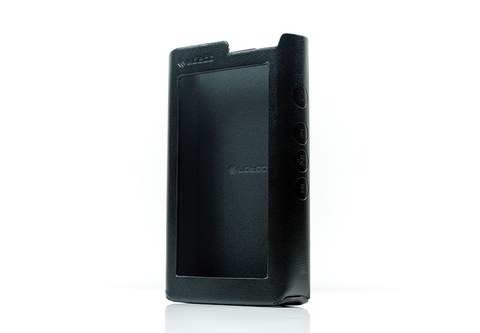
Hardware and Build
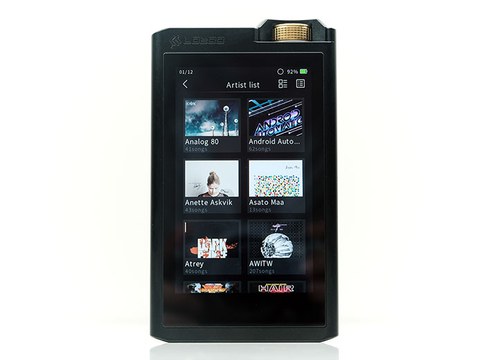
The PAW Gold Touch (often shortened to LPGT by owners) is built around Lotoo’s own operating system rather than Android, which is a deliberate choice: boot time is close to instant, there is no background bloat competing for CPU cycles with audio playback, and the UI is controlled through a 3.77-inch touchscreen paired with physical buttons on the side for playback control without waking the display.
Under the hood sits an AKM AK4497EQ DAC chip, a well-regarded flagship-tier converter that supports native PCM up to 768kHz and DSD up to DSD512, decoding limits that are notably higher than some competing players built around the same chip family. Storage is handled entirely through microSD, so there is no fixed onboard memory to run out of; you simply size the card to your library. Connectivity includes Bluetooth with LDAC support for wireless listening, plus a USB-C port that supports both charging and use as a USB DAC for a computer, running in fully asynchronous mode.
- DAC: AKM AK4497EQ
- Display: 3.77-inch IPS touchscreen, Lotoo OS
- Balanced output: 4.4mm, rated around 500mW into a 32-ohm load
- Digital formats: PCM up to 768kHz, DSD up to DSD512
- Storage: microSD only, no fixed internal memory
- Wireless: Bluetooth with LDAC, USB-C DAC mode
Setup Tips
A few practical notes for anyone picking one up:
- Format a fast, high-capacity microSD card before loading music; since there is no internal storage fallback, card speed directly affects how quickly large hi-res or DSD libraries scan and index.
- Use the balanced 4.4mm output whenever the headphones or IEMs support it. The extra power on tap noticeably improves control with harder-to-drive planar or dynamic headphones compared to the single-ended jack.
- If pairing over Bluetooth, confirm the receiving device (headphones, portable amp, or speaker) supports LDAC, otherwise playback falls back to a lower-resolution codec and a chunk of what the DAC is doing gets thrown away before it reaches your ears.
- Give the touchscreen UI a little patience if coming from Android-based players; Lotoo OS is fast but has its own menu logic that takes a session or two to get used to.
Sound
The house sound here is punchy, fast, and slightly forward rather than laid-back and smoothed over. Transients snap quickly, bass is tight and well-controlled rather than bloated, and the overall tonality carries a hint of warmth in the low-mids without ever slipping into being thick or syrupy. Compared to some flagship DAPs that chase an ultra-smooth, almost tube-like presentation, the LPGT feels more like a mastering engineer’s monitor than a soft-focus lifestyle player, which is exactly in line with Lotoo’s professional-audio background.
Detail retrieval is genuinely strong, and the player’s dynamic punch stands out most clearly on percussion-heavy or electronic tracks, where lesser DAPs tend to round off transients. It is not the most spacious-sounding flagship on the market in terms of raw soundstage width, but the tradeoff is a tightly controlled, immediate presentation that many longtime owners describe as one of the more “alive” sounding players they have owned. Pairing well is not limited to any one type of headphone; the extra current on tap from the balanced output means it drives everything from sensitive IEMs to full-size planar headphones without strain, though sensitive IEM users should watch for a touch of background hiss on more revealing gear, a known quirk of this player’s output stage.
Price and Positioning
The PAW Gold Touch sits at around $3,199 at full retail, which places it firmly in flagship DAP territory alongside players from Astell&Kern and Cayin’s higher tiers. That is worth flagging clearly since some casual references to this player online cite lower figures; based on current listings from retailers like Jaben, the roughly $3,199 price point is the accurate current figure. At that price, it is competing with players offering dual-DAC architectures and more modern chipsets, so the appeal is squarely about that specific Lotoo house sound rather than chasing the newest spec sheet.
Who Should Buy It
This is a player for someone who already knows they like a fast, dynamic, slightly forward presentation and wants a dedicated, single-purpose transport rather than a do-everything Android DAP loaded with streaming apps. If you want deep app support, a huge onboard storage option, or a soundstage-first tuning, there are other flagships that fit that brief better. If you want something that feels closer to a mastering reference tool with real portability, the LPGT still holds up well against players released well after it.
Troubleshooting and Setup Tips
A few issues come up repeatedly with new LPGT owners, and most have a straightforward fix:
- microSD card not recognized: Reformat the card in the player itself rather than on a computer, since Lotoo OS can be picky about partition tables created by desktop formatting tools. Slower or older cards may also need a few extra minutes to finish indexing a large library the first time.
- Bluetooth pairs but falls back to a lower-resolution codec instead of LDAC: Confirm the receiving headphones, amp, or speaker explicitly supports LDAC; if the paired device only supports SBC or AAC, the LPGT automatically downgrades the stream and there is no way to force LDAC on unsupported hardware.
- Firmware update fails or the player will not boot after an update: Copy the firmware file to the root of a freshly formatted microSD card rather than a subfolder, and make sure the battery is charged above roughly 50 percent before starting, since an interrupted update is the most common cause of a stuck boot screen.
- Computer will not detect the LPGT as a USB DAC: Some operating systems need a driver install for the asynchronous USB DAC mode to be recognized; check Lotoo’s support downloads for the correct driver rather than assuming plug-and-play on every system.
FAQ
Does the PAW Gold Touch run Android?
No. It uses Lotoo’s own proprietary OS, which trades app flexibility for faster boot times and a leaner, audio-focused interface.
What is the maximum resolution it supports?
PCM up to 768kHz and native DSD up to DSD512, both handled by the AKM AK4497EQ DAC chip.
Does it have internal storage?
No, storage is entirely via microSD card, so there is no fixed capacity ceiling built into the player itself.
Can it be used as a USB DAC for a computer?
Yes, over USB-C in fully asynchronous mode, which lets a laptop or desktop use the LPGT’s DAC and output stage instead of onboard sound.
Is it a good fit for sensitive in-ear monitors?
It pairs well overall, though very sensitive multi-driver IEMs may reveal a small amount of background hiss on the balanced output, so it is worth auditioning with your specific IEM if noise floor is a priority.
I have spent a fair amount of time around Astell&Kern, Cayin, and Lotoo players while covering portable audio gear for this site, and the LPGT remains one of the more distinctive-sounding flagships in that group rather than a me-too spec bump.