The Cayin N6ii is a slightly older generation player than the N6iii that’s already covered elsewhere on this site, but it’s still very much a current, actively sold and reviewed digital audio player — and its defining trick, a swappable motherboard system, is arguably still one of the more interesting ideas in the portable audio space.
| Spec | Detail |
|---|---|
| DAC Chip (A01 module) | AK4497EQ (dual) |
| Processor | Snapdragon platform, 4GB RAM |
| Battery | 5900mAh, up to 14 hrs unbalanced / 13 hrs balanced |
| Wireless | Dual-band WiFi, Bluetooth 4.2 with aptX and LDAC (up to 96kHz) |
| Digital Output | I2S via mini-HDMI-style connector |
| Weight | 290g |
| Storage | microSD expansion |
| Launch Price | $1,199 (original A01 configuration) |
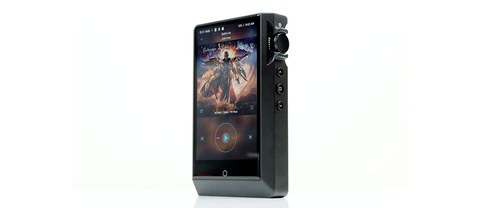
The Modular Idea, Explained
Most DAPs lock you into whatever DAC chip and amp circuit the manufacturer chose at launch. Once you buy it, that’s the sound you’re stuck with until you buy an entirely new player. Cayin’s answer with the N6ii was to split the device into two physical halves: a fixed “motherboard” housing that handles the processor, screen, battery, and controls, plus a removable audio module that plugs into it, containing the actual DAC chip and amplification circuit.
Swap the module, and you fundamentally change how the player sounds, without touching the rest of the device. It’s a genuinely clever piece of industrial design, and it means an N6ii bought years ago can still be meaningfully upgraded by buying a newer module rather than a whole new player.
The A01 Module
The original N6ii ships with the “A01” audio module, built around an AK4497EQ DAC chip. That’s not a budget chip picked to hit a price point — it’s the same DAC used in Astell&Kern’s SP1000 flagship and in Cayin’s own N8 flagship player, both considerably pricier devices. Getting that chip in a mid-range modular player is a big part of the N6ii’s value proposition.
Sonically, the A01 module leans toward a rich, engaging, slightly warm presentation rather than a clinically neutral one — the kind of tuning that tends to flatter a wide range of headphones and IEMs rather than demanding a perfectly synergistic pairing.
Everyday Specs
- Snapdragon processing platform with 4GB of RAM
- Dual-band WiFi and Bluetooth 4.2 with aptX and LDAC support up to 96kHz
- 5900mAh (3.8V li-ion) battery rated for 14 hours unbalanced or 13 hours balanced playback
- 290g weight
- I2S digital output via a mini-HDMI-style connector for connecting to a compatible external DAC
That battery life is genuinely strong for a player running a power-hungry discrete DAC chip, and the I2S output is a nice touch for anyone building a desktop rig around the N6ii as a transport, mirroring the same idea used in Cayin’s own Mini-CD MK2 CD player.
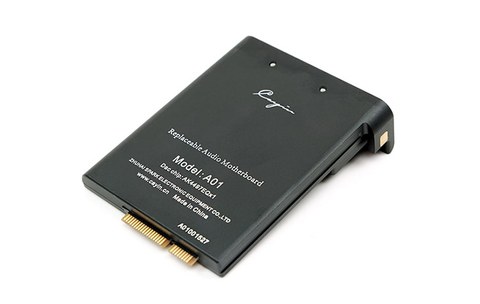
Beyond A01: Other Modules
Part of what keeps the N6ii relevant is that Cayin kept releasing new audio modules for it long after launch, including options built around R-2R discrete resistor DACs and dedicated line-out/pre-amp configurations for pairing with outboard amplifiers. That means a buyer isn’t locked into the original A01 sound signature forever — it’s possible to chase a completely different tonal character just by swapping the module, without replacing the whole player.
Reviewers at Headfonia and Headfonics have covered several of these modules over the years, and the general consensus is that the modular concept has aged well, giving the N6ii unusual longevity compared to most DAPs that get replaced outright every product cycle.
Is It Worth Buying Today?
At $1,199 for the original configuration, the N6ii sits in a competitive mid-flagship price bracket. What tips it in the N6ii’s favor for a lot of buyers is precisely the module system: rather than betting everything on one DAC implementation, you’re buying into a platform that can be reconfigured as your tastes or budget change. If you value that flexibility, and don’t mind that this is now the previous generation relative to the N6iii, it remains a sensible and still-current recommendation.
Common N6ii Problems and Fixes
- Player won’t recognize the audio module after a swap: Power down completely before swapping modules rather than hot-swapping. The contacts need a clean power cycle to re-initialize, and hot-swapping can leave the module unrecognized until a reboot.
- Bluetooth keeps dropping with LDAC enabled: LDAC’s higher bitrate is more sensitive to interference. Switching to a lower LDAC quality tier in the Bluetooth settings, or falling back to aptX in crowded WiFi environments, usually resolves intermittent dropouts.
- microSD card not detected: Reformat the card to exFAT on a computer first; some cards pre-formatted for cameras or other devices use a file system the N6ii’s Android layer doesn’t read reliably.
- Battery drains faster than expected: The discrete DAC modules are power-hungry, and leaving WiFi or Bluetooth scanning active in the background compounds it. Disabling wireless radios when not streaming noticeably extends runtime.
- Screen feels sluggish after a firmware update: Clear the cache partition through the player’s recovery menu, or do a soft reset. Occasionally a firmware update leaves temporary files behind that slow the touch interface until cleared.
Build and Day-to-Day Handling
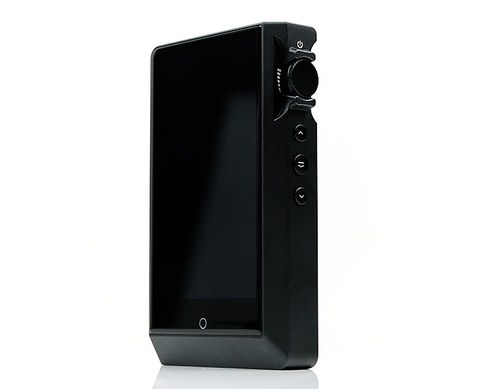
Because the N6ii is essentially two stacked components bolted together, it’s noticeably chunkier and heavier in hand than a comparable single-board DAP. That’s the trade-off for modularity, and most owners seem to accept it readily given what they get in return. The touchscreen interface, running on the Snapdragon platform mentioned earlier, feels responsive for everyday navigation — browsing a library, adjusting EQ, or pairing Bluetooth headphones doesn’t feel like fighting underpowered hardware the way some budget Android DAPs can.
Physical controls are laid out sensibly too, with dedicated playback buttons on one edge that let you skip tracks or pause without waking the screen, a small but appreciated detail for anyone using the N6ii during a commute or workout. The volume wheel has enough resistance that accidental bumps in a bag or pocket are unlikely to blast your ears, a complaint that has plagued more than a few competing players over the years.
For anyone weighing the N6ii against a fixed-DAC flagship at a similar price, the real question is whether module flexibility matters more to you than squeezing the absolute best single-configuration performance out of a locked design. There’s no universally correct answer, but it’s the deciding factor worth thinking through before choosing between the two philosophies.
Storage-wise, the N6ii relies on microSD expansion rather than large amounts of built-in space, which keeps the unit’s cost down but means budgeting for a good quality card if you carry a large lossless library. Combined with the dual-band WiFi, streaming apps installed through the player’s software layer generally work without much fuss, though as with most Android-based DAPs, occasional app compatibility quirks are part of the territory compared to a phone running the latest OS version.
Is the N6ii the same as the N6iii?
No, the N6ii is the earlier generation. It’s a distinct, still-current product with its own module ecosystem, not simply an older name for the same player.
Can I upgrade the DAC later?
Yes — that’s the whole point of the modular design. You can swap in a newer audio module without replacing the rest of the player.
Does it support high-res Bluetooth codecs?
Yes, aptX and LDAC are both supported, up to 96kHz over Bluetooth 4.2.
What’s the benefit of the I2S output?
It provides a cleaner digital handoff to a compatible external DAC than standard coaxial or optical connections, useful if you’re using the N6ii as a desktop transport.
Is it heavier than typical DAPs?
Yes, at 290g it’s on the heavier side, a direct result of the two-part modular construction housing both the motherboard and swappable audio module.
Written by a long-time personal computer and gadget reviewer who treats every DAP and amplifier like a puzzle worth taking apart, literally and figuratively.