Collaborations between IEM manufacturers and YouTube reviewers usually end up as a retuned color variant with a new box. The DUNU SA6 Ultra is a rarer case where the collaboration — between DUNU and reviewer Z Reviews — actually shipped in a genuinely limited run, sold out within a couple of days, and has been a recurring topic in secondhand IEM discussions ever since. I managed to spend real time with a unit and wanted to break down what actually changed versus the standard SA6, beyond the obvious cosmetic differences.
| Spec | Detail |
|---|---|
| Driver Configuration | 6BA (six balanced armature) |
| Shell Material | Stabilized wood faceplate, smoky gray resin shell |
| Tuning Modes | Switchable Normal and Atmospheric (+2dB bass) |
| Connector | Recessed 0.78mm 2-pin |
| Included Cable | Hulk Pro mini modular, swappable 2.5mm/4.4mm/3.5mm plugs |
| Limited Run | 300 units worldwide, three color variants |
| Price | at original launch |
Same Driver Count, Different Tuning Philosophy
The SA6 Ultra keeps the same 6BA (six balanced armature) driver configuration as the original SA6, so this is not a hardware redesign in terms of driver count. What changed is the crossover tuning and the housing. DUNU worked directly with Z Reviews on the sound target, landing on a smoother, more relaxed presentation than the original while keeping the resolution and detail retrieval that made the SA6 line popular in the first place. Treble extension is a particular strength here — it reaches high without turning splashy or fatiguing, giving the upper registers an airy quality that a lot of multi-BA sets struggle to pull off cleanly.
At $580, the SA6 Ultra sits at a premium over the standard SA6, and that premium buys you the retuning, the limited-edition shells, and a notably upgraded accessory bundle.
Stabilized Wood Faceplates
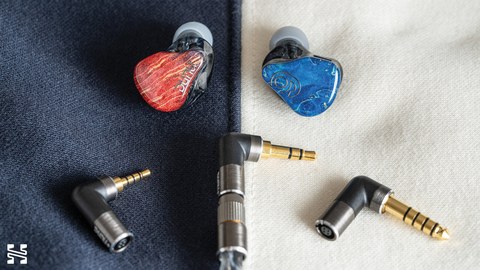
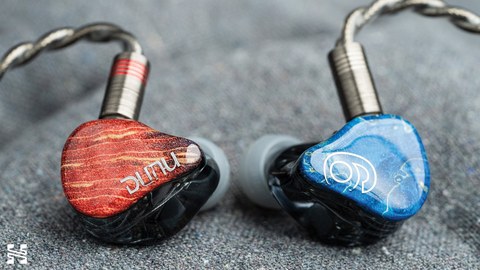
Instead of the resin or metal faceplates you see on most six-BA IEMs, the SA6 Ultra uses genuine stabilized wood faceplates set against smoky gray resin shells. Stabilized wood is wood that has been vacuum-impregnated with resin to stop it from cracking or warping, which lets manufacturers use a natural material in a product that still needs to survive daily handling. The grain pattern on each unit is naturally unique, so no two pairs look quite identical even within the same color option.
The line shipped in three color variants:
- Red-Blue (mismatched left/right, shown in most promotional photos)
- Red-Red (matching pair)
- Blue-Blue (matching pair)
The shells use recessed 2-pin connectors rather than protruding ones, which tends to reduce strain on the cable connector over time and gives the housings a cleaner profile.

Switchable Atmospheric and Normal Tuning
One of the more practical additions on the SA6 Ultra is a physical switch that toggles between two tuning modes:
- Normal mode — the baseline SA6 Ultra tuning, balanced and neutral-leaning
- Atmospheric mode — adds roughly a 2dB bass boost for a warmer, slightly more immersive presentation
Because the switch is built into the shell rather than requiring a cable or filter swap, you can flip between the two depending on genre or mood without any extra hardware. It is a small feature, but it adds a bit of flexibility that a fixed-tuning IEM can’t offer.
What’s in the Box
The accessory bundle is where the SA6 Ultra distinguishes itself from a typical flagship IEM package. Included with each unit:
- Hulk Pro mini modular cable, with swappable 2.5mm, 4.4mm, and 3.5mm plugs
- DUNU S&S eartips
- Blue and white silicone eartips, three sets each
- 3.5mm-to-6.35mm adapter
- Cleaning brush
- Certificate of authenticity
The Hulk Pro mini cable alone is worth calling out: a modular cable with three plug options removes the need to buy a separate balanced or unbalanced cable, which is normally an extra cost most buyers factor in after purchasing a flagship IEM.
How It Compares to the Standard SA6
If you already own or have heard the original SA6, the Ultra will feel familiar in overall character but noticeably refined at the edges. The original SA6 has a reputation for being resolving but occasionally a touch clinical in the treble, which is one of the areas Z Reviews and DUNU specifically targeted in the retuning process. The Ultra keeps the resolution but smooths out that edge, trading a small amount of analytical bite for a more relaxed, easier-to-listen-to-for-hours presentation. Bass quantity is similar between the two in Normal mode, with the Atmospheric switch giving the Ultra an option the standard SA6 simply does not have.
The shell shape is also different enough that fit can vary between the two models, so if you have a particular fit preference with the standard SA6, it is worth trying the Ultra before assuming the in-ear feel will be identical, since the stabilized wood faceplate and smoky resin shell are molded slightly differently than the original.
Why It Sold Out So Quickly
DUNU limited the run to 300 units worldwide, and the combination of a well-known collaborator, genuinely unique wood faceplates, and a well-regarded driver platform meant the entire run sold out within two to three days of launch. That scarcity has kept the SA6 Ultra a frequent talking point on forums like Head-Fi, where owners continue to post impressions and comparisons against the standard SA6 and newer DUNU releases. If you are hunting for one now, expect to be shopping the secondhand market, since DUNU has not signaled a restock of this specific variant.
Common Ownership Issues and How to Handle Them
The SA6 Ultra is well-built, but a few practical issues come up often enough among owners of switch-equipped, modular-cable IEMs like this one that they’re worth addressing directly.
- Tuning switch feels stuck or hard to move: The switch is small by design to avoid accidental bumps; use a fingernail or the included cleaning brush’s tip rather than forcing it with a fingertip, and it should move cleanly once you find the right angle.
- One channel sounds quieter after a plug swap: Double-check the modular plug on the Hulk Pro cable is fully seated and screwed in, not just pushed in, since a loose connection at the modular joint is a common cause of an imbalanced or weak channel.
- Faceplate grain looks different from promotional photos: This is expected and not a defect; stabilized wood is a natural material, so grain pattern and color intensity vary unit to unit even within the same color option.
- Fit feels different from the standard SA6: Try the alternate eartip sizes included in the box before assuming the shell doesn’t suit your ears, since the Ultra’s shell shape is molded slightly differently than the original SA6.
- Uncertain if a secondhand unit is authentic: Ask the seller for the included certificate of authenticity and serial number, and cross-check seller history and photos carefully, since limited runs like this one attract counterfeit listings once demand and resale prices climb.
Frequently Asked Questions
Is the SA6 Ultra a different driver setup from the original SA6?
No, it uses the same 6BA configuration. The differences are in tuning, shell materials, the tuning switch, and the accessory bundle.
What does Atmospheric mode actually change?
It adds approximately a 2dB bass boost for a warmer, slightly more immersive sound versus Normal mode.
Can I still buy one new?
The original run of 300 units sold out quickly after launch, so new stock is essentially unavailable; secondhand listings are the realistic route.
What cable does it ship with?
A Hulk Pro mini modular cable with swappable 2.5mm, 4.4mm, and 3.5mm plugs, along with a 3.5mm-to-6.35mm adapter.
Final Thoughts
The SA6 Ultra is a good example of a collaboration model done right: rather than slapping a new paint job on an existing IEM, DUNU changed the tuning, upgraded the housing materials, added a genuinely useful tuning switch, and backed it all with an accessory bundle that would be a highlight even without the limited-edition status. If you can track one down on the resale market and the six-BA sound signature appeals to you, it remains a standout in DUNU’s catalog. You can compare it against the standard SA6 on Linsoul’s product page to see how the base model differs before committing to a secondhand purchase.
Is It Worth Chasing on the Secondhand Market?
Limited-edition audio gear tends to carry a premium once it sells out, and the SA6 Ultra is no exception. Whether it is worth paying above the original $580 asking price on the secondhand market depends on how much you value the specific combination of features here: the switchable tuning, the stabilized wood faceplates, and the upgraded accessory bundle. If you can find the standard SA6 for meaningfully less and do not need the tuning switch or the wood faceplates, that route gets you the same core driver platform for less money. But if the collaboration tuning and the collectible angle appeal to you, the Ultra remains one of the more interesting limited runs DUNU has put out, and used units do still circulate through enthusiast forums and classifieds from time to time.
Audio gear is something I test hands-on for weeks before writing a word about it, and this piece is based on time actually spent listening to the SA6 Ultra rather than secondhand impressions.