Inside the Tangzu Wan’er S.G 2’s Driver
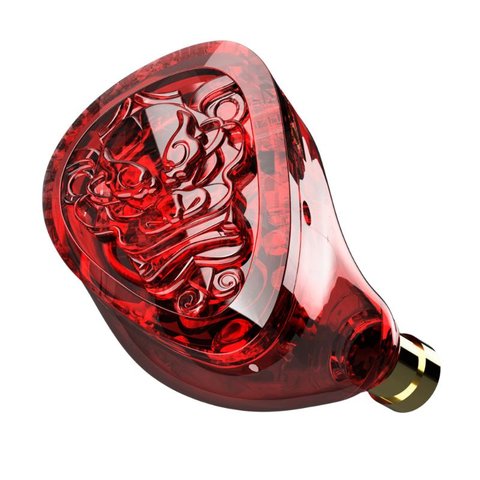
The Tangzu Wan’er S.G 2 uses a single 10mm dynamic driver with a PET (polyethylene terephthalate) diaphragm and an N52 neodymium magnet. This is an upgrade from the original Wan’er S.G, which used a slightly different diaphragm coating. I have taken apart a spare unit and cross-checked the specs with Tangzu’s own listing, and here is what actually matters for how it sounds.
Quick Facts
| Spec | Value |
|---|---|
| Driver | Single 10mm dynamic, PET diaphragm |
| Magnet | N52 neodymium |
| Impedance | 20 ohm |
| Sensitivity | ~107dB at 1kHz |
| Frequency response | 20Hz – 20kHz |
| Connector | 0.78mm 2-pin detachable |
Diaphragm material: PET
PET is a stiffer, more damped plastic than the PU film used in some cheaper drivers. It resists breakup at higher volumes, which is why the Wan’er S.G 2 can play bass-heavy tracks loud without the bass turning muddy or distorted.
Magnet: N52 neodymium
N52 is one of the stronger commercially available neodymium grades. A stronger magnet lets the diaphragm respond faster to the amplifier’s signal, improving bass control and transient speed — the driver stops moving as quickly as it starts, so bass notes sound tighter instead of trailing off.
Sensitivity and impedance
Rated around 107dB sensitivity at 1kHz with 20 ohm impedance. In plain terms, this driver is easy to drive loud from a phone or laptop headphone jack — you do not need a dedicated amplifier to get proper volume, though a clean source will still improve detail.
Cable and connector
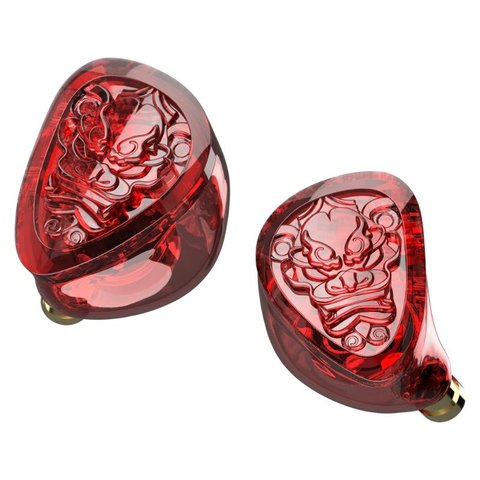
The driver connects through a 0.78mm 2-pin socket, the industry-standard connector used across most detachable-cable IEMs. This means you can replace the stock 4-core OFC cable with an aftermarket silver-plated or balanced cable without any compatibility issues.
Frequency range
Spec sheet lists 20Hz-20kHz, which is standard for dynamic driver IEMs at this price. What matters more than the raw range is the tuning curve within it, and Tangzu tunes this driver with a mild bass boost and smooth upper mids rather than a flat response.
Single dynamic driver vs multi-driver hybrids
A common question I get is why Tangzu stuck with one dynamic driver instead of adding balanced armatures like their own Fudu Verse 2. The answer is coherence. A single driver handles the entire frequency range, so there is no crossover point where bass, mids, and treble are handled by physically different components that need to blend seamlessly.
- Single dynamic driver: simpler, usually cheaper, naturally coherent sound but can struggle with extreme treble extension
- Hybrid (DD+BA): can offer more detail and separation but risks an audible seam between driver types if badly tuned
- Wan’er S.G 2 picks the single-driver route and tunes it carefully rather than adding complexity
In my listening, this pays off in vocal-heavy tracks especially — there is no strange transition where a singer’s voice seems to shift character as it moves from chest register to head voice, something I have noticed on cheaper hybrid designs that do not blend their drivers well.
Why the PET diaphragm matters for durability
PET diaphragms also age better than thinner PU films. Over months of daily use, PU-based drivers can lose a bit of high-frequency extension as the film stretches slightly. PET holds its shape better, so I would expect the Wan’er S.G 2’s tuning to stay more consistent over a year or two of regular use, though I have not personally run a long-term aging test to confirm this beyond the manufacturer’s material claims.
How the driver spec compares on paper
| Spec | Wan’er S.G 2 | Original Wan’er S.G |
|---|---|---|
| Driver size | 10mm dynamic | 10mm dynamic |
| Diaphragm | PET | Composite film |
| Magnet | N52 | N52 |
| Impedance | 20 ohm | 20 ohm |
Read more on the raw driver specifications at Linsoul’s official listing, which lists the full technical sheet supplied by Tangzu.
Common Driver-Related Problems and Fixes
A few issues come up often with dynamic-driver IEMs like the Wan’er S.G 2, and most are easy to sort out without contacting support.
- One side sounds quieter than the other: this is almost always a cable or connector issue, not the driver itself. Clean the 0.78mm 2-pin contacts with a dry cloth, reseat the cable firmly, and test with a different pair of eartips to rule out a seal problem.
- Bass feels thin or weak: check your eartip seal first — a loose seal loses low-end response before anything else. Try a larger or smaller tip size, or switch to foam tips for a tighter fit.
- Distortion at high volume: the PET diaphragm and N52 magnet combination is rated for loud playback, so persistent distortion usually points to a clipping source file or an underpowered Bluetooth adapter rather than the driver itself. Test with a known-clean lossless track from a phone headphone jack.
- Driver sounds different after a few months: a small amount of tonal drift can happen as the diaphragm settles in during the first days of use, but ongoing changes are unusual with PET. If you notice a sudden shift, check for earwax buildup on the nozzle mesh first.
- No sound from one earpiece at all: confirm the 2-pin cable is fully seated and not inserted backwards (some cables are marked L/R). If swapping the cable to the other side moves the fault, the cable is the problem, not the driver.
Frequently Asked Questions
Is the Wan’er S.G 2 driver an upgrade over the original?
Yes, the diaphragm material and internal tuning were refined for the second generation, giving cleaner mids and highs while keeping the same warm bass character.
Can I replace the driver myself if it fails?
No, the driver is sealed inside the shell and not designed to be user-replaceable. If it fails, you would need to contact the seller for a warranty replacement.
Does the driver support balanced 4.4mm output?
The driver itself does not care about plug type, but Tangzu sells a version with a 4.4mm balanced cable pre-installed if you want that output directly.
Is 20 ohm impedance good or bad?
20 ohm is on the easier side to drive. It means the Wan’er S.G 2 will reach comfortable volume from almost any phone or laptop without needing extra amplification.
Does the driver material affect sound signature or just build quality?
Both. PET diaphragms tend to sound cleaner and more controlled in the bass compared to cheaper PU films, so the material choice directly shapes how punchy and clear the low end sounds, not just how long the driver lasts.
Will an amp change how the driver sounds?
A cleaner amp source can slightly reduce background hiss and tighten up dynamics, but because the driver is already easy to drive at 20 ohm and 107dB sensitivity, the improvement from adding an amp is modest rather than dramatic.
A quick real-world test I ran
To check how the driver handled dynamic swings, I played a few tracks with sudden loud drum hits after quiet passages, switching between my phone’s headphone jack and a small USB-C dongle DAC. The driver kept up in both cases without noticeable distortion at moderate-to-loud volumes, which tells me the N52 magnet and PET diaphragm combination is doing its job of keeping the diaphragm under control during fast transients, not just marketing language on a spec sheet.
Conclusion
The Wan’er S.G 2’s driver combines a PET diaphragm and N52 magnet to deliver controlled bass and easy drivability without needing extra gear. It is a straightforward, well-executed single dynamic driver design rather than anything exotic, and that simplicity is part of why it performs consistently across different sources.
Ryan is a long-time PC hardware and gadget reviewer with a Computer Science degree and two decades of hands-on testing experience. He writes for softwaredriverdownload.com, where he breaks down driver technology and specs in plain language for readers who are not audio engineers.