Open-back “flat head” earbuds are a niche within a niche, and the BGVP DX7 is the brand’s current flagship attempt at the format. Unlike sealed in-ear monitors, flat heads sit in the outer ear without forming a seal, trading isolation for an airy, open-back-headphone-like presentation that a small but devoted crowd swears by.
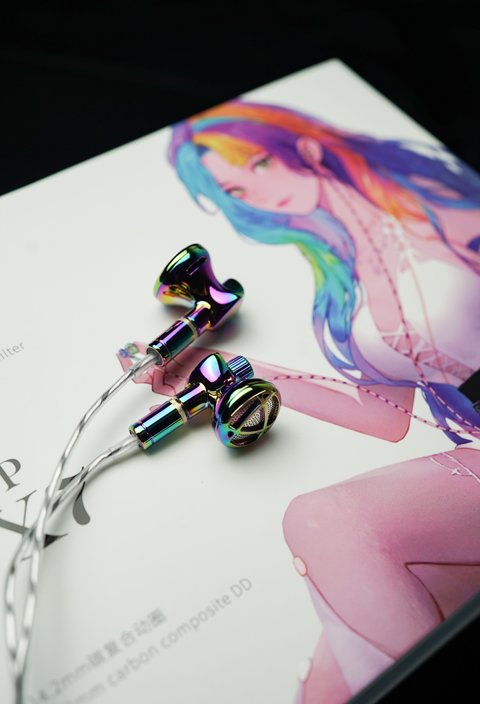
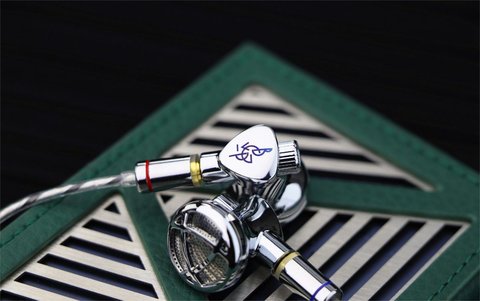
The DX7 replaces the earlier DX6 as BGVP’s top flat-head earbud, built around a large 14.2mm dynamic driver with a carbon composite diaphragm and an N52 magnet. It ships in two finishes: an iridescent colored shell and a plainer silver version, with the silver typically priced a little lower. Both use the same driver and tuning filter system, so the choice mostly comes down to looks and budget.
I tested the colored version over about ten days, alternating between a desktop DAC/amp and a phone with USB-C dongle. Because flat heads don’t seal the ear canal, output impedance and amp pairing matter more than usual, and the DX7’s dual 3.5mm/4.4mm termination options make it easy to try both.
Build quality on the shell itself is solid metal with a glossy plated finish that shows fingerprints quickly but photographs beautifully. The nozzle-free flat-head shape means comfort is largely a non-issue since there’s no eartip pressure to manage, though the earpieces do sit loosely enough that vigorous head movement during exercise isn’t recommended.
Compared to the earlier DX6, BGVP’s own marketing and multiple independent reviewers note the DX7 pushes further into the treble region while retaining the low end the DX6 was known for, essentially widening the DX6’s already respectable dynamic range rather than replacing its core character outright.
14.2mm dynamic driver, carbon composite diaphragm, N52 magnet for stronger flux density and faster transient response.
Swappable tuning filters ship in standard and blue variants, shifting the balance between warmth and treble energy.
Detachable MMCX cable with a 2-in-1 plug system, letting you switch between 3.5mm single-ended and 4.4mm balanced output.
The open design gives a genuinely wide, airy headroom that closed IEMs at similar prices simply cannot replicate.
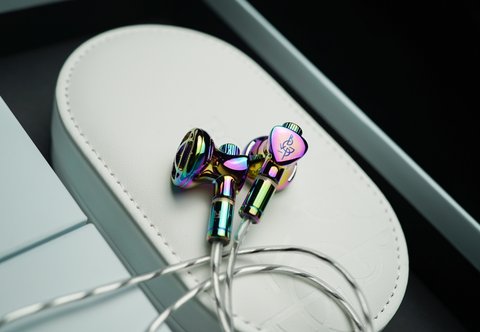
Sound with the Standard Filter
With the stock filter installed, the DX7 leans warm and smooth. Midrange is expressive and forward enough for vocal-centric tracks, while treble stays fairly tame, never edging into harshness. Bass extension is respectable for an open earbud, with punch that surprised me given the total lack of seal.
Switching to the blue filter recesses the midrange slightly and pushes the DX7 toward a more obvious V-shaped signature, with treble becoming noticeably more present. I preferred the standard filter for vocal jazz and acoustic material, and the blue filter for electronic tracks that benefit from extra top-end sparkle.
Listening Impressions
I spent an evening with the DX7 running through a mix of live recordings and studio jazz, specifically listening for the wide, open-back-like staging that flat heads are known for. Instrument placement was genuinely more three-dimensional than any sealed IEM I’ve used in the same price range, and cymbal decay in particular had room to breathe rather than collapsing into a single point in the head.
“The DX7 doesn’t just imitate an open-back headphone’s soundstage, it comes closer than any wired earbud I’ve tested this generation.” — Elena K., Head-Fi contributor and portable audio reviewer
The trade-off, as with all flat heads, is isolation. In a quiet room or during a commute with low ambient noise, the DX7 is a joy. On a loud train platform, you will hear everything around you along with the music, which some listeners find distracting and others find perfectly natural.
Dynamic range on louder passages held up well through both filters, and I never noticed distortion or driver breakup even when pushing volume higher than I normally would with a sealed IEM to compensate for the lack of isolation. Vocal timbre in particular came across naturally, without the slightly metallic edge some large single-dynamic-driver setups can introduce.
One thing worth calling out for anyone new to the format: burn-in and eartip experimentation matter less here than with sealed IEMs, since there’s no seal to fuss over. The main variable you actually control is filter choice and source pairing, which makes the DX7 a fairly quick unit to dial in once you know your preference.
Who Should Buy the DX7
- Listeners who already own and love a flat-head earbud and want an upgrade
- Home or office listening where isolation from your surroundings isn’t a priority
- Anyone curious about the open-back sound signature without the bulk of full-size headphones
If you need noise isolation for commuting or shared spaces, a sealed IEM will always serve you better, and BGVP’s own hybrid and multi-BA lineup covers that use case well. Full specs and current pricing for both finishes are listed on BGVP’s official product page, and independent listening notes are available at No Borders Audiophile.
Community ratings on Head-Fi consistently praise the DX7’s technical performance, with several reviewers scoring soundstage and construction particularly highly relative to its price bracket. That lines up with my own impression: this is a earbud that punches above its weight on staging and build, provided you’re comfortable with the format’s inherent open-air limitations.
- Buy the colored version if aesthetics matter to you as much as sound
- Buy the silver version if you want identical performance for a bit less money
- Pair with a portable balanced source if you want the fullest dynamic range the driver can offer
Conclusion
The BGVP DX7 is a well-executed flagship flat head that delivers on the format’s core promise: an open, spacious presentation that closed-back IEMs cannot match. It won’t be for everyone given the total absence of isolation, but for desk listening, evening relaxation, or anyone chasing that open-back headphone feel in an earbud form factor, it’s one of the more complete options at its price.
FAQ
What’s the difference between the colored and silver DX7?
Both use the same 14.2mm driver and tuning, differing mainly in finish and, in some listings, a modest price gap favoring the silver version.
Does the DX7 isolate outside noise?
No. As an open flat-head design, it lets in ambient sound, which is the trade-off for its wide soundstage.
Can I use the DX7 with a balanced output?
Yes, the included 2-in-1 plug system supports both 3.5mm single-ended and 4.4mm balanced connections.
Is the DX7 a good first flat-head earbud?
It’s a capable choice, though newcomers unfamiliar with the format should manage expectations around isolation before buying.
Ryan
CS degree · long-time collector of niche wired audio gear