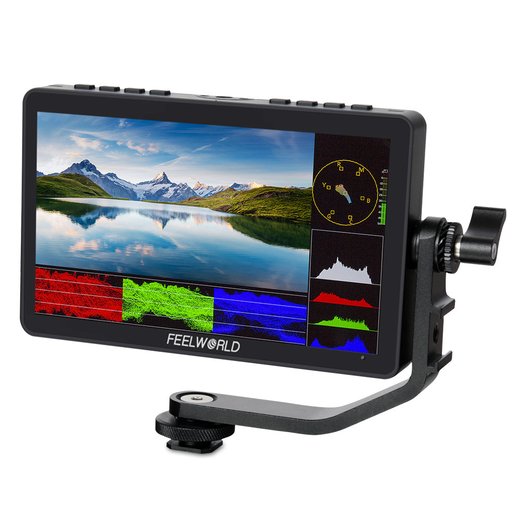
Update feelworld f5 firmware only with the official file for the exact device revision, using stable power and the required storage format.
I updated the firmware on a Feelworld F5 monitor without backing up my saved LUT presets first, and they were wiped after the update completed. Exporting the LUT files to a card before flashing anything is a step I never skip now.
This firmware update guide explains the checks that prevent the most common setup mistakes. It separates model identification, power, connection and configuration so each part can be tested clearly.
The product label is the final reference. Retailer titles can shorten a model name, combine accessories or omit a hardware suffix that changes compatibility.
Diagnostic timeline
Stage 1
Read the current model and firmware version from the information menu.
Stage 2
Download the file only from the matching manufacturer support page.
Stage 3
Read the release notes and confirm the hardware revision is listed.
Stage 4
Prepare the required storage device and copy files exactly as instructed.
Stage 5
Connect a full battery or stable external supply before starting.
Common problems and first checks
| Symptom | Likely area | First action |
|---|---|---|
| Update does not start | Wrong file, storage format or model | Recheck the exact support page and file placement |
| Device loses power | Weak battery or unstable adapter | Use stable external power before retrying |
| File is not detected | Archive was not extracted or file is in a folder | Follow the manufacturer directory instructions |
| Device loops after update | Interrupted or incompatible firmware | Use official recovery guidance |
| Functions changed | New defaults or unsupported configuration | Reset carefully and restore compatible settings |
Start with the symptom that can be observed directly. Software cannot repair a damaged cable, weak battery, cracked mount, loose speaker connection or wrong power adapter.
Use a known-good comparison when possible. Keep voltage and signal type within the published limits while swapping one component at a time.
Identify the exact version first
Read the complete code on the device, battery, power adapter and packaging. Record any suffix, revision, connector type and firmware number. A small extra letter can identify a different screen, control board, radio module or power input.
Compare the device with the linked source pages. Check button positions, ports, mounting holes, cable orientation and included accessories. Similar appearance does not prove that two products use the same voltage or software.
Photograph the original wiring and save current settings before repair or updating. Keep these records with the source links for feelworld f5 firmware so the device can be returned to a known working state.
Specifications and compatibility checks
| Area | What to confirm |
|---|---|
| Device family | F5-series camera monitors |
| Revision | Check the full model and firmware version |
| File source | Use Feelworld's matching firmware article |
| Media | Follow the stated card or USB method |
| Power | Keep the monitor powered until restart completes |
Published specifications describe a reference package. A retailer may include another cable, battery, mount or accessory. Verify the complete kit rather than relying on a short listing title.
Match electrical limits before physical fit. Voltage, polarity, signal type and pin order matter more than wire colour. For mounted equipment, also check dimensions, screw length, centre of gravity and cable strain.
Safe setup sequence
- Read the current model and firmware version from the information menu.
- Download the file only from the matching manufacturer support page.
- Read the release notes and confirm the hardware revision is listed.
- Prepare the required storage device and copy files exactly as instructed.
- Connect a full battery or stable external supply before starting.
- Allow the device to restart, then verify the installed version and basic operation.
Make one controlled change at a time and repeat the same test. This creates a clear cause-and-effect record and prevents a second fault from hiding the original problem.
Do not force a connector or mount. Stop when a plug, screw or bracket does not align easily and verify the model, orientation and thread size.
Maintenance and long-term reliability
Disconnect power before cleaning. Use a soft dry cloth on screens, cabinets and controls. Use lens-safe tools on coated glass and never spray cleaner directly onto a monitor or teleprompter.
Inspect batteries, adapters, connectors and cables regularly. Retire swollen batteries and cables with exposed conductors or loose plugs. Keep heavy connectors supported so they do not damage a small socket.
Store feelworld f5 firmware in a dry location with space around ventilation openings. Protect screens and beamsplitter glass from pressure. Keep speakers away from moisture and avoid storing earbuds while their contacts are wet.
Maintain a simple service record with the exact model, firmware version, source links, cable types and any changed settings.
Final validation before normal use
Complete a full power cycle and confirm that settings remain. Test every input, output, button and status indicator that will be used in the real workflow.
Run a longer test instead of stopping after the startup screen. Monitors should hold a stable signal, speakers should play without distortion, wireless devices should remain connected and firmware updates should survive another restart.
Write down the test condition and result. Notes such as “fails only at maximum brightness” or “works only with the short cable” are more useful than a general description of an intermittent fault.
Detailed inspection checklist
Use bright light to inspect small ports, plugs, screws and cable joints. Look for bent pins, cracked insulation, loose sockets, damaged threads and signs of overheating. A connection can look normal while failing when the cable is moved.
Test with the shortest known-good cable available. Remove unnecessary adapters, splitters and extension leads. Add them back one at a time only after the basic connection remains stable.
Measure power at the device while the problem is happening. An unloaded battery or adapter can show the correct voltage and then fall when a bright screen, amplifier or processor draws more current.
Configuration and service records
Write down the firmware version, input format, cable type and every changed setting. Save photographs or screenshots before and after work. Name records with the exact model and revision.
Keep factory settings separate from experiments. When a change performs worse, return to the last known working state instead of adding another change on top of it.
Frequently Asked Questions
Where should I get information for Feelworld F5 Firmware?
Use the product, manual or support pages linked in this article and match the complete model code.
Can I use a cable, battery or part from a similar model?
Only after confirming voltage, polarity, dimensions and part number. Similar appearance does not guarantee compatibility.
Should I install firmware immediately?
Update only when an official file applies to the exact hardware and solves a relevant issue. Record the current version first.
Why does the device work briefly and then fail?
Loaded voltage, heat, cable strain, radio interference or a loose connection may appear only during a longer test.
What is the safest first troubleshooting step?
Return to the last known working setup and test power, connection, configuration and hardware one section at a time.
Sources
Ryan is a longtime PC and gadget enthusiast who tests gear before recommending it, sharing setup notes and troubleshooting steps at softwaredriverdownload.com.