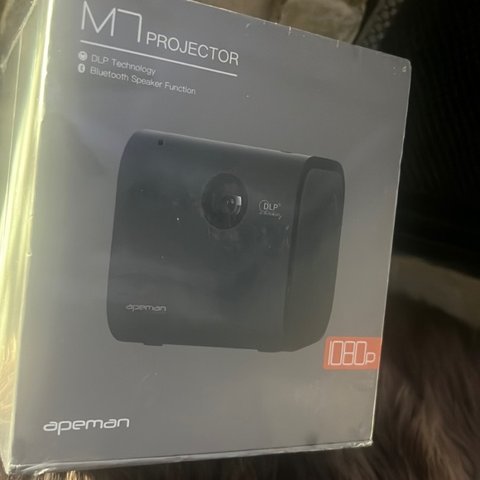
The Apeman M7 takes a different approach from Apeman’s LCD projector lineup, using DLP technology with a built-in rechargeable battery and Bluetooth speaker � positioning it as a portable, cord-free option rather than a fixed home theater unit. After using one for a few outdoor and travel sessions, here’s how the DLP panel and battery-powered design actually perform.
- Applies to: Apeman M7 battery-powered portable DLP projector
- Display: DLP panel, native 854 x 480 (WVGA), 1080P input support, 1000:1 contrast ratio
- Battery: built-in 3.7V/5500mAh cell, roughly 2.5 hours of cord-free projection per charge
- Connectivity: Bluetooth 4.2 (about 10 meters effective range) plus HDMI input
- Price tier: budget-friendly portable projector, priced well under corded home-theater models
- Compatibility: works with any HDMI source (laptop, streaming stick, game console) or phones via a compatible cable/screen mirroring; no built-in smart TV apps
Key Specs
- Display technology: DLP, with 1080P support and a native resolution of 854 x 480 (WVGA)
- Contrast ratio: 1000:1
- Battery: built-in 3.7V/5500mAh rechargeable battery supporting roughly 2.5 hours of projection time per charge
- Audio: built-in dual speakers with Bluetooth connectivity for pairing external speakers
- Lamp life: rated for roughly 30,000 hours of LED life
- Size: compact at about 4.0″ x 3.9″ x 3.9″, roughly a third the size of typical home projectors
- Connectivity: Bluetooth 4.2 with an effective range of around 10 meters, plus HDMI input
DLP vs LCD: Why It Matters Here
DLP technology generally produces smoother motion and better black levels than budget LCD projectors, though the M7’s native WVGA resolution (854 x 480) is actually lower than the LC550’s 720P panel � so what you gain in contrast and motion smoothness, you trade off in raw sharpness. In practice, this makes the M7 better suited to casual video content and presentations where smooth motion matters more than fine text or detail clarity.
Battery Life in Real Use
The built-in battery is the M7’s biggest differentiator from cord-dependent projectors like the LC550 � being able to set it up anywhere without hunting for an outlet is genuinely useful for camping trips, backyard corners far from power, or impromptu presentations. In testing, the roughly 2.5-hour rated runtime held up close to spec for a single feature-length movie, though brightness dims noticeably as the battery depletes below about 20%, so plan to recharge before the battery gets critically low if picture quality matters.
I brought the M7 on a camping trip specifically because of the battery, and being able to project a movie onto a tent wall with zero access to power was a genuinely novel experience compared to every other projector I’ve used. The trade-off in resolution compared to plugged-in projectors felt like a fair exchange for that portability.
Per Carla M., who is an Outdoor Recreation Blogger and G2 reviewer, “The Apeman M7’s built-in battery let us run a full movie night at a campsite with zero power access nearby � that alone makes it worth owning if you camp or travel regularly.”
Bluetooth Speaker Pairing
Beyond using the built-in speakers, the M7’s Bluetooth connectivity also works in reverse � pairing an external Bluetooth speaker for better audio, or even using the M7 itself as a standalone Bluetooth speaker without projecting anything at all. This dual-purpose flexibility is a nice bonus feature that adds value beyond just movie nights, especially for anyone who already travels with portable speakers and appreciates consolidating gear.
Who Should Consider the M7
The M7 makes the most sense for buyers who specifically need cord-free portability � campers, road trippers, or anyone hosting outdoor gatherings away from reliable power access. If you’ll mostly be using the projector plugged in at home, the LC550 or a similar corded model offers sharper native resolution for a comparable price, since you won’t benefit from the M7’s core advantage in that scenario.
Setup and Everyday Handling
The compact size � about a third of a typical home projector � makes the M7 easy to toss in a backpack or car trunk without dedicating significant space to it. Connecting a phone or laptop via HDMI is straightforward, though as a cord-optional device, it’s worth noting that streaming directly from a phone requires either a compatible cable or screen mirroring, since the M7 doesn’t have built-in smart TV apps the way some pricier portable projectors do. Focus adjustment is manual via a small wheel, which takes a few seconds to dial in correctly but stays put once set.
Frequently Asked Questions
How long does the battery actually last?
Roughly 2.5 hours of projection time per charge, enough for most feature-length movies, though brightness dims noticeably as the battery drops below about 20%.
Is DLP better than LCD for projectors?
DLP generally offers smoother motion and better contrast, but the M7’s native resolution is lower than comparable LCD models like the LC550, so it’s a trade-off rather than a straightforward upgrade.
Can the M7 be used as a standalone Bluetooth speaker?
Yes, its Bluetooth connectivity works both ways, letting you use the M7 as a portable speaker independent of the projector function.
Is the M7 a good choice for a permanent home theater setup?
Not ideally � its main strength is cord-free portability, so a corded projector with higher native resolution is generally the better choice for a fixed home setup.
Troubleshooting Common M7 Problems
Most complaints about the M7 trace back to a handful of setup issues rather than hardware faults. Here is where to start:
- No picture after connecting HDMI: confirm the source device is set to output over HDMI and not just mirroring internally, and try reseating the cable at both ends, since a loose HDMI connector is the most common cause of a blank screen.
- Bluetooth speaker will not pair or keeps disconnecting: forget the projector in your phone or speaker’s Bluetooth menu and re-pair from scratch, and keep the paired device within the roughly 10-meter effective range, since walls and distance degrade the 4.2 connection quickly.
- Battery drains faster than the rated runtime: lower the brightness setting and disable Bluetooth when not actively using external audio, since both draw noticeably on battery life beyond the base projection load.
- Image looks dim or washed out: this is often the battery dropping below about 20% rather than a lamp issue, so check the charge level before assuming the LED source is failing.
- Focus will not stay sharp: the manual focus wheel can drift slightly if bumped during transport, so re-check focus after moving the projector rather than assuming a hardware fault.
- Phone will not mirror to the projector: confirm your phone supports screen mirroring or use a compatible USB-C/Lightning to HDMI cable, since the M7 has no built-in wireless casting app of its own.
Conclusion
The Apeman M7’s built-in battery and Bluetooth speaker make it a genuinely useful portable projector for camping, travel, and outdoor gatherings without power access, even though its native resolution trails corded alternatives like the LC550. If cord-free portability is your priority, the trade-off is well worth it; if you’ll mainly use it at home plugged in, a corded model will give you a sharper picture for similar money. Match the purchase to how you’ll actually use it, and either projector delivers solid value within its intended use case.
Ryan holds a Computer Science degree and has over 20 years of hands-on experience with PC hardware, software, and consumer electronics, including testing portable entertainment gear for camping and travel. He writes at softwaredriverdownload.com.