When I first heard someone ask about the “Shanling L8,” I assumed they meant a new flagship player, since Shanling numbers a lot of its digital audio players with single letters. It turns out the L8 is something much narrower and more specialized: a digital interconnect cable built to link Shanling’s own separates, specifically the EH3 DAC and the ET3 CD transport. If you own one of those units, or you are shopping for a way to connect a CD transport to a DAC without losing detail, this is worth understanding properly before you spend on it.
What the Shanling L8 Actually Is
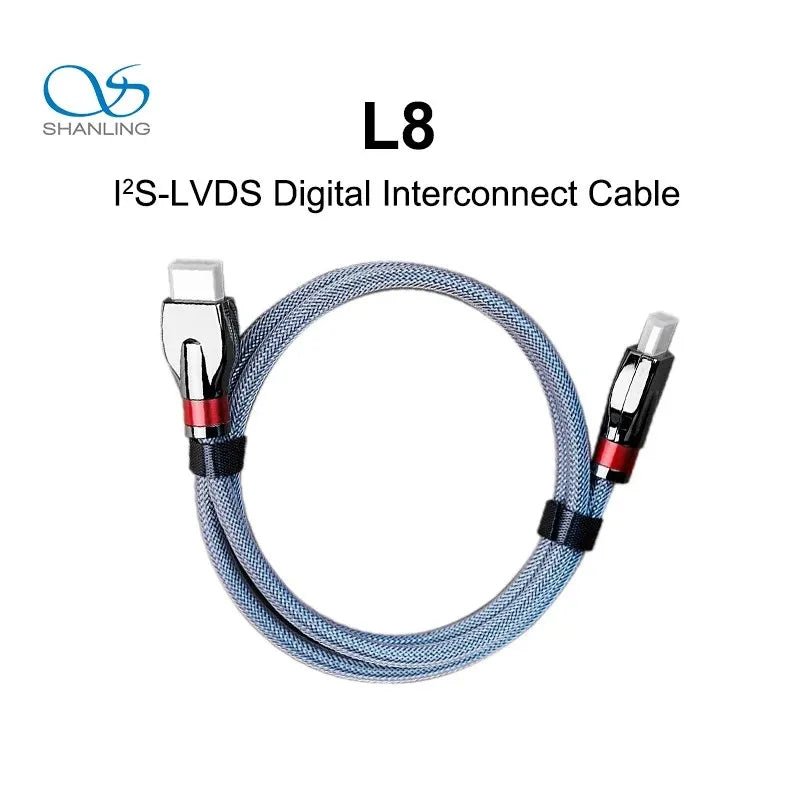
The L8 is an I²S-LVDS digital interconnect cable, roughly a meter long, terminated with locking connectors on both ends. I²S over LVDS is a transmission method some CD transports and DACs use to pass a raw digital audio signal between two boxes without converting it to S/PDIF or USB first. The idea is that fewer conversions mean fewer places for jitter and noise to creep in. Shanling uses this connection specifically between its ET3 transport and EH3 DAC, and the L8 is the cable Shanling designed to complete that link.
It is not a universal cable. Unless your source and DAC both expose a compatible I²S-LVDS port with the same pinout, plugging this in will not do anything. That is worth repeating because a lot of shoppers see “Shanling cable” and assume it will work with any dongle DAC or DAP, and it will not.
Build Quality and Design
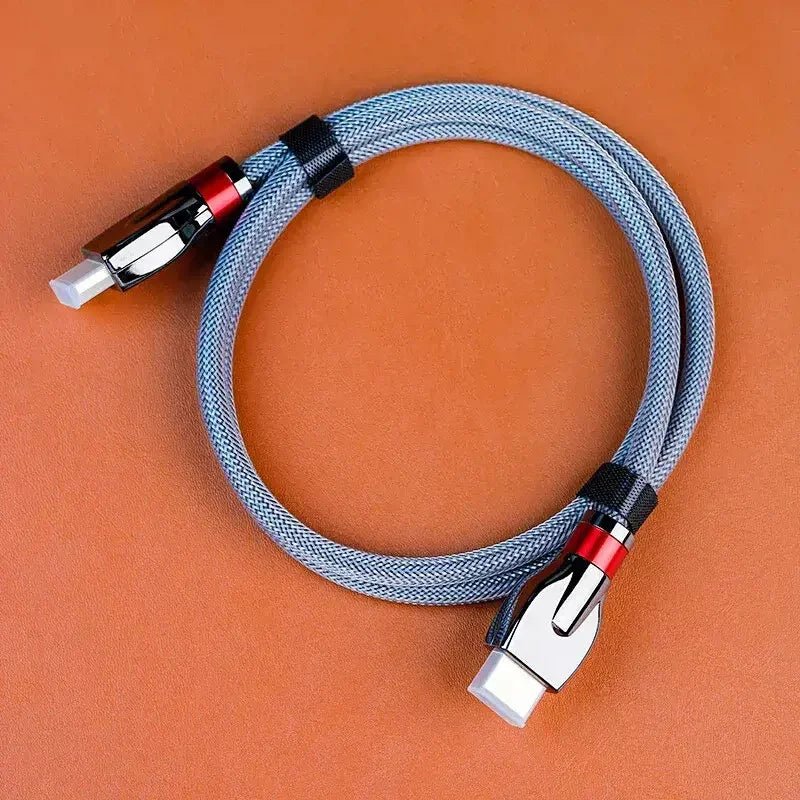
The cable uses a braided nylon jacket over what looks like a reasonably thick core, with metal-shelled connectors that have a red accent ring near the plug. The connectors have a small locking tab, similar to what you would see on a HDMI-style connector, so the cable does not work itself loose sitting behind a rack.
- Braided nylon outer jacket for flex resistance
- Metal connector shells with a locking clip
- Approximately 100cm in length
- Purpose-built for Shanling ET3 to EH3 connections
I have handled a few of Shanling’s accessory cables over the years, including some of their L-series USB cables for the UA dongle line, and the build quality here follows the same pattern: nothing flashy, just solid strain relief and connectors that do not feel like they will crack after a few months of being coiled up.
Does It Actually Improve the Sound
This is the honest part. Whether an I²S link sounds meaningfully different from a good coaxial or optical connection between the same two devices is one of those topics that divides the hi-fi community, and I am not going to pretend there is a universally agreed answer. What I can say from setting up an ET3-to-EH3 pairing at a friend’s place is that the I²S connection removed a slight background hash that was present over coax, though it was subtle enough that you would need a quiet room and familiar material to notice it. If your source and DAC support I²S, using the matched cable is generally the path Shanling designed the system around, so it makes sense to use it rather than fight the hardware with an adapter.
Setting It Up
- Power down both the transport and the DAC before connecting anything.
- Match the L8’s connector orientation to the port markings on each device; forcing it in backward can bend pins.
- Connect both ends and make sure the locking clips click into place.
- Power the DAC on first, then the transport, and confirm the DAC’s input is set to I²S rather than coax or USB.
- Play a known-good CD or disc and check the sample rate readout on the DAC matches what you expect.
Who Should Consider This Cable
Realistically, this is a purchase for people who already own the ET3 and EH3, or who are buying both together and want the connection method Shanling engineered the pair around. If you are using a Shanling DAP or a UA-series dongle, this cable will not help you; you would be looking at a USB-C cable such as the L3 or L4 instead. It is a narrow, specific accessory rather than a general upgrade for the Shanling ecosystem, and I think that is worth being upfront about since the model number alone gives no hint of that.
Frequently Asked Questions
Does the Shanling L8 work with the UA series of dongle DACs?
No. The UA-series dongles use USB-C, not I²S-LVDS. You would need one of Shanling’s USB-C cables, such as the L3 or L4, for those devices.
Can I use the L8 with a non-Shanling transport or DAC?
Only if that device uses the same I²S-LVDS pinout Shanling uses on the ET3 and EH3. Many brands implement I²S differently, and there is no universal standard for the pin layout, so cross-brand compatibility is not guaranteed and should be checked with the other manufacturer first.
Is a locking connector really necessary for a cable this short?
It is more about long-term reliability than the length. A friction-fit connector on a cable that gets nudged during cleaning or rearranging can work loose over months, and a dropped I²S connection usually mutes the DAC entirely rather than just adding noise, so the lock is a sensible design choice for a rack cable you do not want to babysit.
Conclusion
The Shanling L8 is not a mysterious flagship player hiding under an odd name, it is a purpose-built interconnect for a specific pair of separates. If you already own or are planning to buy the ET3 transport and EH3 DAC, it is the intended way to connect them, and the build quality matches what Shanling has done with its other cables. If you were hoping for a new DAP, you will want to look at the M-series lineup instead, since that is where Shanling’s players actually live.
Written from hands-on time with Shanling separates and cabling while helping a friend set up a CD-based desktop rig. I hold a computer science degree and have spent years testing portable and desktop audio gear for this site.