Long before Hidizs became known for the AP80 and AP60 lines, the company’s very first pocket audio player carried a simple name: the AP100. It launched at a time when dedicated digital audio players were still a niche alternative to phones, and it is worth revisiting not out of nostalgia alone, but because a surprising number of used units are still floating around forums, secondhand marketplaces, and dusty desk drawers. If you have picked one up, inherited one, or are simply curious what the earliest Hidizs player was actually capable of, here is a grounded look at where it stands.
- Applies to: Hidizs AP100 portable digital audio player, the brand’s first-generation DAP, long discontinued
- DAC / decoding chain: Cirrus Logic CS4398 DAC with a CS8422 digital receiver and CS48L10 EQ chip
- Storage: 8GB built-in, expandable via microSD up to 64GB (FAT32 formatting required)
- Battery: 3000mAh li-ion cell, rated for roughly 10 hours of playback
- Price tier / availability: No longer sold new; found only through secondhand and used marketplaces
- Compatibility: Standalone player, no companion app or OS driver needed for playback; coaxial digital output for feeding an external DAC
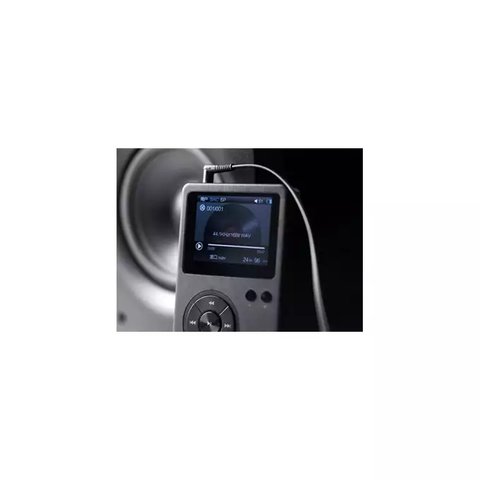
A Quick Timeline of the AP100’s Place in the Lineup
The AP100 was Hidizs’ debut pocket HiFi audio player, introduced as the company’s first real attempt at a dedicated music player rather than an accessory. It predates the AP60 series and the AP80 family by a wide margin, and its internals reflect that: a Cirrus Logic-based decoding chain rather than the newer ESS Sabre chips found in current Hidizs models. Understanding that timeline matters, because expectations should be set against what a first-generation player from a small, ambitious audio brand could realistically deliver, not against what a modern flagship DAP offers.
Core Specifications
- Display: 2.4-inch TFT screen, 320×240 resolution, 26 million colors
- Audio decoding: CS4398 DAC chip paired with a CS8422 digital audio receiver and a CS48L10 EQ chip, all from Cirrus Logic
- Format support: WAV, FLAC, WMA, MP3, OGG, AAC, APE (Normal and High level), and ALAC, up to 24-bit/192kHz
- Signal-to-noise ratio: around 110dB
- Output power: roughly 2.2Vrms on both left and right channels
- Storage: 8GB built-in memory, expandable via microSD up to 64GB
- Battery: 3000mAh li-ion cell, rated for around 10 hours of playback
- Connectivity: micro USB, coaxial digital input and output, dedicated line-out socket, and a physical navigation pad
- Weight: approximately 156g
That coaxial digital output is a detail worth calling out, since it is rarely found on budget players even now. It lets the AP100 function as a digital transport feeding an external DAC, which was a fairly forward-thinking inclusion for an entry-level device at the time.
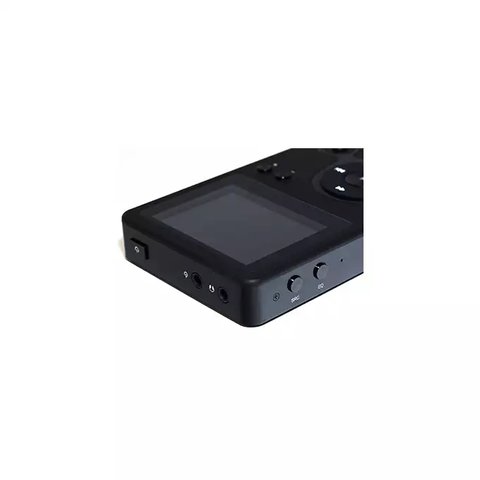
What It Actually Sounds Like Today
I tracked down a used AP100 through a local audio forum classifieds thread out of curiosity, mostly to see whether the reputation it built in early reviews still held up against modern budget dongles. The honest answer is mixed. Output power is genuinely strong for its class, enough to drive higher-impedance headphones with more headroom than most current entry-level dongles manage, and the tonal balance leans neutral rather than artificially warm or bright. Where it clearly shows its age is in the user interface: menu navigation is slow by today’s standards, the screen is dim outdoors, and there is no touchscreen at all, just a physical directional pad.
If your only frame of reference is a modern touchscreen DAP, the AP100 will feel like operating a piece of retro hardware, because that is essentially what it is at this point.
Firmware, Drivers, and Practical Support
Since the AP100 predates Hidizs’ current product support structure, official firmware downloads for it are limited compared to newer models. Before assuming a used unit is faulty, it is worth checking basic things first:
- Confirm the microSD card is formatted in FAT32, which older players like this one typically require rather than exFAT
- Try a full battery discharge and recharge cycle, since a used lithium cell can behave erratically at very low or very high charge levels
- Check the micro USB port for lint or corrosion, a common failure point on any older portable device that has sat in a drawer
- Reach out through Hidizs’ official help center if you need archived firmware or confirmation of compatibility, since legacy downloads are not always listed on the main support page
Comparing It Against Hidizs’ Modern Lineup
Placing the AP100 next to something like the current AP60 or AP80 Pro-X makes the generational gap obvious in a useful way. The AP60 line moved to AKM and ESS DAC chips, added a touchscreen or improved button navigation depending on the revision, and introduced Bluetooth streaming entirely absent from the AP100. The AP80 Pro-X goes further still, with dual DAC chips, MQA decoding, and a balanced 4.4mm output the AP100 was never designed to offer. None of this makes the AP100 a bad player in isolation; it simply reflects how much the budget DAP category has matured since it launched.
What has not changed as much is Hidizs’ general philosophy of chasing solid output power and format support at accessible prices, which the AP100 arguably established as the brand’s identity from the very beginning. If you already appreciate that approach in a newer Hidizs player, the AP100 is worth hearing at least once, purely to understand where that lineage started.
Buying One Secondhand: What to Check
Since new units are not available, anyone picking one up is buying used, and a few practical checks go a long way toward avoiding a disappointing purchase:
- Ask the seller to demonstrate that the battery holds a charge through a full listening session, since aging lithium cells in devices this old are the single most common failure point
- Inspect the headphone jack and line-out socket for looseness, a sign of heavy past use that can cause intermittent audio dropouts
- Test the physical navigation buttons thoroughly, since worn button contacts are common on units that have seen years of regular use
- Confirm the seller can show the screen displaying a track actively playing, not just powering on to a static menu, to rule out a dead audio path
Is It Still Worth Using?
For a dedicated listening device that never leaves the house, the AP100 still has a case to make: solid output power, a genuine coaxial digital out, and a neutral tonal signature that has aged reasonably well. As a daily-carry player, it is a harder sell next to newer, smaller, touchscreen-equipped Hidizs models like the AP60 or AP80 Pro-X, both of which use more modern DAC chips and offer Bluetooth, something the AP100 does not have at all.
If you already own one, there is little reason to retire it outright. If you are shopping secondhand and considering one purely for the novelty, treat it as a budget desktop listening companion rather than a portable workhorse, and price your expectations accordingly.
Troubleshooting a Secondhand AP100
Because nearly every AP100 in circulation now is a used unit, most of the problems people run into are age-related rather than defects. Working through these before assuming the player is dead will resolve the majority of complaints:
- Player is not recognized when connected to a PC: swap the micro USB cable first, since worn data cables that still charge fine often fail to carry a data connection. Also try a different USB port, ideally a rear port on a desktop rather than a front-panel hub.
- No sound despite the screen showing a track playing: check that the headphone jack is fully seated, and inspect it for lint or debris with a flashlight, since a partially blocked jack is a common fault on units that have been stored loose in a bag or drawer.
- microSD card is not being detected: reformat the card as FAT32 rather than exFAT, since older players like the AP100 generally cannot read exFAT-formatted cards, and try a smaller-capacity card if a 64GB card is not recognized.
- Player will not power on at all: leave it on a charger for a full hour before trying again, since a deeply discharged lithium cell can appear dead for several minutes after power is reconnected.
- Buttons feel unresponsive or sticky: this is usually worn button contacts rather than a software fault; light contact cleaner applied sparingly around the button edges can sometimes restore responsiveness, though there is no guaranteed fix on a device this old.
Frequently Asked Questions
Is the Hidizs AP100 still sold new?
No, it has been discontinued for some time and is only available through secondhand or used marketplaces.
Does the AP100 support Bluetooth?
No. Bluetooth connectivity was not part of the AP100’s design and only appeared in later Hidizs players.
What microSD card size does it support?
Up to 64GB via microSD expansion, in addition to its 8GB of built-in storage.
Can I still get firmware updates for it?
Official firmware support is limited for a device this old. Checking Hidizs’ help center directly is the best route if you need archived files.
Conclusion
The Hidizs AP100 was a genuinely ambitious first product for a brand that has since become a recognizable name in budget-to-midrange portable audio. It will not compete with anything Hidizs currently sells, but as a piece of that story, and as a still-functional player for anyone who picks one up secondhand, it holds up better than its age might suggest.
Ryan has been tearing down and rebuilding portable audio gear for over a decade, testing everything from budget dongles to flagship DAPs. He writes about drivers, software, and audio hardware at softwaredriverdownload.com.