Lotoo’s flagship line has always been built around a simple idea: chase engineering substance over spec-sheet theater. The PAW GT2 is the current top-of-range expression of that philosophy, sitting above the long-running PAW Gold Touch as the newer reference player, and it leans hard into a genuinely unusual internal architecture rather than just swapping in a newer DAC chip and calling it done.
| Spec | Detail |
|---|---|
| DAC | Dual AKM AK4499EX + AK4191EQ digital filter + AK4137EQ upsampling |
| Max Balanced Output | Up to 1000mW per channel |
| SNR | 133dB |
| Format Support | PCM up to 768kHz, DSD up to DSD512 |
| Architecture | Isolated audio, digital, and wireless subsystems, each on its own power supply |
| Wireless | LTTP (Lotoo Tele Transport Protocol) for hi-res wireless |
| Price | Around $3,200 |
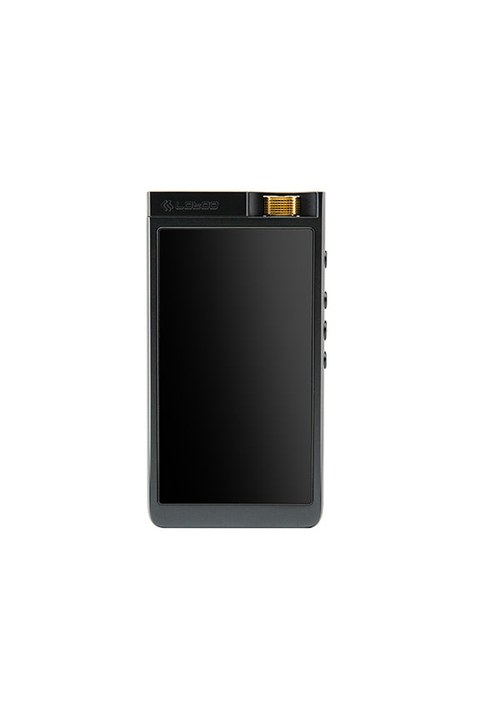
A Different Kind of Internal Layout
The headline engineering feature of the GT2 is what Lotoo calls its “sandwich structure”: instead of cramming the audio circuitry, the digital/control logic, and the wireless radios onto one shared board with one shared power supply, the GT2 physically separates these three subsystems into their own layers, each with its own dedicated power supply. The idea is straightforward even if the execution is not: digital switching noise and wireless RF activity are two of the biggest enemies of a clean analog output stage, and isolating them at the power-supply level, not just with software or shielding, is a more thorough way to keep that noise out of the music.
On the DAC side, the GT2 pairs dual AK4499EX converters with an AK4191EQ digital filter chip, plus a separate AK4137EQ chip dedicated to upsampling. That is a notably more elaborate signal chain than a typical single-DAC-chip flagship, and it shows up in the numbers: native decoding up to PCM 768kHz and DSD512, a claimed signal-to-noise ratio of 133dB, and up to 1000mW of output power on tap from the balanced output.
- DAC: dual AKM AK4499EX plus AK4191EQ digital filter and AK4137EQ upsampling chip
- Max balanced output: up to 1000mW per channel
- SNR: 133dB
- Format support: PCM up to 768kHz, DSD up to DSD512
- Architecture: separated audio, digital, and wireless subsystems, each on its own power supply
- Proprietary wireless: LTTP (Lotoo Tele Transport Protocol) for hi-res wireless transmission
LTTP: Lotoo’s Own Wireless Protocol
Rather than relying purely on Bluetooth codecs for wireless listening, Lotoo built its own transport called LTTP, short for Lotoo Tele Transport Protocol, designed specifically to carry hi-res audio wirelessly with far less compromise than standard Bluetooth codecs allow. This matters because Bluetooth, even with LDAC, still involves lossy compression at some stage of the chain. A proprietary transport built ground-up for this purpose is a genuinely different approach than most competitors, most of whom simply add another Bluetooth codec to the list and call it a wireless upgrade.
In practice, this means the GT2 is one of the few DAPs positioned to offer a wireless listening experience that Lotoo is willing to put next to its wired output in marketing, rather than treating wireless as strictly a lesser, convenience-only mode.
Build and Setup
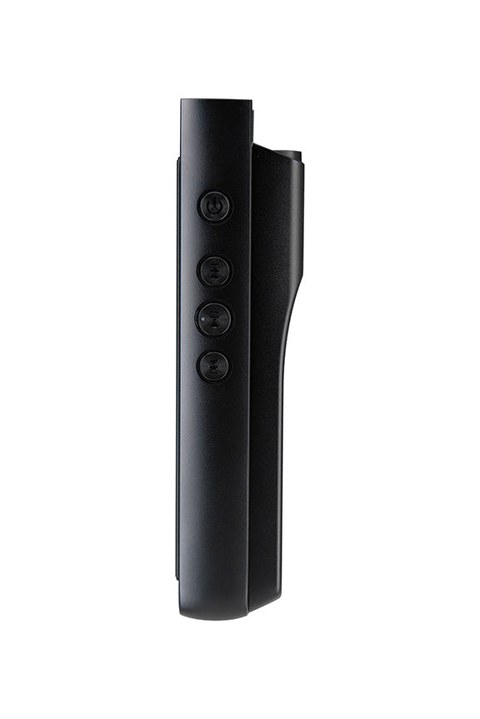
The chassis itself uses a machined metal housing, with physical transport buttons running down one edge so playback can be controlled without waking the touchscreen, a detail that matters more than it sounds when the player lives in a jacket pocket or bag. A few practical points worth knowing before setup:
- Use a fast, high-endurance microSD card. With DSD512 and 768kHz files in the mix, card read speed becomes a real bottleneck for browsing large libraries, not just for playback.
- Match the output to the load. The balanced 4.4mm output’s headline power figures are measured into low-impedance loads; high-impedance planar or dynamic headphones will draw meaningfully less of that peak number, which is normal and expected behavior for any amplifier stage.
- If using LTTP, confirm the receiving device explicitly supports it, since it is a proprietary Lotoo protocol rather than a universal Bluetooth codec, so it will not work with arbitrary third-party wireless headphones.
- Let the upsampling engine (AK4137EQ) do its job on lower-resolution files rather than fighting it; Lotoo’s implementation is tuned specifically around its own DAC pairing rather than being a generic upsampler.
Sound
Given the dual-DAC, isolated-power architecture, it is not surprising that the GT2’s most obvious strength is a very low noise floor paired with a huge amount of clean headroom. Dynamics land with real authority, background blackness is excellent even with sensitive in-ear monitors, and the extra power on tap means the GT2 drives full-size planar headphones with genuine confidence rather than sounding stretched at the top of the volume range.
Tonally, it keeps a family resemblance to earlier Lotoo flagships: fast, controlled, and a little more analytical than warm, without tipping into being clinical or fatiguing. Where it separates itself from the older Gold Touch is in sheer scale, resolution, and the sense of effortlessness at higher volumes and with harder-to-drive gear, which tracks with the far higher output ceiling and the more elaborate DAC arrangement underneath the hood.
Common PAW GT2 Problems and Fixes
- Library browsing feels slow with large DSD512 files: This is almost always a microSD card bottleneck rather than a player issue. Switching to a fast, high-endurance card noticeably speeds up folder scanning and album art loading.
- Balanced output doesn’t feel as powerful as expected on planar headphones: The 1000mW figure is measured into low-impedance loads. High-impedance planars draw meaningfully less of that peak number by design, which is normal amplifier behavior rather than a fault.
- LTTP won’t connect to a wireless headphone: LTTP is a proprietary Lotoo protocol, not standard Bluetooth. Confirm the receiving device explicitly lists LTTP support before assuming a pairing problem.
- Upsampled tracks sound over-processed: Try leaving the AK4137EQ upsampling engine on its default setting rather than manually forcing an aggressive upsampling ratio, since Lotoo tuned it specifically around the GT2’s own DAC pairing.
- Player runs warm during long DSD512 sessions: Some warmth is expected given the dual-DAC, isolated-power architecture doing more work than a single-chip design. If it feels excessive, closing background apps and avoiding direct sunlight during playback helps keep temperatures reasonable.
Price and Who It’s For
The GT2 lands at around $3,200, putting it squarely in the same rarefied bracket as the priciest players from Astell&Kern and Cayin. Retailers such as The Sound Kitchen and MusicTeck carry it at that price point, which is consistent across sources. That price only makes sense for someone who has already worked through mid-tier and upper-mid DAPs and specifically wants the ceiling: maximum power output, maximum resolution support, and Lotoo’s own take on wireless hi-res transmission via LTTP.
It is not a sensible first flagship purchase for someone dipping a toe into higher-end portable audio for the first time; the value proposition here is squeezing out the last increments of performance, not offering the best price-to-performance ratio in the category.
FAQ
What DAC chips does the PAW GT2 use?
Dual AKM AK4499EX converters alongside an AK4191EQ digital filter chip and a dedicated AK4137EQ upsampling chip, a more elaborate arrangement than a typical single-chip flagship DAP.
What is LTTP?
Lotoo Tele Transport Protocol, a proprietary wireless transmission method built by Lotoo specifically to carry hi-res audio with less compromise than standard Bluetooth codecs.
What is the maximum output power?
Up to roughly 1000mW per channel from the balanced output into an appropriate low-impedance load.
Is the GT2 better than the PAW Gold Touch?
It is the newer, higher-tier flagship with more power, a more elaborate DAC architecture, and a physically isolated internal design, so it generally outperforms the Gold Touch on resolution and headroom, though the older player still has its own devoted following for its specific tonal character.
Does it support high-resolution formats?
Yes, natively up to PCM 768kHz and DSD512.
Between reviewing DAPs from Astell&Kern, Cayin, and Lotoo for this site and running my own personal collection of portable amps and IEMs, the GT2’s isolated internal architecture stood out as a genuinely different engineering approach rather than a routine spec refresh.