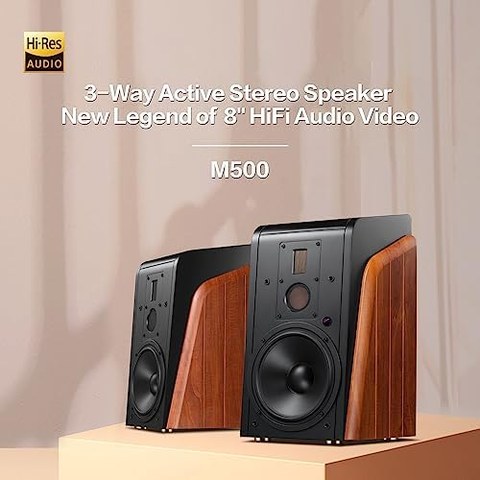
Active speakers that actually sound like a proper hi-fi system, without a separate amplifier or a rack of boxes, are harder to find than the marketing copy suggests. The HiVi-Swans M500 is one of the few that gets close. It is a self-powered, 3-way bookshelf/studio monitor speaker built by HiVi (the parent company behind the Swans brand), and it is aimed squarely at people who want serious desktop or small-room sound without wiring up a whole separate amp and DAC.
I spent time with a pair of these in a mid-size room, running them off a laptop over Bluetooth and then switching to a wired optical connection from a TV, and the differences between those two paths turned out to matter more than I expected. Here is what the M500 actually is, how it performs, and who should (and should not) buy it.
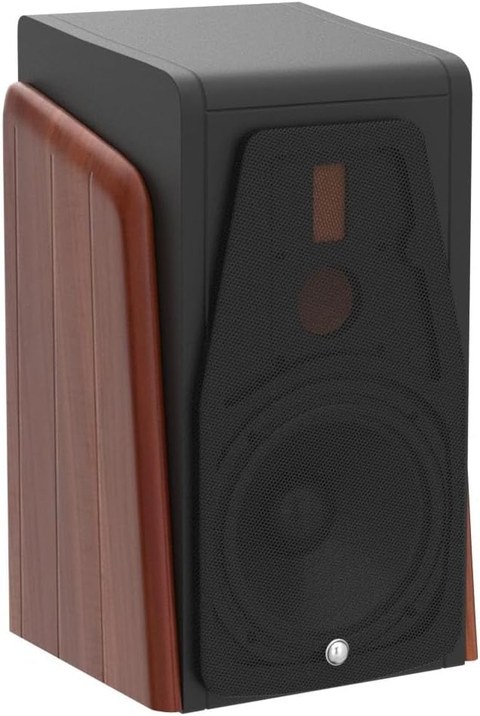
| Type | Active 3-way bookshelf/studio monitor speaker pair |
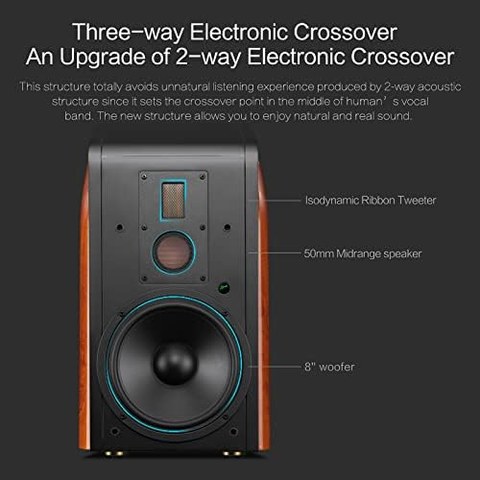
| Drivers | Ribbon tweeter, dedicated midrange, 8-inch woofer (180W RMS) |
| Frequency response | Approx. 45Hz to 20kHz |
| Inputs | Bluetooth, WiFi/WLAN, coax, optical, balanced XLR, line-in |
| Power | Mains-powered master/passive pair, no external amp needed |
| Best for | Desktop or small-room hi-fi upgrade without a separate amp |
What the HiVi-Swans M500 Is
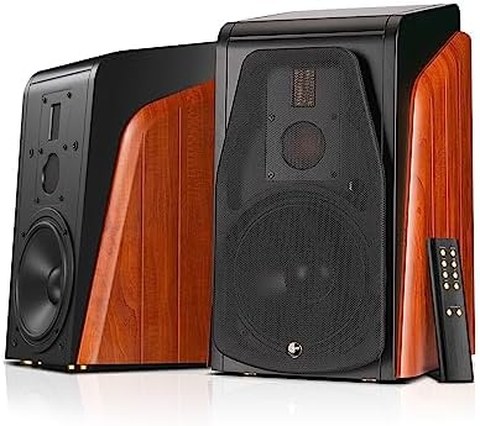
The M500 is a powered 3-way bookshelf/studio monitor speaker sold as a matched pair, with one unit acting as the “master” that houses the amplification and input electronics, feeding the second, passive unit over a speaker-level cable. Each cabinet packs three separate drivers instead of the usual two:
- An isodynamic ribbon tweeter for the top end, rated up to roughly 20kHz
- A dedicated midrange driver to handle vocals and instruments without the compromises of a simple 2-way crossover
- An 8-inch long-throw woofer rated at 180W RMS, extending down to roughly 45Hz
That gives a claimed frequency response of about 45Hz to 20kHz across the pair, which is wide for a bookshelf-format speaker and puts the M500 closer to a small studio monitor than a typical Bluetooth speaker. On the input side, the M500 is unusually flexible: Bluetooth, WiFi/WLAN streaming, coaxial digital, optical digital, balanced XLR, and unbalanced line-in are all present, so it can sit between a turntable’s phono stage, a TV, a laptop, and a phone without needing a separate switcher.
Setup and Room Placement
Because the M500 is a full 3-way design in a fairly deep cabinet, it behaves more like a real hi-fi speaker than a desktop puck, and it rewards the same setup care you would give any bookshelf speaker.
- Give it distance from the back wall. The 8-inch woofer will boom if the cabinet sits flush against a wall. A few inches of clearance, or a dedicated stand pulled slightly into the room, tightens up the bass noticeably.
- Angle the pair toward the listening position. Toeing the speakers in by 10-15 degrees sharpens the stereo image, especially with the ribbon tweeter, which is fairly directional at the very top of its range.
- Pick the input that matches the source, not just convenience. Bluetooth is the easy option, but the optical or coaxial digital input will sound noticeably cleaner from a TV or a laptop’s digital output, since it skips the Bluetooth codec’s compression entirely.
- Keep the master unit’s cable run to the passive speaker short and thick. Since one cabinet powers the other, a thin or overly long speaker cable between them can introduce a subtle channel imbalance.
On a desk, the M500 is honestly oversized for most people; it is better suited to a credenza, a pair of proper stands, or a media console in a living room or small studio space.
Sound Signature
The tonal balance leans slightly warm rather than analytical, which is a deliberate choice given the ribbon tweeter’s tendency to sound bright if left unchecked. Vocals come through with real body thanks to the dedicated midrange driver, and the top end has an airy, extended quality that a lot of 2-way bookshelf speakers in this class simply cannot match, since they are asking a single mid/tweeter driver to cover a much wider band.
Bass is the pleasant surprise. An 8-inch woofer in a sealed or ported cabinet this size has real low-end authority, and it stays controlled rather than boomy once the speakers are pulled away from the wall. It will not replace a subwoofer for home theater use, but for music, it is genuinely satisfying without a sub in the room.
Where the M500 shows its price and format is in ultimate resolving power against true reference studio monitors from brands like Genelec or Neumann. The HiVi is not trying to be a flat, uncolored measurement tool; it is voiced to sound enjoyable across a wide range of genres, which is the right call for a speaker being sold to music listeners rather than mixing engineers.
Who the M500 Is For
- Someone upgrading from a soundbar or a small Bluetooth speaker who wants a dramatic step up in scale and detail
- A home office or living room where running a separate amplifier and DAC is not practical
- Listeners who want digital inputs (optical/coaxial) so a TV or computer can connect without an external DAC
- Anyone who values connectivity flexibility over the absolute last word in neutrality
It is a poor fit for anyone who specifically wants a compact desktop speaker (the M500 is genuinely large for a desk), or anyone building a dedicated mixing/mastering setup where a flatter reference monitor from a specialist brand would be the more appropriate tool.
Buying and Availability
The M500 is sold through Swan’s own storefront as well as through Amazon listings, and pricing places it in the “serious upgrade” bracket rather than casual desktop-speaker territory. Given the amount of driver hardware and amplification packed into each cabinet, that positioning is fair; it competes with active monitor pairs from brands like Kali Audio and Edifier’s higher-end line rather than with typical lifestyle Bluetooth speakers.
Before buying, it is worth measuring the space where the pair will actually live. The cabinets are deep enough that a shallow shelf will not comfortably fit them, and the connection panel on the master unit needs some rear clearance for the various digital and XLR cables.
Troubleshooting Common Issues
A powered pair like this has a couple of failure points a passive speaker doesn’t, so here’s what to check before assuming a unit is faulty:
- One speaker is quieter or channel balance sounds off: check the speaker-level cable running from the master to the passive unit is firmly seated at both ends and using a reasonably thick gauge, since a loose or thin connection here is the most common cause of imbalance.
- Bluetooth connection cuts out intermittently: keep the source device within a reasonable range of the master unit, move other 2.4/5GHz devices (routers, other Bluetooth gear) away from the speaker, and re-pair from scratch if dropouts persist.
- Bass sounds boomy or overwhelming: pull the cabinets a few inches away from the back wall, as outlined in the setup section above; this alone resolves most boom complaints with an 8-inch woofer in a smaller room.
- No sound through the optical or coaxial digital input: confirm the source device is outputting plain stereo PCM rather than a compressed Dolby or DTS bitstream, since the M500’s digital inputs are built for PCM and won’t decode a raw bitstream signal.
- Remote control isn’t responding: check the batteries first, then confirm there’s a clear line of sight to the master unit’s receiver, since a shelf lip or nearby object can easily block the signal.
FAQ
Is the HiVi-Swans M500 a portable speaker?
No. It is a mains-powered, stationary bookshelf/studio monitor speaker meant to live on a stand, shelf, or credenza. There is no battery.
Do I need a separate amplifier or DAC?
No. One cabinet in the pair houses the amplification and handles digital-to-analog conversion for the digital inputs, so it works as a complete self-contained system.
Which input sounds best?
The optical or coaxial digital input generally sounds cleanest, since it avoids Bluetooth codec compression entirely. XLR is the better choice if the source already has a quality balanced output, such as a dedicated DAC.
Can it be used for a TV or home theater setup?
Yes, via the optical input, but it is a 2-channel stereo speaker rather than a surround system, so it is best thought of as a major stereo upgrade for music and TV audio rather than a full home theater replacement.
How much space does it need?
More than a typical Bluetooth speaker. Budget for stand or shelf placement with a few inches of clearance from the back wall on both cabinets for the bass to breathe properly.
I have spent years testing desktop and bookshelf audio gear for this site, from budget Bluetooth speakers to higher-end active monitors, and the M500 stood out enough in my own listening room that it earned a spot in this lineup rather than just a spec-sheet writeup.