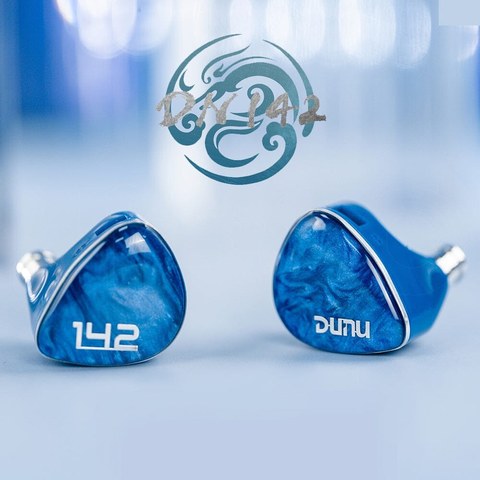
DUNU rarely plays it conservative with driver counts, and the DN142 pushes that further than most $249 in-ear monitors dare to. Packed into a small resin shell are seven individual drivers — one dynamic, four balanced armature, and two micro-planar units — all working through a four-way crossover. I’ve had the DN142 in rotation for several weeks now across a mix of studio monitors, portable dongles, and a desktop amp, and it’s one of the more distinctive-sounding IEMs I’ve tested at this price.
| Quick Facts: DUNU DN142 | |
|---|---|
| Brand | DUNU |
| Model | DN142 |
| Driver configuration | 1 dynamic + 4 balanced armature + 2 micro-planar (tribrid) |
| Crossover | Four-way |
| Shell | 3D-printed resin, swirled faceplate |
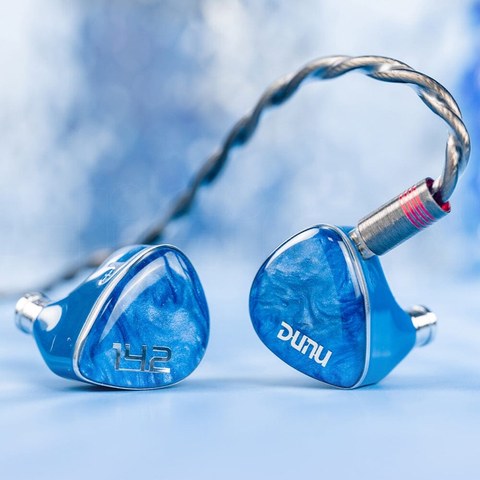
| Cable | Modular, swappable connectors, silver-plated |
| Typical price | Around $249 |
Driver Configuration: Why Tribrid Instead of Hybrid
Most IEMs in this price bracket stick to a dynamic-plus-BA hybrid layout, which is a proven and comparatively safe recipe. DUNU instead went tribrid, adding a pair of micro-planar drivers alongside the usual dynamic woofer and quad-BA array. The idea is that planar drivers bring a faster, more linear response in the upper midrange and treble than a balanced armature typically can, while the dynamic driver still handles the low end where diaphragm displacement matters most.
In practice, this shows up as unusually quick transient response on percussion and plucked strings. Where a lot of hybrid designs blur slightly at the crossover points between driver types, the DN142 sounds more like one continuous voice, at least most of the time — more on the exceptions below. If you want the full engineering rundown from DUNU’s side, their official DN142 reveal post on HiFiGo goes deeper into the crossover topology than I will here.
Build, Comfort, and What’s in the Box
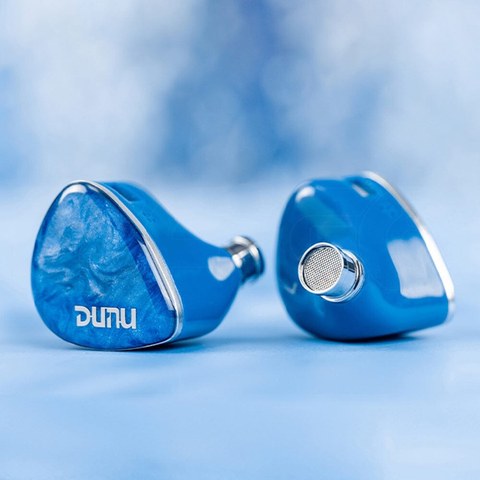
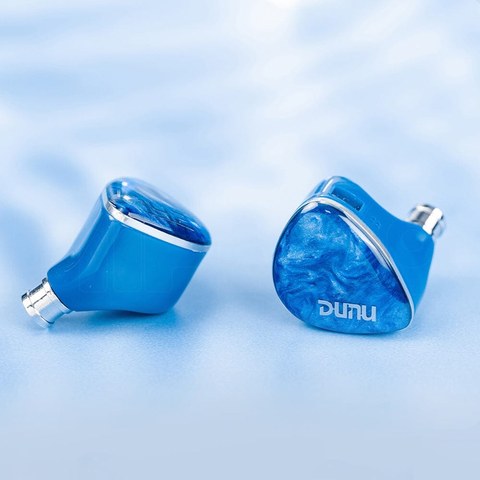
The shells use a 3D-printed resin construction with a swirled dark-blue faceplate that photographs better in person than in most marketing shots. Fit is genuinely comfortable for extended listening — the shell shape follows a fairly standard universal-fit curve rather than anything aggressive, so most ear shapes should get a secure seal without needing to hunt for a specific eartip size.
DUNU includes a modular cable terminated with swappable connectors, along with a noticeably generous tip selection covering different bore widths and foam densities. That’s a meaningful value-add at this price, since a lot of competitors ship a single tip type and expect you to buy separately if the stock fit doesn’t work for your ear canal. A few things worth knowing before you buy:
- The stock cable is silver-plated and low-microphonic, so cable noise during movement is minimal
- Nozzle diameter is on the standard side, so most aftermarket tips fit without issue
- The carrying case is compact but not padded enough for rough travel
- Impedance and sensitivity make it easy to drive from a phone dongle, no desktop amp required
Sound Signature: U/W-Shaped With Real Bite
DUNU tuned the DN142 with a U- or W-shaped signature — sub-bass has real rumble and extension, the midrange stays clear rather than getting swallowed by the bass, and the treble is energetic without tipping into sibilance on well-recorded material. Bass guitar and kick drum both have a physical low-end weight that a lot of BA-heavy IEMs simply can’t reproduce, while vocals stay forward and intelligible instead of getting buried.
Treble is where the micro-planar drivers earn their keep. Cymbal decay sounds more natural and less splashy than most balanced-armature treble I’ve heard at this price, and there’s an added sense of air above the vocal range that helps recordings feel less closed-in. If you listen to a lot of live recordings or acoustic tracks, that extra top-end resolution is noticeable within the first few songs.
Where It Stumbles: An Honest Note on Cohesion
I want to be fair here rather than just listing strengths. Several other reviewers, and I largely agree, have described the DN142’s tuning as occasionally awkward — not badly voiced, but lacking the seamless cohesion you’d expect from a $249 flagship-adjacent design. On certain busy tracks, particularly ones with dense midrange information, there’s a faint sense that the dynamic driver’s bass, the BA array’s midrange, and the planar treble aren’t always speaking with one voice. It’s subtle, and it won’t bother casual listening, but critical listeners doing detailed A/B comparisons will likely notice the same seams I did.
This isn’t a dealbreaker, but it does mean the DN142 rewards a bit of source matching. Pairing it with a slightly warmer dongle DAC smooths over some of that disjointedness, while a very analytical source can occasionally exaggerate it. Worth knowing going in rather than discovering after purchase.
How It Compares to the Rest of DUNU’s Lineup
The DN142 sits above DUNU’s more budget-friendly hybrids and just below the brand’s true flagship tier. If you’ve tried anything from DUNU’s Titan series, the DN142 will feel like a deliberate step forward in resolution and driver complexity, though the tuning philosophy is noticeably more adventurous than DUNU’s usual relaxed-neutral house sound. You can compare current pricing and bundle options at Linsoul’s DUNU collection or read a second opinion over at ecoustics’ DN142 review, which lines up with most of what I heard.
Verdict
The DUNU DN142 is a genuinely interesting listen rather than a safe one. Sub-bass depth, clear vocals, and lively treble make it easy to enjoy across most genres, and the generous accessory bundle adds real value on top of the driver technology. The tuning isn’t perfectly cohesive on every track, and critical listeners will hear the same seams other reviewers have flagged, but for anyone who wants a tribrid IEM that actually sounds different from the usual hybrid formula, it’s worth an audition.
Fixing Common Issues With the DN142
A tribrid design with seven total drivers per side has more that can go slightly wrong than a simple single-driver IEM, though most reported issues trace back to fit or source pairing rather than the hardware itself:
- Problem: Bass feels weak or the seal doesn’t feel secure. Fix: try a different eartip size from the included set before assuming the tuning is off – the dynamic driver’s low end depends heavily on a proper seal, and even a slightly loose fit noticeably thins out the bass.
- Problem: Treble sounds unusually sharp on certain tracks. Fix: this is more likely a source-pairing issue than a defect, since the micro-planar drivers are sensitive to a brighter source; try a warmer-sounding dongle DAC before assuming the unit itself is faulty.
- Problem: One side sounds noticeably quieter than the other. Fix: check the modular cable connectors are fully seated on both sides first, since a loose 2-pin connection is the most common cause of a channel imbalance on cable-swappable IEMs.
- Problem: The stock case doesn’t hold up well to daily bag use. Fix: consider a padded aftermarket case for travel, since the included case is compact but not heavily padded, as noted in the build section above.
- Problem: Sound feels inconsistent or disjointed on busy tracks. Fix: this lines up with the cohesion issue discussed earlier – try a slightly warmer source to smooth over the crossover seams, since a very analytical source tends to exaggerate them.
Frequently Asked Questions
Is the DUNU DN142 hard to drive from a phone?
No. Sensitivity and impedance are both friendly enough that a standard USB-C or Lightning dongle will drive it to comfortable listening volumes without strain.
Does the DN142 work well for bass-heavy genres like EDM or hip-hop?
Yes, the dynamic driver gives it real sub-bass extension and rumble that a pure BA or planar design usually can’t match.
Is the tuning beginner-friendly or more for experienced listeners?
Both, honestly. Casual listeners will enjoy the energetic, fun signature, while more critical listeners may notice occasional cohesion issues between driver types on complex tracks.
I put every IEM I review through weeks of daily listening across multiple sources before writing anything down, since first impressions rarely tell the full story.