The Moondrop Jiu doesn’t get talked about nearly as much as the Chu series, which is a shame because it’s a genuinely distinct product rather than just another budget IEM rehash. It’s effectively an upgraded, DSP-equipped take on the same basic formula that made the original Chu popular, built around a 10mm titanium diaphragm dynamic driver with digital tuning built in.
What makes the Jiu different
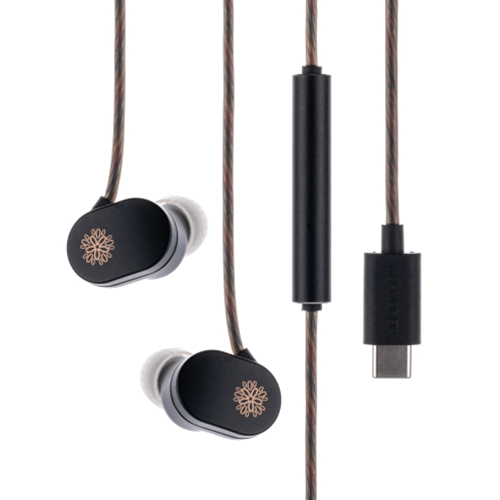
Where the Jiu stands apart is the built-in DSP processing paired with a USB-C connection, letting you use it straight out of a phone or laptop’s USB-C port without any separate dongle DAC. The onboard DSP tuning gives the Jiu a smoother, more even treble response and a well-controlled low end compared to a purely passive single dynamic driver design at a similar price.
Key specs and features
10mm dynamic driver with a titanium diaphragm, tuned with onboard DSP processing rather than passive analog only.
USB Type-C connector, works directly with phones, laptops, and most modern Android and Windows devices without extra drivers.
Built-in MEMS microphone for calls and voice assistant use, a nice bonus for a budget IEM at this price.
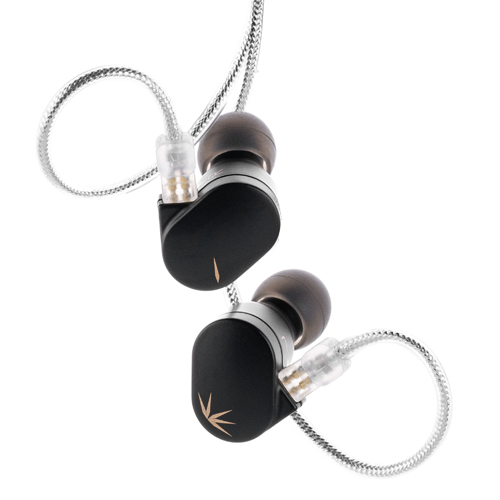
Alloy metal shell with a minimalist black finish and a small gold flower emblem, non-detachable thin cable that resists tangling.
How it sounds
The DSP-shaped tuning gives the Jiu a natural soundstage and a smoother, more even treble response than you’d expect from a simple passive design at this price. Bass is present without being overblown, and the overall presentation is easy to listen to for extended sessions, which fits with Moondrop’s general house sound philosophy carrying over into a DSP-equipped product.
Compared to the standard Moondrop Chu 2, the Jiu’s onboard DSP gives it a slight edge in perceived polish and treble smoothness, though the difference isn’t night and day — both share a family resemblance in tuning philosophy.
Who should buy it
- Anyone who wants USB-C plug-and-play without carrying a separate dongle DAC
- Listeners who want a built-in microphone for calls on the go
- Buyers who already like Moondrop’s smoother house tuning and want it in a self-contained USB-C package
Living with a non-detachable cable
One tradeoff worth discussing honestly: the Jiu’s non-detachable cable means you can’t swap to an aftermarket cable the way you can with the Chu 2’s 0.78mm 2-pin design. For most casual listeners, this doesn’t matter much day to day, but it’s worth knowing upfront if cable rolling or future cable upgrades are part of how you usually enjoy this hobby. In exchange, you get a slightly simpler, more robust connection point since there’s no detachable connector to wear out over years of use, and the built-in DSP module can live directly in that fixed cable without needing a separate inline adapter.
Travel and everyday carry
Because the Jiu doesn’t need a separate dongle DAC, it’s genuinely one of the more travel-friendly digital IEMs I’ve tested recently. Packing light for a trip, I appreciated not needing to also bring a dongle DAC and worry about losing a small separate accessory. Plugging directly into a laptop or phone’s USB-C port and getting consistent, DSP-tuned sound without extra hardware is a real convenience that’s easy to undervalue until you’re the one digging through a bag looking for a misplaced dongle.
Frequently asked questions
Is the Moondrop Jiu a real, current product?
Yes, it’s a genuine Moondrop in-ear monitor with a 10mm titanium diaphragm dynamic driver and onboard DSP processing over a USB-C connection.
Does the Jiu need a separate dongle DAC?
No, it has its own DAC and DSP processing built directly into the earpiece, so it connects straight to a USB-C port without any additional hardware.
How does the Jiu compare to the Chu 2?
The Jiu is often described as an upgraded, DSP-equipped take on the same basic formula, with a smoother treble response and a built-in microphone that the standard Chu 2 lacks.
Does the Jiu have a detachable cable?
No, the cable on the Jiu is non-detachable, though it’s a thin, tangle-resistant design that has held up well in daily use.
Comparing the Jiu to purpose-built dongle DAC setups
Some listeners prefer keeping their IEM and DAC as separate components, arguing it gives more flexibility to upgrade each piece independently over time. That’s a valid approach, but it comes with real downsides in convenience: more cables, more things to lose or forget, and more potential points of failure. The Jiu’s all-in-one design trades some of that modularity for simplicity, and for a lot of casual and semi-casual listeners, that trade is worth making. If you’re the type of person who enjoys tweaking and swapping individual components as a hobby unto itself, a separate IEM-plus-dongle setup might still appeal more, but for straightforward daily use, the Jiu’s integrated approach removes friction that a lot of people don’t realize they were tolerating until it’s gone.
Who might want to skip the Jiu
If you already own a separate dongle DAC you’re happy with and a passive IEM you like, there’s no compelling reason to switch just for the sake of consolidation. Similarly, if a detachable cable and future cable-rolling flexibility matter to you as part of the hobby, the Chu 2’s swappable 0.78mm 2-pin design will suit your habits better than the Jiu’s fixed cable.
A quick note on availability
The Jiu has seen inconsistent retailer stock at various points, so if you’re specifically hunting for one, it’s worth checking a few authorized sellers rather than assuming it’s always readily available the way more heavily marketed models tend to be. That relative scarcity is likely part of why it doesn’t come up in casual recommendation threads as often as the Chu series, despite being a genuinely worthwhile product in its own right.
Final thoughts
The Moondrop Jiu deserves more attention than it typically gets. Its combination of a titanium diaphragm driver, onboard DSP tuning, and USB-C plug-and-play convenience make it a genuinely practical option for anyone who wants a self-contained digital IEM without extra dongles or apps to fuss with.
About the author: I test a lot of budget IEMs that never get the spotlight they deserve, and the Jiu is a good example of a product that quietly does its job well.