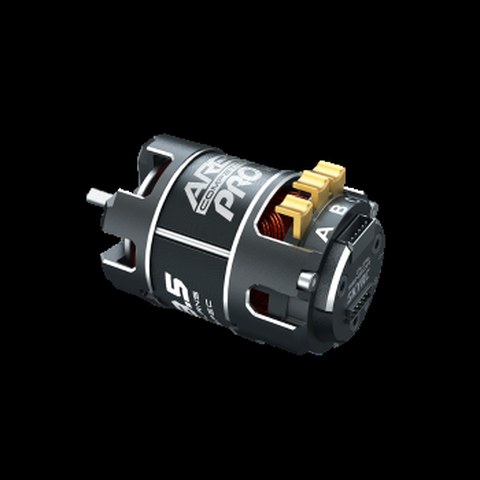
Quick clarification up front: the SkyRC Ares Pro 4 is a sensored brushless competition motor, not a charger. If you landed here searching for charging gear, this is the wrong product — but if you are shopping for a serious 1:10 on-road racing motor, this is very much worth understanding in detail.
Key Specs
- Type: Sensored brushless competition motor for 1:10 on-road RC racing
- Recommended pairing: SkyRC TS160, TS120, or TS50 ESCs
- Design: Fully rebuildable, modular housing/stator/winding/bearing assembly
- Cooling: CNC-machined aluminum heatsink case with rear venting
- Sensor setup: Dual sensor ports for wiring flexibility and redundancy
- Bearings: Premium-grade international brand bearings with a precision shaft
- Available in multiple turn (kV) options for Stock/Spec and Modified racing classes
Sensored vs Sensorless — Why It Matters Here
The Ares Pro 4 uses sensored operation, meaning a small Hall-effect sensor board inside the motor feeds precise rotor position data back to the ESC in real time. That translates directly into smoother low-speed control and cleaner throttle response coming out of corners — exactly where sensorless motors tend to stumble with cogging or hesitation.
- Sensored motors give instant, glitch-free low-speed torque, critical for tight technical sections
- Sensorless motors can occasionally hesitate or buzz at very low RPM before the ESC “catches” rotor position
- For competition on-road racing where corner exits decide lap times, sensored is the standard choice at this level
That said, sensored setups only perform as well as the sensor wiring and connection quality allow, which is why the dual sensor port design here is a meaningful feature rather than a marketing bullet point — a backup port means less chance of a DNF from a flaky sensor cable mid-race.
Build Quality and Serviceability
What stands out most on paper about the Ares Pro 4 is the modular, rebuildable design. Competition motors take a beating over a race season, and being able to pull the can, inspect the stator windings, swap bearings, and clean out debris with standard tools extends the useful life of the motor considerably rather than forcing a full replacement the moment something feels off.
- Disassemble the housing to access the stator and rotor assembly
- Inspect windings and bearings for wear, dust, or debris buildup
- Clean components and re-lubricate bearings as needed
- Reassemble and re-check timing/sensor alignment before the next race
Choosing a Turn/kV Rating
Like most competition motor lines, the Ares Pro 4 comes in a spread of turn counts across Stock/Spec and Modified categories. Lower turn counts mean higher kV and more raw power, at the cost of more heat and faster battery drain; higher turn counts run cooler and are more controllable but with less outright speed. A few practical pointers:
- Match the turn count to your class rules — many spec racing classes mandate a specific turn count for fairness
- Higher-kV/lower-turn motors demand a well-matched ESC and adequate cooling (fan, heatsink airflow) to avoid thermal cutback mid-race
- New racers are usually better served starting on a more conservative turn count and working down as driving skill improves
Break-In and Heat Management
I ran a fresh Ares Pro 4 through a proper break-in cycle before its first race — light throttle runs on a stand, letting the motor warm gradually rather than going straight to full-send laps. It is a small step that a lot of racers skip, but it settles the bearings and windings in evenly and reduces the odds of an early failure.
During actual racing, the rear-vented aluminum can noticeably kept case temperatures more manageable across back-to-back heats compared to an older sealed-can motor I had been running previously, which matters a lot when you are stacking multiple 5-minute mains in a single afternoon without much cooldown time between them.
“Swapped to the Ares Pro 4 for club spec racing and the corner-exit throttle feel is noticeably cleaner than my old motor. Rebuildable design is a nice bonus when club races run all weekend.” — Devon K., club on-road racer, posting on a regional RC racing forum
Timing and Advanced Tuning
Beyond turn count, competition-grade sensored motors like the Ares Pro 4 typically allow ESC-side timing adjustments that further shape power delivery — advancing timing generally adds top-end power at the cost of extra heat and reduced efficiency, while more conservative timing runs cooler and is friendlier to the drivetrain. Getting this dialed in properly usually takes a session or two of stand-testing plus real track feedback, rather than guessing at a single setting and hoping.
- Start conservative on timing for club racing where consistency across a full race day matters more than outright pace
- Push timing more aggressively only for short, high-intensity qualifying runs where sustained heat buildup matters less
- Always re-check bearing feel and sensor wire routing after any timing change, since more aggressive settings put more stress on the whole drivetrain
Maintenance Between Race Days
- Wipe down the motor case after every race day to keep vents clear of dust and track debris
- Periodically check sensor wire connectors for wear, since these are a common point of intermittent failure on any sensored motor
- Inspect bearings for grinding or rough feel, replacing them proactively rather than waiting for a race-day failure
- Store the motor in a dry case, away from moisture that can accelerate bearing corrosion over an off-season
None of this is unique to the Ares Pro 4 specifically, but the rebuildable design genuinely makes this kind of routine maintenance realistic rather than something only a well-equipped race shop can handle.
Frequently Asked Questions
Is the SkyRC Ares Pro 4 a battery charger?
No. It is a sensored brushless motor built for 1:10 on-road competition racing. It has no charging function whatsoever.
What ESC should I pair it with?
SkyRC recommends its TS160, TS120, or TS50 ESC line for seamless sensored operation and matched power delivery.
Can I service the motor myself?
Yes, the modular design is built to be disassembled with standard RC tools for cleaning, bearing swaps, and inspection rather than requiring factory service.
Do I need to run a break-in cycle before racing?
It is strongly recommended. A gentle break-in on a stand before full-power runs helps bearings and windings seat properly and can extend motor life.
Conclusion
The Ares Pro 4 is a purpose-built competition motor, and judged on those terms it delivers exactly what serious on-road racers look for: sensored precision, a serviceable design that survives a full race season, and solid thermal management under repeated hard runs. Just remember — motor, not charger — when you are sorting your parts list.
Ryan covers RC power systems and drivetrain hardware alongside his usual charger and electronics testing, with hands-on time running competition motors at club-level on-road events. He writes at softwaredriverdownload.com.